
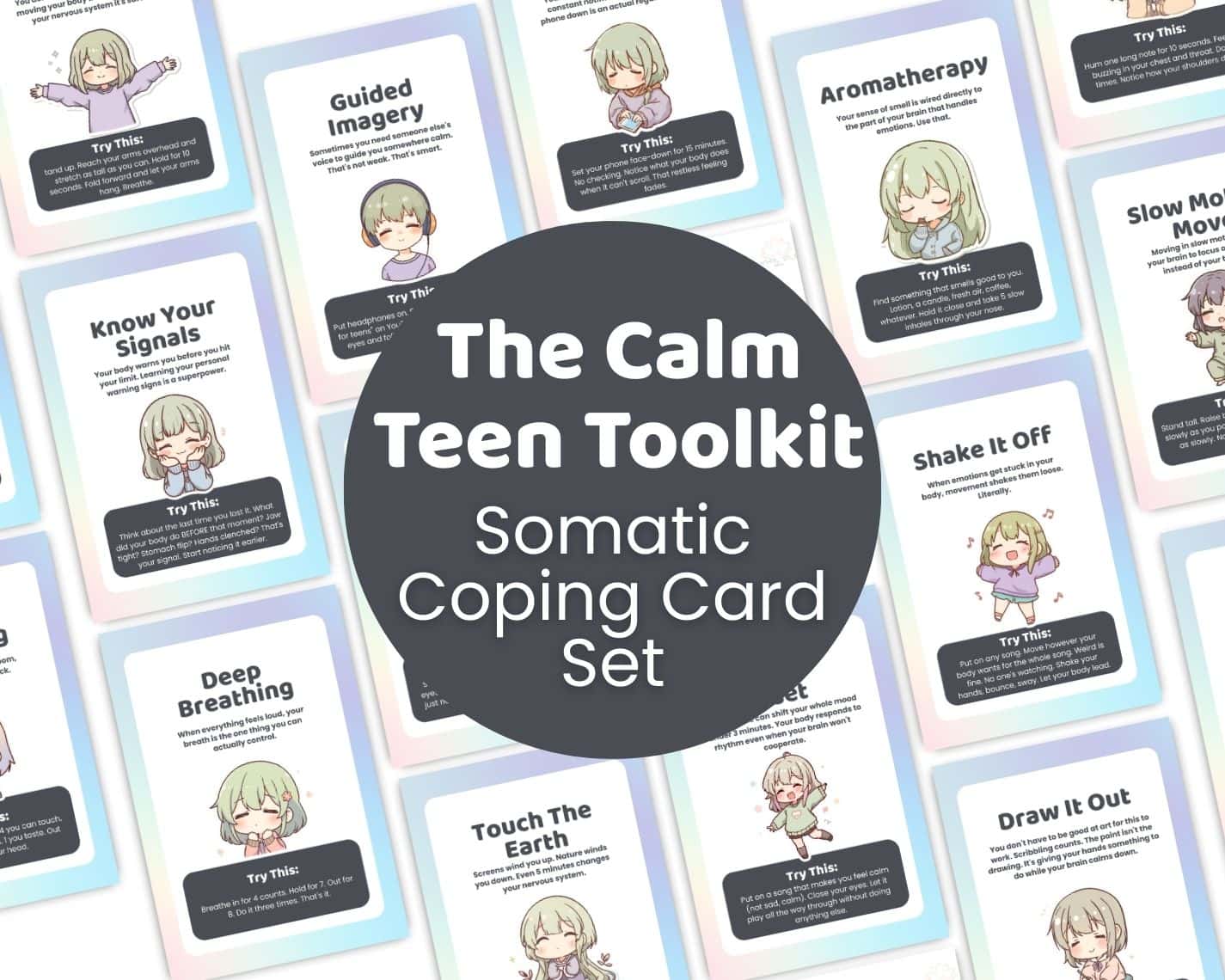
The Calm Teen Toolkit | 30 Nervous System Regulation & Somatic Coping Cards
$9.00
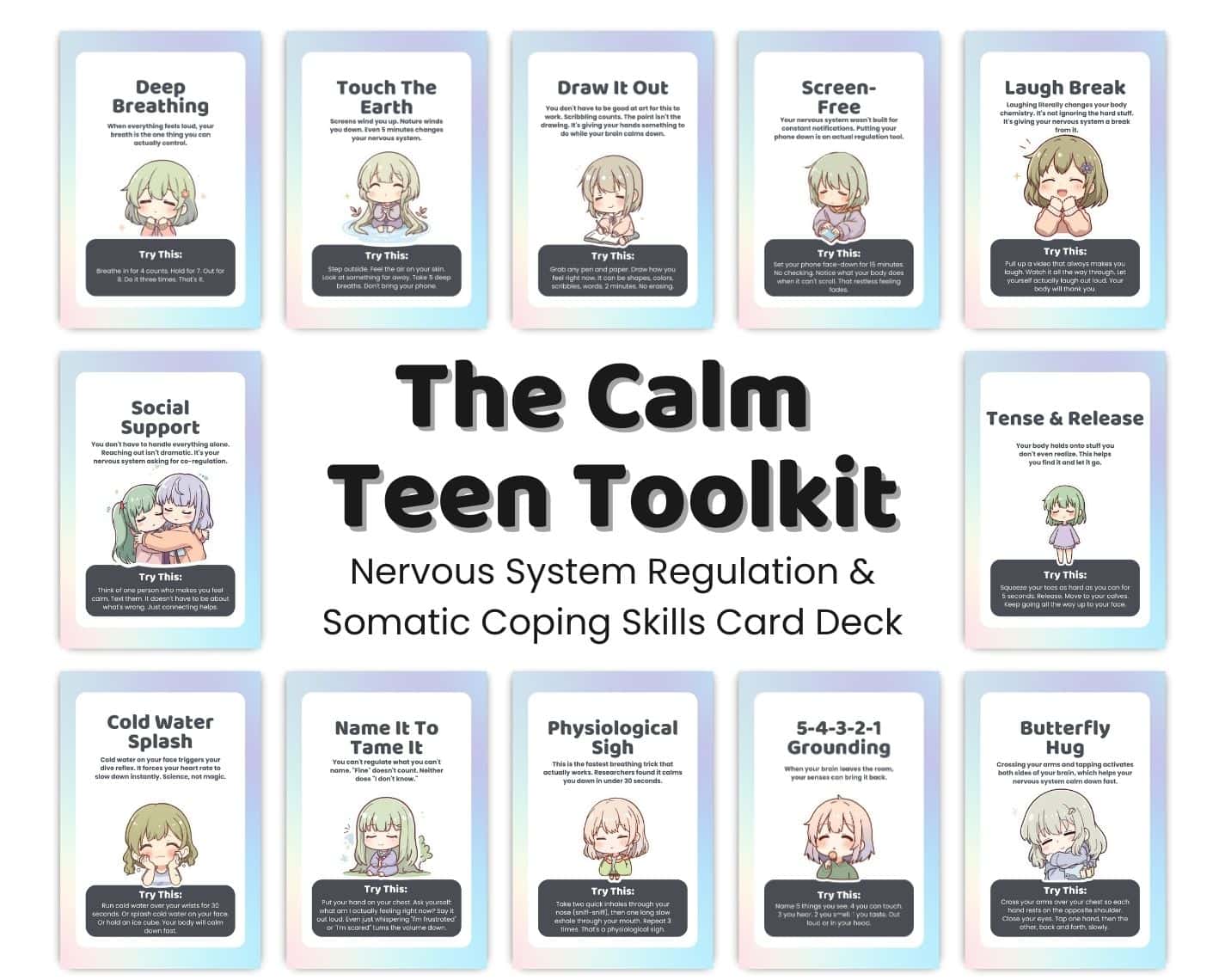
30 body-based nervous system regulation tools your teen can pick up and use on their own. No therapy-speak. No condescending tone. Chibi illustrations, plain-language instructions, and a “Try it” action box on every card. For the moments when “just calm down” has never once worked.
Description
Nobody taught me what to do with my body when I was a teenager.
I had big feelings and no language for them. I had a nervous system that was screaming and no one who could explain what that even meant. I didn’t discover somatic work until I was almost 40. By then, my body had been holding things since I was 15.
I think about that sometimes. What would’ve been different if someone had handed me a simple card that said: put your hand on your chest, name what you’re feeling, breathe? Not a lecture. Not a pamphlet from the school counselor. Just one small, body-based thing I could do in 60 seconds when everything felt like too much.
That’s what these cards are. Somatic coping skills for teens, written in language they’ll actually read, with illustrations they’ll actually like. No clinical terms. No condescending tone. Just 30 real nervous system regulation tools a teenager can pick up and use on their own.
Here’s what makes these different from most teen mental health resources:
Most resources tell teens what they should do. “Talk to a trusted adult.” “Practice self-care.” That advice isn’t wrong, but it skips the part where their body is already in fight-or-flight and their brain has left the building. These cards start with the body first. Every single one gives them something physical to do, because that’s what actually interrupts the stress response.
What’s inside (30 cards):
- Breathing techniques (4-7-8 breathing, physiological sigh, alternate nostril breathing)
- Body-based regulation (progressive muscle relaxation, body scan, cold water reset)
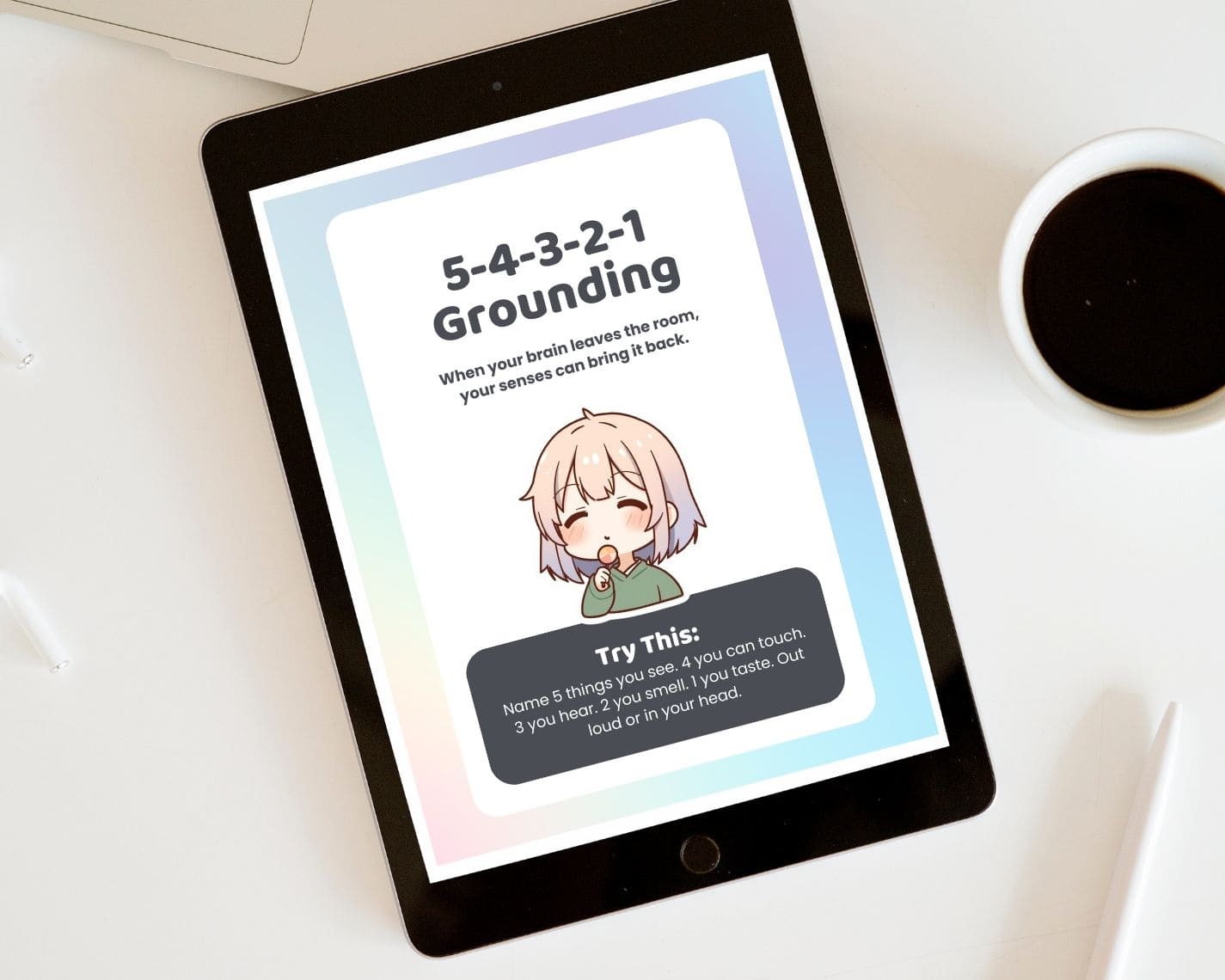
- Sensory grounding (5-4-3-2-1 technique, aromatherapy, nature connection)
- Movement and release (stretching, shaking, slow motion movement, dance)
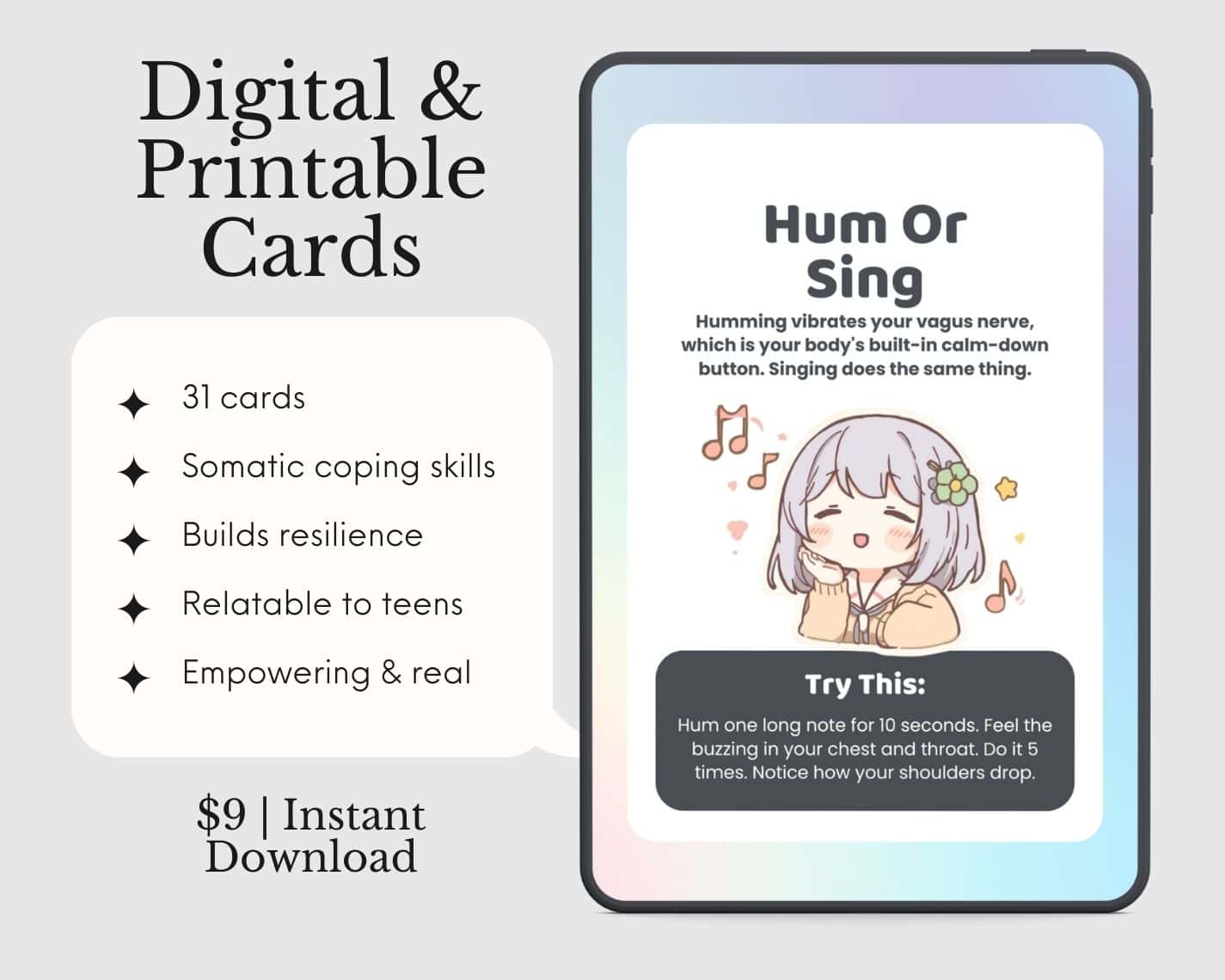
- Creative expression (brain dump journaling, drawing, humming and singing)
- Mindset and connection (prayer, thought flipping, texting someone safe, setting boundaries)
- Daily habits (phone breaks, sleep wind-down, hydration and fuel checks, exercise)
Every card includes a chibi illustration, a plain-language description of how it helps, and a specific “Try it:” action box with step-by-step instructions.
These cards might be right for your teen if:
- They shut down, blow up, or go silent when emotions get big
- “Just calm down” has never once worked (and you know it)
- They’re old enough to want tools but young enough to resist anything that feels like therapy
- You’ve been learning about nervous system regulation for yourself and want them to have it too
- You want something you can hand them without a conversation, a lecture, or a “we need to talk”
- You believe the tools they build now become the ones they carry into adulthood
These cards are NOT a substitute for:
- Professional mental health support (if your teen is in crisis, please reach out to a provider)
- Clinical therapeutic intervention (these are a family tool, not a treatment plan)
How to use them:
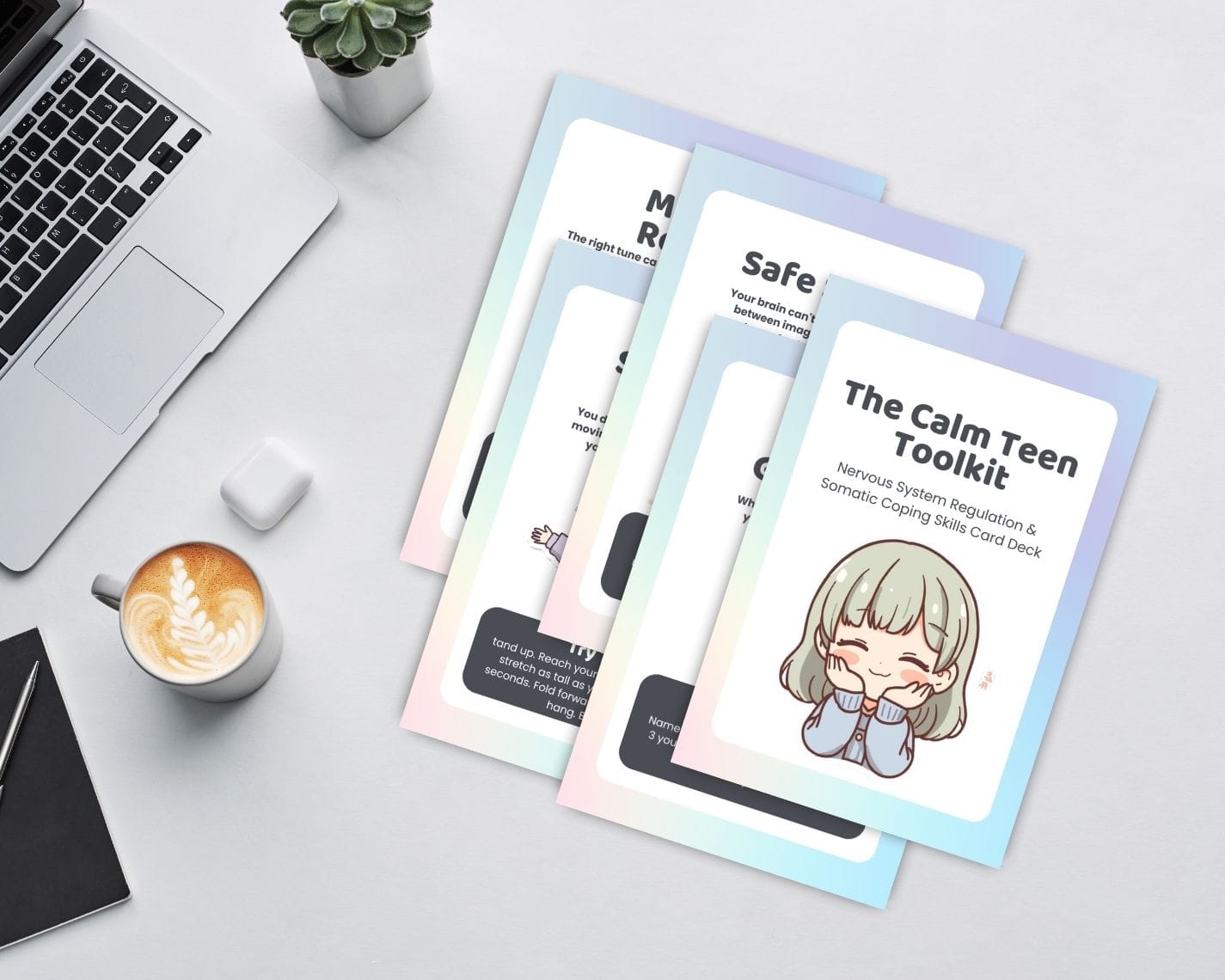
Print them. Let your teen pick the ones that feel right. Some kids pin a few to their wall. Some keep a stack on their nightstand. Some pull one out after school when they need to decompress. There’s no correct order and no required number.
You could also go through them together. Pick one card each and try it at the same time. That’s co-regulation, and it works even better than doing it alone.
Why cards instead of an app or a book?
Because teens don’t open books in the middle of a meltdown. And apps require unlocking, navigating, loading. A card on their nightstand or pinned to their wall is already there. No friction. No barriers. Just a tool within reach when they need it.
These cards also work when the lines of communication are closed. If your teen won’t talk to you about what they’re feeling (and let’s be honest, most won’t), you can leave these in their space and let them come to it on their own terms. No conversation required. No “we need to talk.”
I spent two decades wishing someone had given me tools like these when I was young. Not a diagnosis. Not a prescription. Just a simple way to come back to my body when it felt like everything was falling apart. These cards are what I wish someone had handed me at 15.
Not sure yet? Start with our free guide: Why Calming Down Doesn’t Work (And What Finally Will)


Reviews
There are no reviews yet.