
Coping Skills Cards for Kids | 28 Printable Somatic Exercises
$9.00
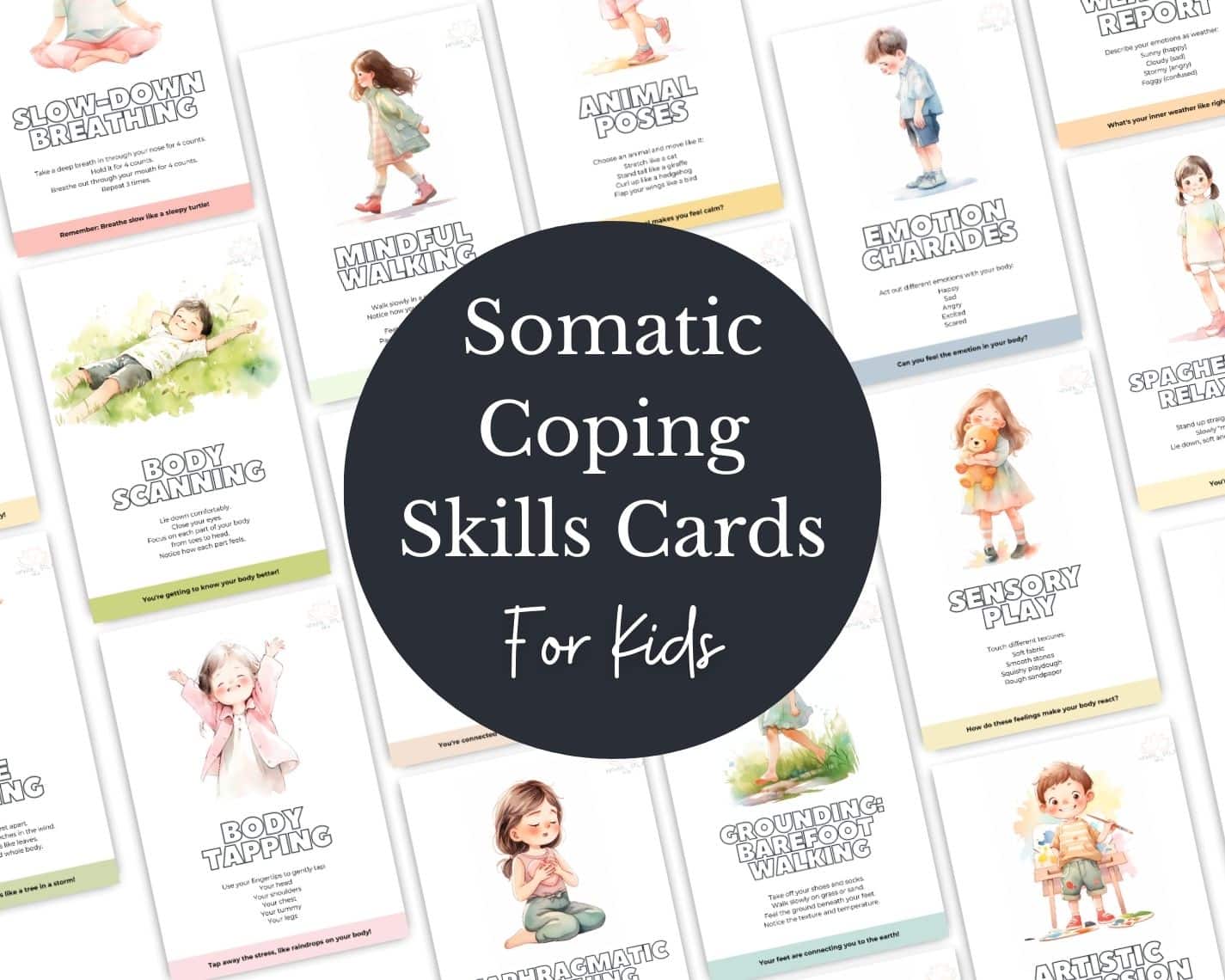
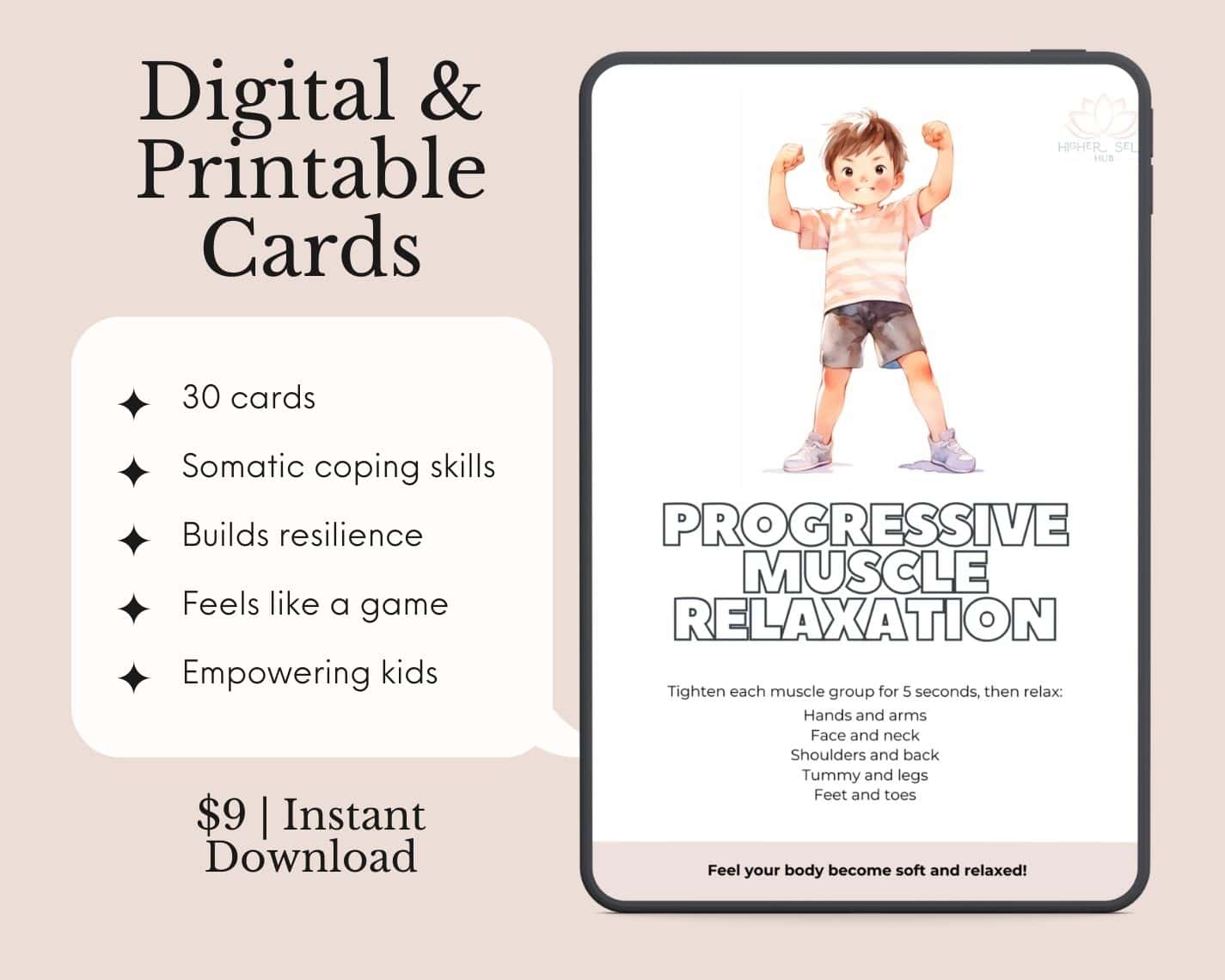
When your child is mid-meltdown, “just calm down” doesn’t work. These 28 printable cards give them something to DO with their body instead. Kid-friendly language, watercolor illustrations, one exercise per card. Print them, cut them, and put them where little hands can reach.
Description
We call it a “reset” in our house.
When one of my kids is mid-meltdown, when I can feel my own patience thinning, when the whole house feels like it’s vibrating at the wrong frequency. We don’t try to fix it. We just say the word. Reset. And everybody gets to start fresh.
That one practice changed more in our home than years of trying to get everyone to “just calm down.”
These cards grew out of that same idea. Somatic coping skills for kids, made simple enough that a child can look at a card and do the exercise on their own. No long explanations. No therapy language. Just body-based tools that actually help them feel what’s happening and move through it.
Here’s what I noticed about most kids’ calming resources:
They tell kids what to feel. “Take a deep breath and you’ll feel better.” But if you’ve ever watched a child in the middle of a big emotion, you know that instruction lands on the floor. What works is giving them something to do with their body. Something physical. Something that meets the energy they’re already carrying.
That’s what these cards are. Simple somatic exercises translated into kid-friendly language, with illustrations and encouragement that make it feel less like a lesson and more like a game.
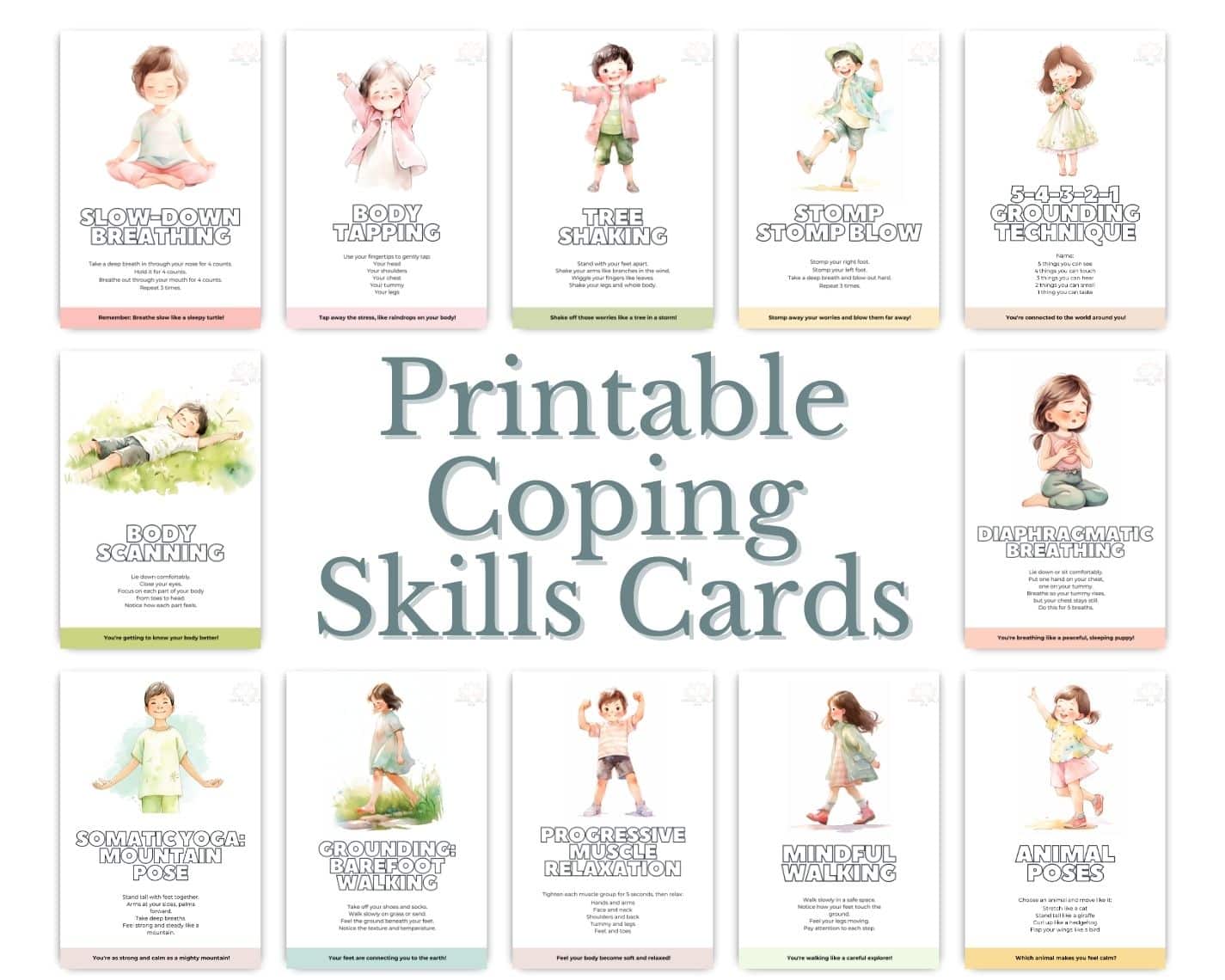
What’s inside (28 cards):
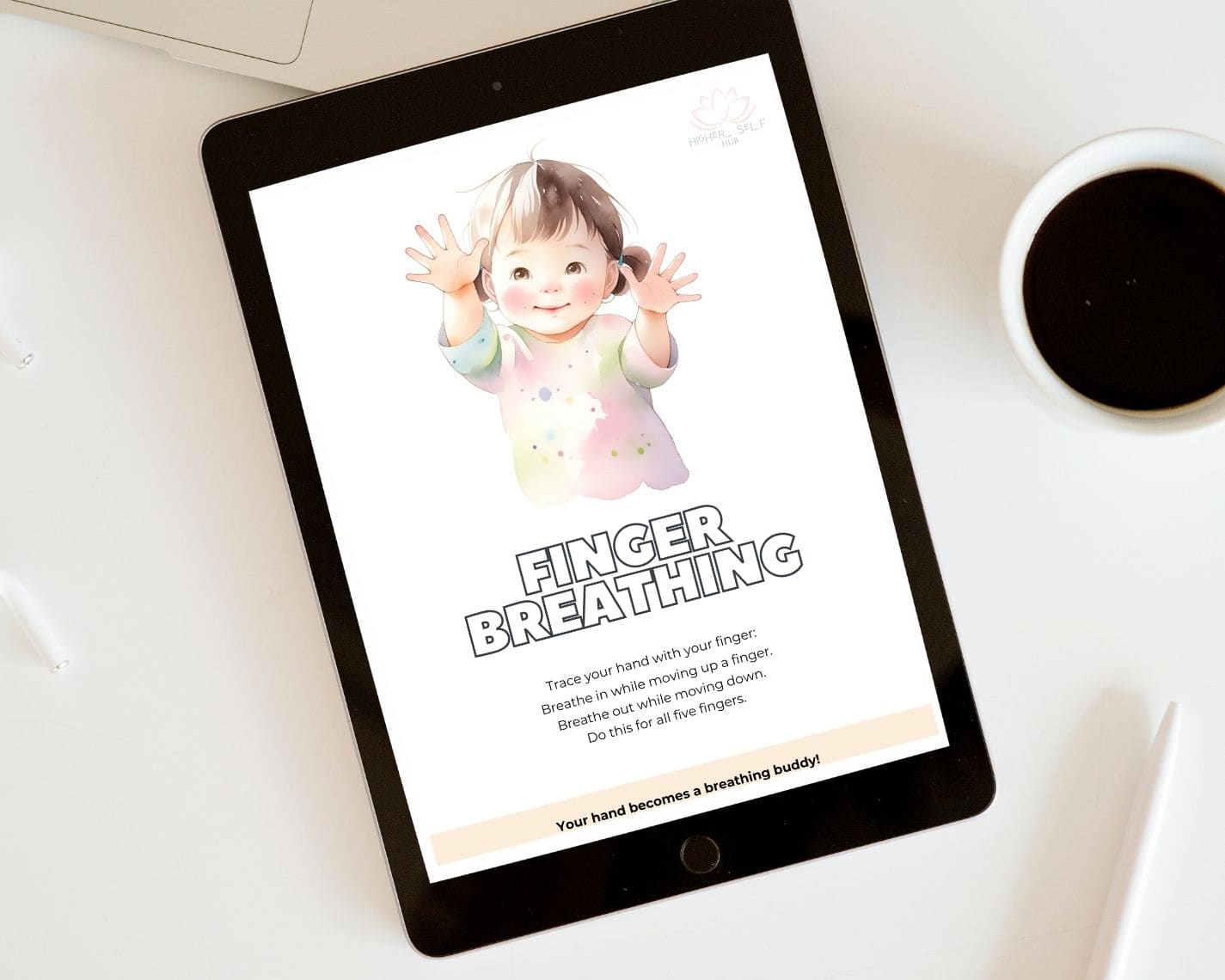
- Breathing exercises (slow-down breathing, finger breathing, diaphragmatic breathing)
- Movement and shaking (tree shaking, stomp stomp blow, animal poses)
- Body tapping and progressive muscle relaxation
- Sensory grounding (5-4-3-2-1 technique, barefoot walking, sensory play, mindful eating)
- Body awareness (body scanning, somatic yoga poses, spaghetti relaxation)
- Emotional check-ins (weather report, emotion charades, safe space visualization)
- Mindfulness activities (mindful walking, artistic expression)
Every card includes a watercolor illustration, step-by-step instructions, and a playful reminder at the bottom (“Shake off those worries like a tree in a storm!” or “Your hand becomes a breathing buddy!”).
These cards might be a good fit if:
- Your child has big emotions and you’re looking for something beyond “take a deep breath”
- You want coping skills activities for kids that are body-based, not just talk-based
- You’ve been learning somatic tools for yourself and want your child to have them too
- Bedtime, transitions, or new situations tend to ramp things up in your house
- You’d rather hand your child a card than try to explain a technique in the heat of the moment
- You believe the tools you give them now become the tools they carry into adulthood
These cards are NOT for:
- Clinical therapeutic use (these are a parenting tool, not a replacement for professional support)
- Kids who need specialized behavioral intervention (always consult a provider)
How to use them:
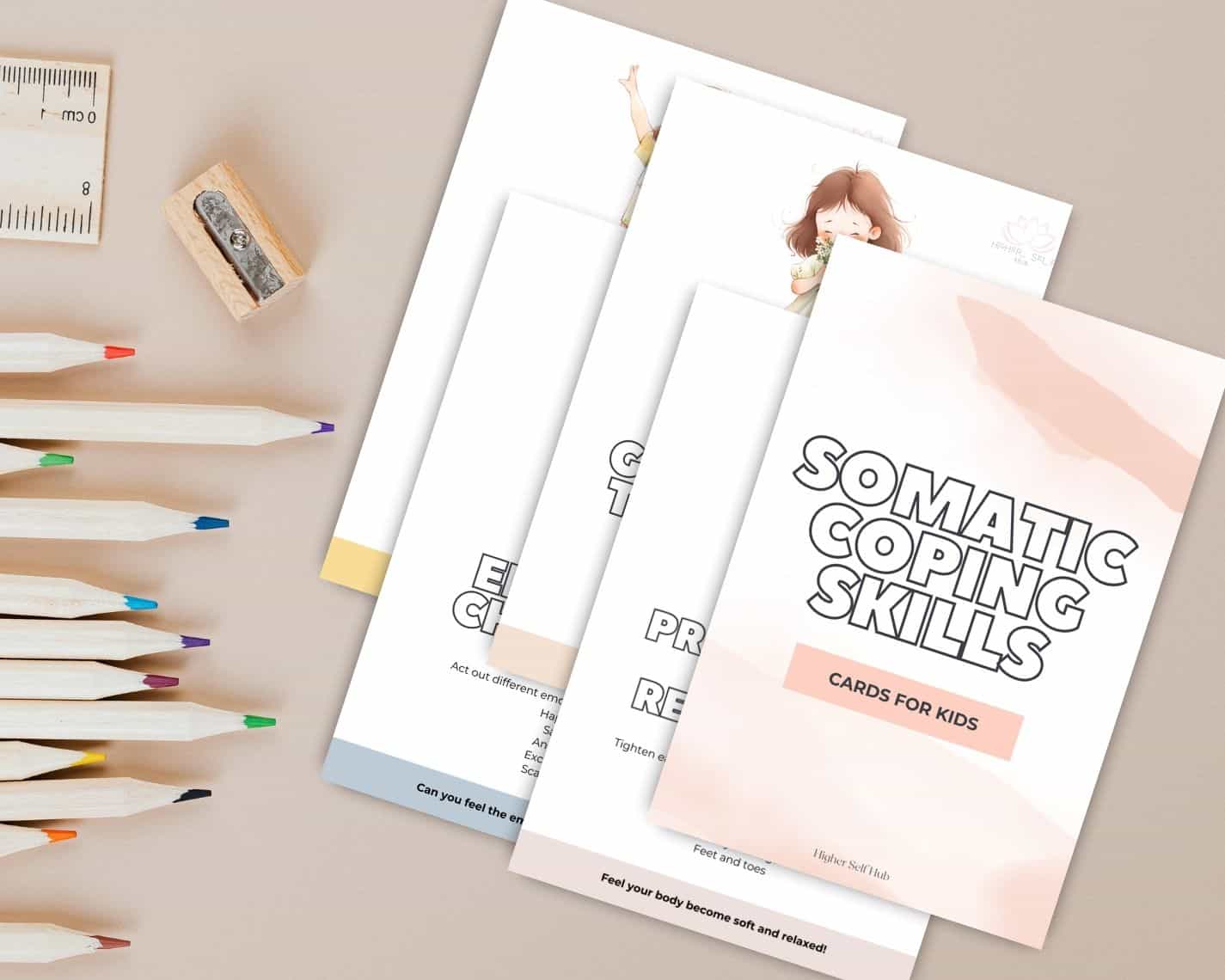
Print them. Cut them out if you want, or keep them as full pages. Put them where your child can reach them. Some families fan them on the fridge. Some keep a few in the car. Some let their child pick one before bed. There’s no right order and no wrong way.
The goal isn’t perfection. It’s access. When a big feeling shows up, your child has something to reach for that brings them back to their body.
Why cards instead of talking it through?
Because in the middle of a big emotion, words don’t land. You know this. You’ve tried “take a deep breath” and watched it fall on the floor. These cards skip the lecture and go straight to the body. Your child picks one up, sees the illustration, reads three simple steps, and does the thing. No explaining required.
That’s also why they work when you’re at your own limit. When your patience is thin and your own nervous system is activated, handing them a card is easier than finding the right words. It’s co-regulation without a conversation.
What one parent told us about a similar toolkit: “Finding new tools to help with calming myself.” The tools you give them now become the tools they carry into adulthood. And honestly, you might find yourself using a few of these cards too.
I didn’t have these tools as a kid. Most of us didn’t. But the fact that you’re here, looking for something like this for your child, means they already have something we didn’t. They have a parent who’s paying attention.
Not sure yet? Start with our free guide for yourself: Why Calming Down Doesn’t Work (And What Finally Will)

Reviews
There are no reviews yet.