
7-Day Guide to Naturally Lower Cortisol and Boost Energy
Some mornings I wake up and my body is already running. Not moving. Just… running. Jaw grinding, stomach churning, brain three hours ahead before my feet even touch the floor.
I run a farm, homeschool my kids, and work from home. Add that to autoimmune stuff, and it adds up. I get overwhelmed often. And for a long time, I thought the answer was to push harder. Get up earlier. Do more.
It wasn’t until I started paying attention to what was actually happening in my body that anything changed. Not a big dramatic shift. Just noticing: oh. I’ve been running on cortisol all day. That’s why I’m crashing at 3pm. That’s why I can’t sleep even though I’m exhausted.
If that sounds like something you’ve noticed too, you’re not broken. And you don’t need a complete life overhaul.
Cortisol is your body’s main stress hormone, and when it stays elevated for too long, it affects everything: your energy, your sleep, your mood, even how your body holds weight.
The good news is that small, gentle shifts can help your body start regulating it again, on your terms.
This 7-day guide gives you one simple practice per day. Not a protocol. Not a program. Just seven invitations to help your nervous system remember what calm feels like.
Why This Matters Now More Than Ever
Women face a perfect storm of stressors: career demands, family responsibilities, aging parents, and the hormonal shifts of perimenopause. During this transitional phase, declining estrogen can make us more sensitive to stress, while cortisol dysregulation becomes increasingly common.
When cortisol stays elevated, it doesn’t just affect how we feel. It impacts everything from our sleep quality to our metabolism, immune function, and mental clarity. But here’s what’s empowering: small, consistent changes can help you lower cortisol naturally and create big shifts in how your body manages stress.
If you want to actually try this, I made a free printable guide that walks you through it day by day. One small practice per day, with space to track what you notice.
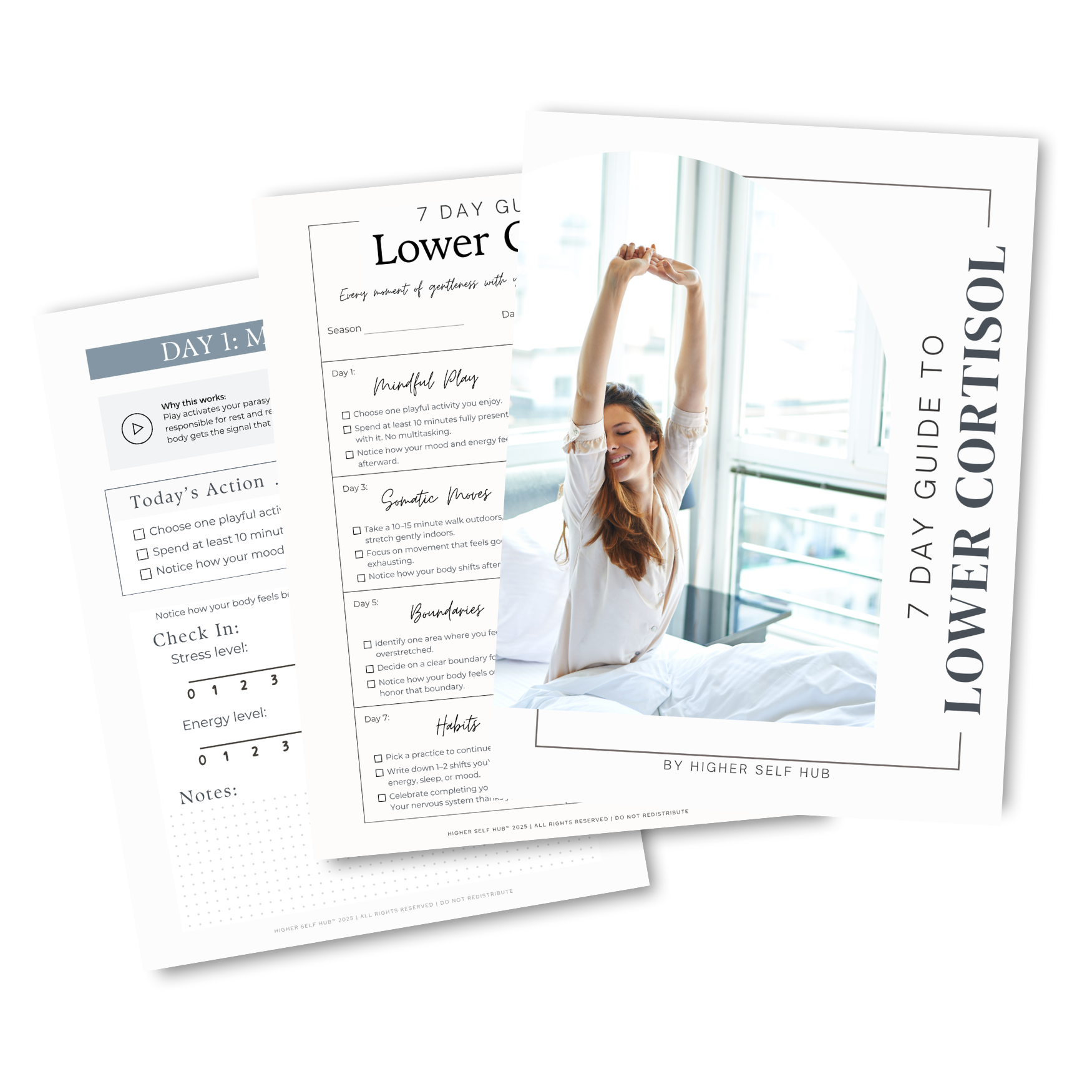
Free 7-Day Guide To Lower Your Cortisol
The Hormone Balancing Guide That Works For Women In The Thick of It.
Your inbox stays calm, too. Unsubscribe anytime. We respect your privacy.
Day 1: Mindful Play Break
Today’s Task: Schedule 15 minutes for something purely joyful
Choose any activity that makes you smile naturally; dancing to one favorite song, playing with a pet, doodling, looking at photos that make you happy, or stepping outside to notice something beautiful. The key is doing something with no purpose other than joy.
Joy and play activate your parasympathetic nervous system, naturally supporting your body’s ability to lower cortisol while boosting mood-enhancing neurochemicals. When we’re constantly in “productivity mode,” our stress hormones stay elevated. Today, give yourself permission to play.
Want to dive deeper into somatic healing and nervous system regulation? Download our free Somatic Starter Kit with 3 proven moves to calm your nervous system faster than brushing your teeth.
Journal Prompt: “What activities made me feel lighthearted as a child, and how can I bring more of that energy into my adult life?”

Day 2: Morning Light Ritual
Today’s Task: Get 10 minutes of natural sunlight within 30 minutes of waking
Step outside (even if it’s cloudy) and simply be present in the natural light. No phone, no multitasking—just you and the morning light. If you can’t go outside, sit by a bright window.
This simple practice helps regulate your circadian rhythm, signaling your body to naturally balance cortisol—high in the morning for energy, low at night for sleep. It’s one of the most powerful (and free) ways to reduce cortisol and support healthy stress hormone patterns.
Journal Prompt: “How does my body feel different when I start the day mindfully versus rushing into tasks immediately?”

Day 3: Somatic Movement Flow
Today’s Task: Practice 10 minutes of gentle, mindful movement
Choose slow, flowing somatic exercises that feel good to your body—gentle spinal waves, shoulder blade squeezes, or simple stretching. Move like you’re moving through honey, paying attention to sensations rather than achieving any particular position.
Somatic movement helps your nervous system downregulate from the “fight or flight” state that keeps cortisol elevated. Unlike intense exercise (which can actually increase cortisol), gentle movement signals safety to your body and supports your mind body connection.
If you have Hope In Your Pocket grounding cards, this is a perfect time to pull one for movement inspiration.
Journal Prompt: “What is my body trying to tell me today, and how can I listen more carefully to its signals?”

Day 4: Nourish Your Adrenals
Today’s Task: Eat a protein-rich breakfast within 2 hours of waking
Choose something substantial like Greek yogurt with nuts and berries, eggs with avocado, or a meat and veggie omelet. Avoid starting your day with just coffee or sugary foods.
Stable blood sugar is crucial for cortisol regulation. When blood sugar spikes and crashes, it triggers stress hormone release as your body tries to maintain balance. A protein-rich start sets the tone for steadier energy all day.
Journal Prompt: “How do different foods affect my energy and mood throughout the day? What patterns do I notice?”

Day 5: Boundary Practice
Today’s Task: Say “no” to one thing that drains your energy
This could be declining an optional meeting, not immediately responding to a non-urgent text, or simply saying “I need to think about that” instead of automatically agreeing to a request.
Chronic people-pleasing and poor boundaries keep cortisol chronically elevated. Every time you honor your needs, you’re telling your nervous system that you’re safe and your wellbeing matters.
Journal Prompt: “Where in my life do I give away my energy too easily, and what would it feel like to protect it more consciously?”

Day 6: Sleep Setup
Today’s Task: Add ONE calming helper to your bedtime routine
Don’t worry about overhauling your entire evening—just set up one thing that will make it easier to wind down. Choose something that feels doable and appealing to you:
- Get a lavender sleep mask or pillow spray
- Set up a diffuser by your bed with calming essential oils
- Prepare a bedside tea station (chamomile tea, honey, favorite mug)
- Pick out comfortable pajamas or a cozy robe
- Download a sleep meditation app or find a calming playlist
- Put a journal and pen on your nightstand
- Get blackout curtains or an eye mask
The goal is simply to have one soothing tool ready and waiting for you. When you’re exhausted, the last thing you want is to search for supplies or create extra steps. Make it so easy that even on your worst days, you can reach for this calming helper.
Quality sleep is when your body does its deepest cortisol regulation work. By removing barriers to relaxation, you’re setting yourself up for the restoration your nervous system desperately needs.
Journal Prompt: “What does my body need to feel truly safe and ready for restorative sleep?”

Day 7: Integration and Habit Formation
Today’s Task: Choose your favorite practice from this week and make it a habit that sticks
Review the past six days and select the practice that felt most natural and beneficial to you. Commit to doing this one thing daily for the next week, then the week after that.
Real change happens through consistency, not perfection. By anchoring one practice deeply before adding others, you’re more likely to create lasting transformation in how your body handles stress.
Journal Prompt: “Which practice from this week made me feel most like myself, and how can I make space for it in my daily routine?”

Moving Forward: Your Cortisol-Conscious Lifestyle
This week was just the beginning. Lowering cortisol naturally isn’t about perfection—it’s about consistent, gentle practices that support your nervous system over time.
Key Takeaways:
- Joy and play are powerful medicine for an overstressed system
- Morning light sets the foundation for healthy hormone rhythms
- Gentle movement is often more effective than intense exercise for cortisol regulation
- Stable blood sugar directly impacts stress hormone balance
- Boundaries aren’t selfish—they’re essential for hormonal health
- Quality sleep is non-negotiable for cortisol recovery
- Consistency trumps intensity every time
Your body has an incredible capacity to heal and rebalance when given the right support. Trust the process, be patient with yourself, and celebrate the small wins along the way.
Your Next Step: Continue with your chosen practice for another week. Once it feels natural, consider adding a second practice from this guide. Notice how your body responds when these become habits rather than experiments.
Remember: You’re not just lowering cortisol. You’re reclaiming your vitality, your peace of mind, and your right to feel good in your own body.
If you want these in a printable format you can actually use, the guide is free. One page per day, with a place to write down what shifted.
Free 7-Day Guide To Lower Your Cortisol
The Hormone Balancing Guide That Works For Women In The Thick of It.
Your inbox stays calm, too. Unsubscribe anytime. We respect your privacy.