
What If Your Setback Is A Setup For Your Greatest Comeback?
I’ve got a confession about one of my most crushing setbacks – a story that might sound familiar to you.
Recovery from nervous system overload isn’t a straight line. Sometimes what feels like a setback is really a setup for a comeback.
If you’re dealing with burnout or overwhelm, you’ve likely heard this before. But when you’re in the thick of a setback, feeling like all your progress has vanished overnight, those words can feel hollow.
When Progress Feels Like a Distant Memory
I was doing so well with my agoraphobia. For months, I’d been expanding my world, saying ‘Yes’ to things that once terrified me.
When my kids’ summer camp started, I was excited to sign up for drop-offs and pick-ups. It felt like a victory – proof of how far I’d come.
Then came that Tuesday morning in the drop-off line.
Surrounded by other moms who seemed entirely at ease, anxiety hit me like a freight train. The familiar sensations flooded back – racing thoughts and an overwhelming need to escape.
I looked around, wondering how everyone else could be so calm when I felt like I was coming apart at the seams.
Here’s what I realized: I’d been doing so well that I’d forgotten my emergency calming tools. When I needed them most, I couldn’t access them because my thinking brain had gone offline.
That afternoon, I couldn’t make it back for pickup. I had to call my husband to drive me instead.
The shame felt crushing.

If you’ve experienced a setback, you’re not alone. I put the fuller explanation into a short, free guide you can read at your own pace.
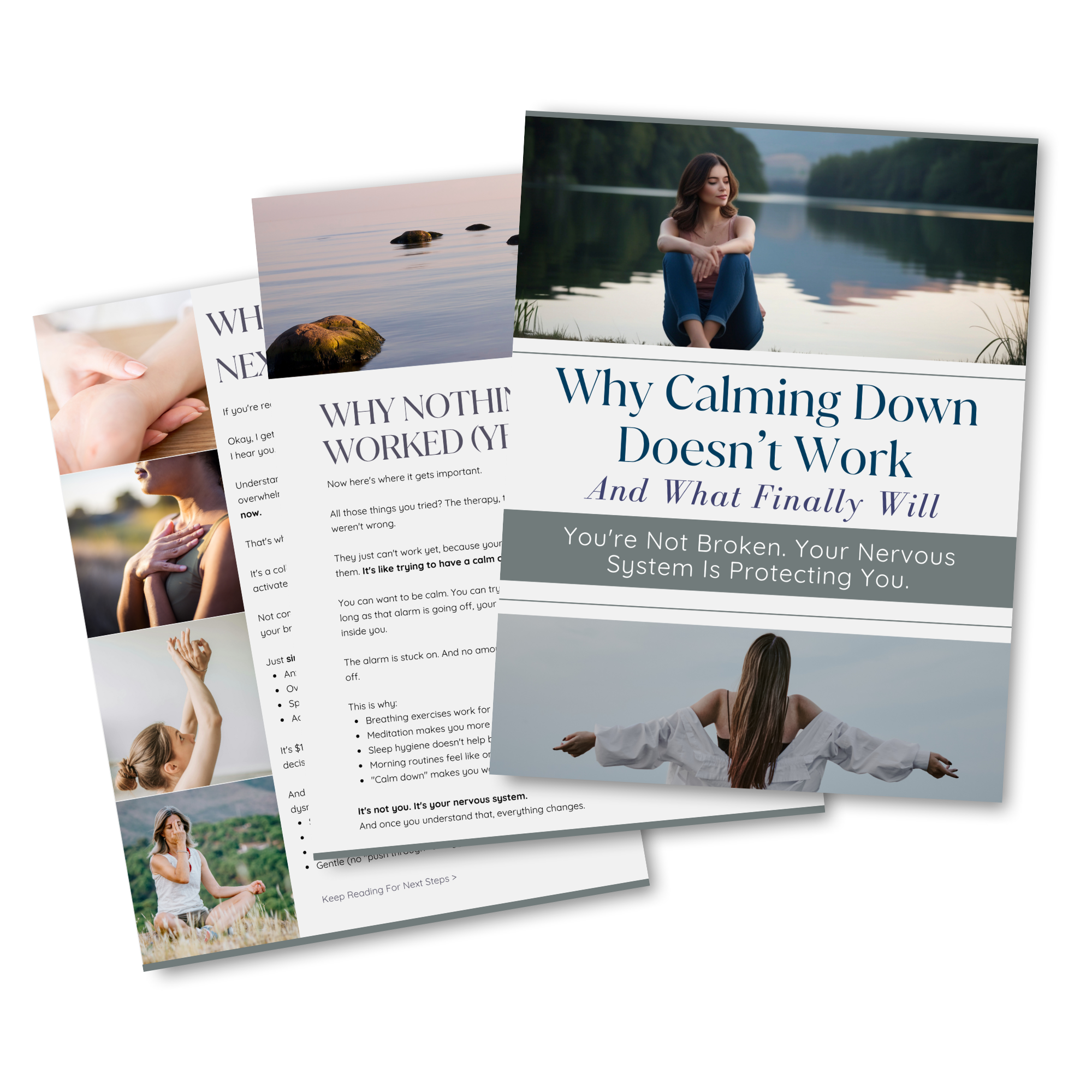
Free Guide: Why Calming Down Doesn’t Work
(And What Finally Will)
You’re Not Broken. Your Body Is Protecting You.
Your inbox stays calm, too. Unsubscribe anytime. We respect your privacy.
The Setback Spiral: You’re Not Alone
If this sounds familiar, you know the shame spiral that follows. One moment you’re celebrating progress, the next you’re questioning everything.
The depression after my camp experience was real. I felt like I’d lost months of progress in a single morning.
But here’s what my husband reminded me: setbacks aren’t failures. They’re evidence that you’re living and stretching yourself.
This felt like bologna at the time, but setbacks actually mean you’re doing the hard work of growth. Here are the practical strategies that helped me rebuild after that drop-off experience.
5 Strategies for Reframing and Recovering from Setbacks
1. Remember: Your Brain is Protecting You, Not Betraying You
When anxiety hits and your thinking becomes cloudy, that’s your brain’s protective system kicking in. Your prefrontal cortex – the thinking part of your brain – literally goes offline when it senses danger.
This isn’t a malfunction; it’s a feature that kept our ancestors alive. Understanding this helped me stop fighting against my brain and start working with it instead.
2. Create Your Emergency Toolkit (And Keep It Accessible)
After my camp experience, I went back to basics. I created a 3×5 index card with my go-to emergency calming tools and kept copies in my purse and car.
When your thinking brain is offline, you need external reminders of what works. Your toolkit might include breathing techniques, grounding exercises, affirmations, or sensory tools.
The key is having them ready when you can’t think clearly enough to remember them.
3. Zoom Out: Look at the Bigger Picture
Setbacks feel enormous when you’re in them, but they’re just moments in a much larger story.
Recovery is like a tree growing — branches may sway or break in storms, but the roots continue to strengthen underground.
One difficult day doesn’t undo weeks or months of hard work and progress.
📌 Save this pin

4. Practice Self-Compassion, Not Self-Criticism
The shame spiral after a setback can be more damaging than the setback itself.
Talk to yourself the way you’d talk to a good friend going through the same experience.
Would you tell them they’re weak or that they’ve failed? Of course not. You’d remind them of their strength and progress. Give yourself that same kindness.
5. Use Setbacks as Information, Not Punishment
Every setback teaches us something valuable. Mine taught me that I needed to keep my tools accessible even when I was doing well.
It reminded me to practice my techniques regularly, not just when I was struggling.
What is your setback trying to teach you? Perhaps it’s highlighting which situations still require gradual exposure or which tools need additional practice.

Moving Forward: Progress, Not Perfection
I’m embarrassed to say it took me months to get back on track after that setback. But the lessons I learned ran much deeper than I expected.
More importantly, the tools I created through that process have become anchors I still rely on every day—the ones I use to calm my nervous system when panic creeps back in.
Recovery isn’t about avoiding hard moments. It’s about developing the resilience to navigate them. Irene Lyons calls this ‘building capacity.’
A setback doesn’t wipe away your hard work—it’s a tough chapter, not the whole book.
If you’re reading this during your own setback: you are not alone, you haven’t lost your progress, and this moment doesn’t decide your future.
Ready to Build Your Own Emergency Toolkit?
Creating simple tools I could grab when my thinking brain turned off was a total game-changer in my recovery.
That’s why I created the Somatic Starter Kit – three somatic practices that became my lifeline during setbacks. I still use these every day to regulate my nervous system and find calm.
These aren’t complicated techniques. They’re the easy, practical strategies I wish I’d had with me that Tuesday morning at camp drop-off.
Ready to build your own emergency toolkit? These are the go-to practices you can use when your thinking brain goes offline. Grab your free copy below.
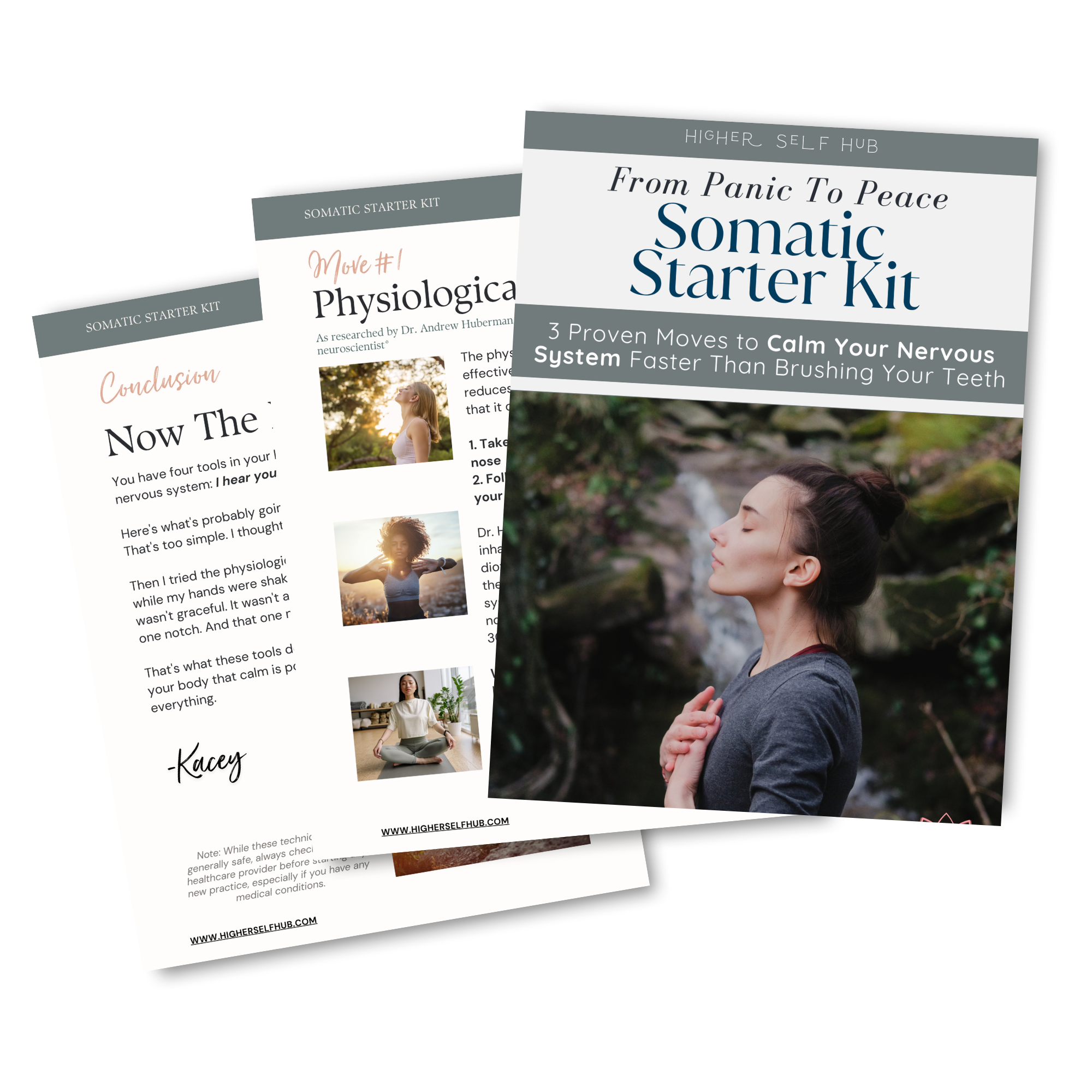
Your Free Somatic Starter Kit
3 science-backed tools to go from panic to peace in under 60 seconds.
Your inbox stays calm, too. Unsubscribe anytime. We respect your privacy.
Sometimes, the best gift to your future self is having a plan for when clear thinking fails.
Remember: every step forward, even the wobbly ones, is still a step forward.