

The Best Anxiety Tool Isn’t Breathing – It’s This 50-Year-Old Puzzle
What if the best anxiety tool you could carry isn’t an app, a pill, or even a breathing technique?
We’ve all been there. Heart racing in a waiting room. Palms sweating before a doctor’s appointment.
Everyone tells you to ‘just breathe,’ but when you’re already spiraling, that advice feels impossible.
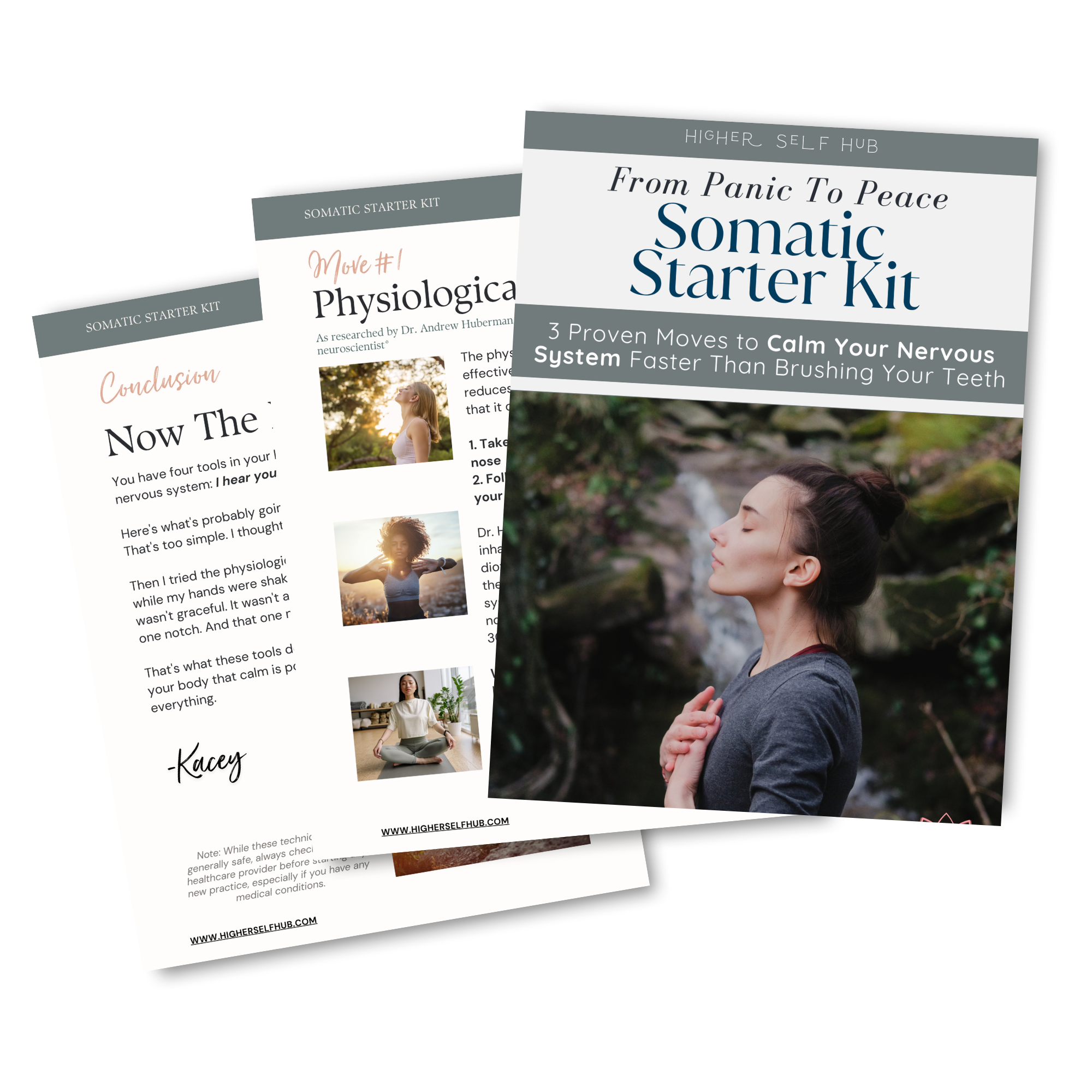
Your Free Somatic Starter Kit
3 science-backed tools to go from panic to peace in under 60 seconds.
Your inbox stays calm, too. Unsubscribe anytime. We respect your privacy.
Heads up: Some links in this post may be affiliate links, which means I may earn a small commission if you choose to purchase, at no extra cost to you. I only share what I love.
Why “Just Breathe” Sometimes Backfires
It’s like when someone says “Don’t think of a pink elephant.” Your mind instantly pictures that pink elephant.
When you’re thinking “Just breathe calmly,” your mind goes to the opposite. “Oh shoot, I’m NOT calm.”
Breathing techniques work, don’t get me wrong. But they can be hard when you’re already spiraling.
That’s where I discovered something totally different. Something that works like a shortcut.

The Accidental Discovery That Changed Everything
I started following a somatic practitioner after seeing her Instagram reel, which gave me a game-changing coping technique. She said if you’re feeling dysregulated, try something super simple. Toss a ball back and forth from one hand to the other.
I was about to go into a doctor’s visit that had me anxious. On my way out, I grabbed one of my kids’ bean bags.
Waiting is always the most challenging part for me. So I pulled that bean bag out of my purse and started tossing it back and forth.
It wasn’t magic. But it was working! It took the edge off enough that I could sit through the whole appointment.
This simple trick opened my eyes to how physical coping mechanisms could work better than just trying to think my way out of anxiety.

The Science Behind Why This Works
When you use both hands like this, something cool happens in your brain. You’re activating what scientists call “bilateral stimulation.”
This is the same principle used in EMDR therapy and why fidget toys work for many people. It helps your amygdala calm down and your prefrontal cortex – the thinking part of your brain – come back online.
Here’s what’s happening:
- Your left and right brain hemispheres start talking to each other again
- Your nervous system begins to regulate
- Your fight-or-flight response calms down
How I Found the Most Effective Anxiety Tool
Then I connected some dots. EMDR works through bilateral movement. Fidget toys and other tangible objects help with grounding. Even doing math problems can pull you out of overthinking.
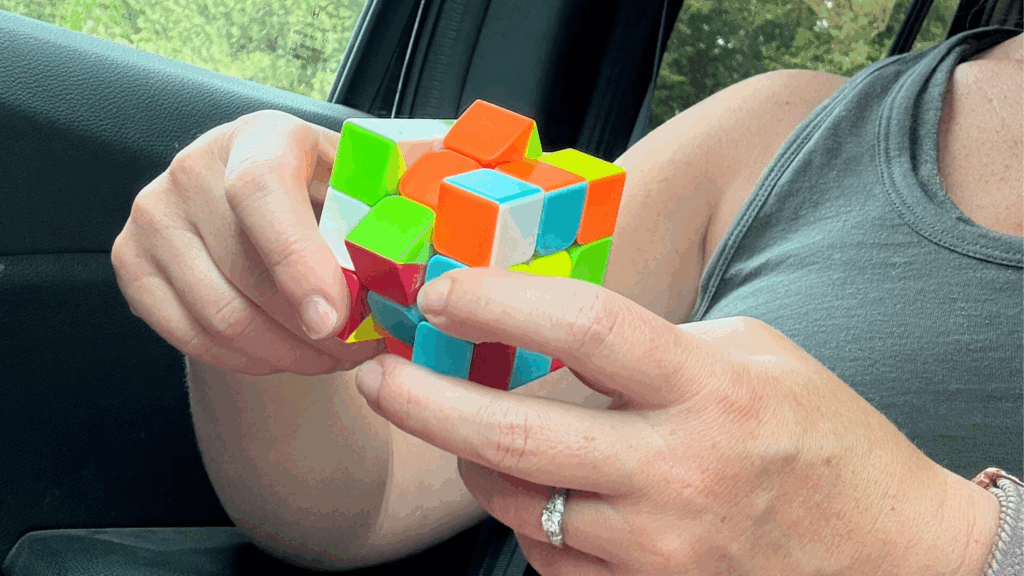
So next time I had an anxious car ride, I grabbed my Rubik’s cube.
Bingo. This little puzzle checked all the boxes and quickly became my best anxiety tool:
- Bilateral brain engagement – Both hands working together
- Tactile grounding – Something physical to focus on
- Mental engagement – Your brain has to problem-solve
- Portable – Fits right in your purse or car


Why Puzzles Beat Breathwork (Sometimes)
Learning to solve the cube kept me engaged for hours. Which meant I wasn’t focused on my anxiety. Big win.
The beauty of puzzles is they get your mind off anxiety completely. You’re not fighting your thoughts. You’re just playing to solve.
It’s like giving your anxious brain a different job to do.
My Real-World Testing Ground
Now I almost always have a cube in my purse and one in my car.
Anxious waiting in a drive-through? Start solving the cube.
Waiting room jitters? Cube time.
Social anxiety at a coffee shop? Perfect cube moment.
Here’s what I discovered: People aren’t offended that I’m solving a cube. They’re actually curious. It becomes a conversation starter, which helps with social anxiety too.
The Bottom Line: Is This Really the Best Anxiety Tool?
You don’t need to become a speed-cuber. You just need to learn the basic solve.
This isn’t just another coping strategy – it’s one of the most practical tips to calm panic attack episodes I’ve found.
I watched some YouTube videos to get started. The learning process itself was therapeutic – it kept my brain busy in the best way.
“Sometimes the most profound solutions are the simplest ones.”
Getting Started
If you want to try this, start simple:
- Get a basic Rubik’s cube (they’re like $10)
- Learn one method from YouTube
- Keep it somewhere you’ll actually use it
It’s one of the most portable calming techniques you can carry.
Remember, this isn’t about replacing breathing techniques entirely. It’s about having another tool in your toolkit.
Sometimes when “just breathe” isn’t cutting it, you need something that gives your hands and brain a job to do.
That 50-year-old puzzle might just be the best anxiety tool you never knew you needed.
Want More Science-Backed Anxiety Tools?
The Rubik’s cube works great – but what about when you don’t have it with you?
Get my FREE Somatic Starter Kit: 3 Proven Moves to Calm Your Nervous System Faster Than Brushing Your Teeth
Your Free Somatic Starter Kit
3 science-backed tools to go from panic to peace in under 60 seconds.
Your inbox stays calm, too. Unsubscribe anytime. We respect your privacy.






Ah, good idea. Those little popper fidget toys don’t do much for me.