
What are Somatic Exercises and Why Do They Work For Emotional Release?
Look, I know you’re not new to wellness advice. Pinterest and Instagram are flooded with tips for nervous system healing & somatic exercises. It’s easy to get lost in the feed and lose track of what actually works for emotional release.
Next thing you know, you’re too overwhelmed to try anything. Or worse, you’re trying another meditation suggestion that leaves you feeling more disconnected than before.
Don’t worry, that’s what this article is for.
Throughout this post, I’ll explain somatic exercises and why you need to know all about them. You can finally release the emotional weight you’ve been carrying in your body. More importantly, I’m going to show you why these practices succeed where traditional “just think positive” advice fails.
What Are Somatic Exercises?
At its most basic, somatic exercises are gentle, body-based movements. They help you reconnect with physical sensations and release stored stress and trauma from your nervous system. Think of them as a conversation with your body rather than a workout for it.
How does it actually work, though? Somatic exercises work through interoception (your body’s internal awareness) to complete stuck stress cycles. These exercises help shift your nervous system from survival mode into a regulated state.
If you like to get nerdy about these things, check out my reviews of the 8 Best Somatic Healing Books for 2025.
Unlike traditional exercise that focuses on external goals, these practices prioritize how you feel inside your body.
The good news? If you’re new to this, it’s easier to practice and master than you think. Your body already knows how to do this. We’re just helping it remember.
Curious about going deeper? I’ve created a complete toolkit to help simplify somatics for you so you can you break the burnout cycle. Check out Hope In Your Pocket.

Why Should You Care About Somatic Exercises?
You know your body best, but let me give you explain how nervous system regulation can benefit you.
Somatic exercises are important because:
Reason #1: They actually work for reducing cortisol levels when you’re stuck in survival mode.
Traditional talk therapy addresses your thoughts. These practices help your body physically complete the stress response it’s been trapped in. Research shows that somatic practices can lower cortisol and shift your hormonal balance. It can do this in ways that thinking your way through problems simply cannot.
Reason #2: They’re accessible when everything else feels too hard.
When you’re burnt out, the last thing you need is another complicated wellness routine. These exercises meet you where you are. Maybe that’s lying in bed, sitting at your desk, or standing in your kitchen between tasks. You don’t need special equipment, a gym membership, or even the energy to leave your house.
Reason #3: They honor your lived experience instead of dismissing it.
Traditional wellness culture often tells overwhelmed women to “just relax” or “practice self-care.” This doesn’t acknowledge the real nervous system dysregulation underneath. Somatic practices work with your body’s wisdom rather than fighting against it. This is where it becomes particularly powerful for hormone health and emotional regulation.
Reason #4: They provide emotional release without re-traumatization.
Unlike some therapeutic approaches that require you to verbally process trauma, somatic exercises allow your body to release what it’s been holding without forcing you to relive painful memories. This makes them safer for many people, especially those with complex trauma histories.
Important: Don’t think that just because you’ve tried yoga or meditation before, you’ve experienced true somatic work.
The truth is, most mainstream yoga classes focus on achievement and appearance rather than internal sensation and nervous system regulation. What I’m talking about here goes deeper. It’s about befriending your body, not conquering it.
Body Based Emotion Relief in Context
How do these practices affect your daily life? It’s just as important as understanding what exactly somatic exercises are and why they’re essential.
Let me give you a real-world example:
Picture this: It’s 3 PM. You’ve been touched out all day, the mental load is crushing, and you can feel your chest tightening with that familiar anxiety. Your mind is racing with the dinner-bath-bed routine ahead, plus the seventeen things you forgot to do this morning. Instead of pushing through or collapsing into doom-scrolling, you take two minutes for diaphragmatic breathing and body scanning.
Within moments, you notice your shoulders have been up by your ears for hours. As you bring awareness to this tension without judgment, something shifts. The tightness begins to soften. You’re still exhausted, but you’re no longer trapped in that suffocating spiral of overwhelm. This is somatic work in action. Not fixing everything, but creating just enough space to breathe.
This kind of practice becomes especially powerful when you integrate it throughout your day. Maybe you do a quick body scan before meals, use diaphragmatic breathing during the bedtime routine, or practice therapeutic yoga stretches while your coffee brews. These micro-moments of somatic awareness compound over time, gradually shifting your baseline nervous system state from survival to regulation.
Check Out: My fellow nervous system nerd, Deb Dana, is a brilliant example of somatic principles in action. Her work on Polyvagal Theory beautifully explains why these body-based practices create such profound shifts in our emotional experience.

7 Tips for Getting Started with Somatic Exercises
Raise your hand if you’re still feeling lost or think you can’t apply this. Be honest! 🙋♀️
That’s no problem; here are some practical tips to help you begin this journey:
Tip #1: Start with what feels safest
Some of the best somatic exercises for beginners include gentle body scanning while lying down, slow therapeutic yoga stretches, or simple diaphragmatic breathing. You don’t need to jump into intense practices right away. In fact, going slow is actually more effective because it allows your nervous system to build trust with the process.
My Somatic Starter Kit breaks it down in the simplest terms and exercises to get started.
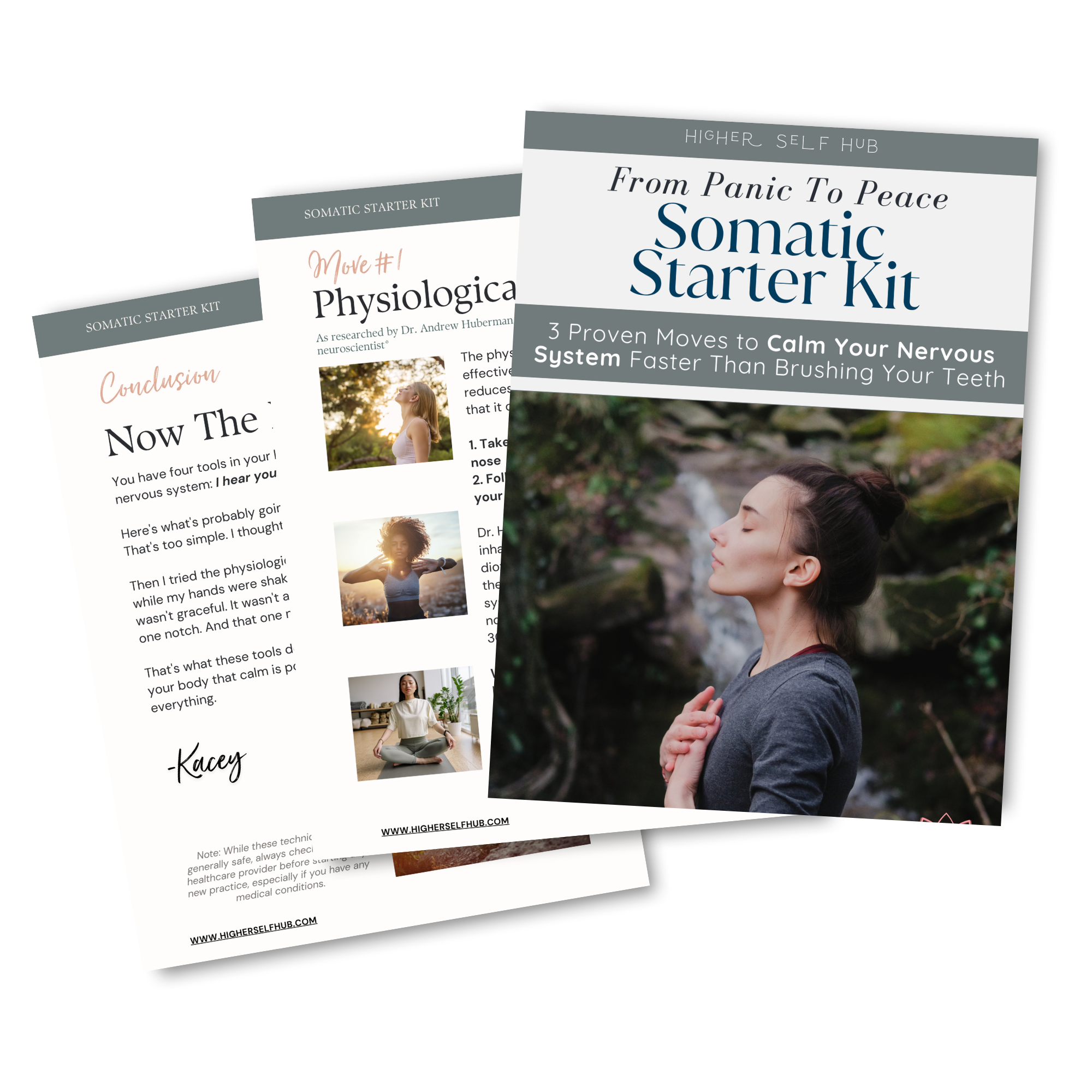
Your Free Somatic Starter Kit
3 science-backed tools to go from panic to peace in under 60 seconds.
Your inbox stays calm, too. Unsubscribe anytime. We respect your privacy.
Tip #2: Remember that emotional release can look different than you expect
Sometimes it shows up as tears, but other times it might be yawning, sighing, trembling, or even sudden laughter. Your body knows how to discharge stress. These are all signs that your nervous system is completing stuck cycles and moving toward regulation. Don’t judge whatever comes up; simply witness it with curiosity.
Tip #3: Focus on sensation rather than achievement
Unlike traditional exercise where you’re working toward a goal, somatic practices invite you to notice what you feel inside your body. Is there warmth? Tingling? Heaviness? Spaciousness? This shift from doing to sensing is what makes these exercises so powerful for cortisol reduction and hormone health.
Tip #4: Practice when you’re NOT in crisis first
While these tools absolutely help during overwhelm, they help more when you’re calm. You’re building your capacity so that you don’t reach a crisis as often. Think of it as nervous system strength training. You’re teaching your body new patterns during windows of regulation, so they become available during dysregulation.

Tip #5: Let go of “doing it right”
There’s no perfect way to practice somatic exercises. Your body’s response is the guide, not some external standard. If something doesn’t feel good or accessible, modify it or skip it entirely. This is about befriending your body, not forcing it into submission.
Tip #6: Track subtle shifts rather than dramatic transformations
Perhaps you notice you’re slightly less reactive to your toddler’s meltdown. Maybe you sleep 15 minutes longer. These small changes are actually huge wins in nervous system regulation, even though our culture trains us to dismiss anything that isn’t a complete overnight transformation.
Tip #7: Ready to go beyond the basics?
Hope In Your Pocket is my intro to nervous system regulation toolkit. It’s designed specifically for overwhelmed women who are done with surface-level solutions. Inside, you’ll find guided somatic practices, emotional release techniques, and real life tools to take on the go. Grab it at higherselfhub.com/hope.
For an in-depth look at how somatic practices helped me break free from servere agoraphobia and panic, read this blog.

How To Apply This To Your Life & Body
Let’s wrap this up, shall we? The key takeaways to remember from this post are that somatic exercises offer a body-based path to emotional release. They work with your nervous system rather than against it, especially when traditional wellness advice has failed you.
At Higher Self Hub, I make it my mission to provide overwhelmed women with practical, trauma-informed tools for nervous system regulation. I’m here to honor your lived experience and meet you exactly where you are.
If you want a simple place to start, the Somatic Starter Kit is free and walks you through the foundational practices I come back to over and over. No fluff, just the basics that actually work when your body feels stuck.
Oh, and come say hi on Instagram and join our community of women who are done with toxic positivity and ready for real, body-based healing!
Your Free Somatic Starter Kit
3 science-backed tools to go from panic to peace in under 60 seconds.
Your inbox stays calm, too. Unsubscribe anytime. We respect your privacy.