

Somatic Spotlight: Meet The Top Experts In Somatic Healing
You’re sitting in a therapist’s office for the third time this month, talking about the same thing you talked about last time. The timer goes off. The session ends. And you walk out feeling like you just ripped open a wound with no one to stitch it back up.
That was me for years.
I spent a long time trying to talk my way through trauma. Through childhood stuff I’d buried, through a brain injury that rewired how I process everything, through panic attacks that made leaving the house feel impossible. Talk therapy helped me understand what happened. But understanding didn’t stop my body from reacting like it was still happening.
Somatic healing is an approach to recovery that works through the body rather than the mind. Instead of talking through your trauma, you learn to notice, move through, and release what your body has been holding.
That shift changed everything for me. Not because the pain disappeared overnight, but because for the first time, I had tools my body could actually feel working.
The people behind that shift? They’re not wellness influencers or Instagram gurus. They’re researchers, therapists, and practitioners who’ve spent decades studying how the body holds and heals from trauma. If you’ve ever wondered where somatic healing actually comes from (and why it works), these are the names worth knowing.
Who Are the Pioneers of Somatic Healing?
Somatic healing didn’t appear out of thin air. It was built by people who noticed something the rest of the medical world overlooked: your body keeps a record of everything you’ve been through. It doesn’t let go just because your mind decides to move on.

Here are the practitioners and researchers whose work shaped how we understand body-based healing today. Not as a trend. As a practice grounded in decades of clinical research.
Peter Levine and Somatic Experiencing
Peter Levine is the creator of Somatic Experiencing (SE), a therapy approach built on one key idea: trauma gets stuck in the body, and the body needs to complete its natural response to release it.
Think about what happens when you’re startled. Your body tenses, your breath catches, your heart races. In most cases, that energy resolves on its own. You shake it off. But when a stressful event is too overwhelming or too ongoing, that energy doesn’t fully discharge. It stays. And your nervous system keeps acting like the threat is still here.
A 2014 randomized controlled trial found that somatic experiencing significantly reduced PTSD symptoms compared to those who received no treatment (Journal of Traumatic Stress). Levine’s work showed that you don’t have to relive the memory to heal from it. Your body just needs help finishing what it started.
If you’re curious about what somatic work actually looks like in practice, this beginner’s guide to somatic exercises is a good place to start.
Stephen Porges and Polyvagal Theory
Stephen Porges changed the conversation about trauma by introducing Polyvagal Theory, a framework for understanding how your nervous system decides whether you’re safe or in danger.
Here’s the short version: your autonomic nervous system processes stress signals in as little as 80 milliseconds (Porges, Polyvagal Theory). That’s faster than conscious thought. So when your body goes into fight, flight, or freeze, it’s not because you chose it. Your nervous system made that call before your brain even had a chance to weigh in.
This is why “just calm down” doesn’t work. Your thinking brain isn’t running the show in those moments. Your vagus nerve is. Research shows the vagus nerve controls up to 75% of your parasympathetic nervous system’s function (Cleveland Clinic), the system responsible for rest, digestion, and feeling safe.
Understanding polyvagal theory was a turning point for me. When I learned that my body’s reactions weren’t weakness or failure, that they were protective responses, everything shifted. I stopped fighting my nervous system and started working with it. Instead of asking “what’s wrong with me?” I started asking, “how can I bring more connection to this moment?”
If you want to learn more about how your nervous system works and what regulation actually looks like in daily life, that’s a good next step.
While you’re learning from the experts, my free Somatic Starter Kit gives you exercises you can practice tonight.
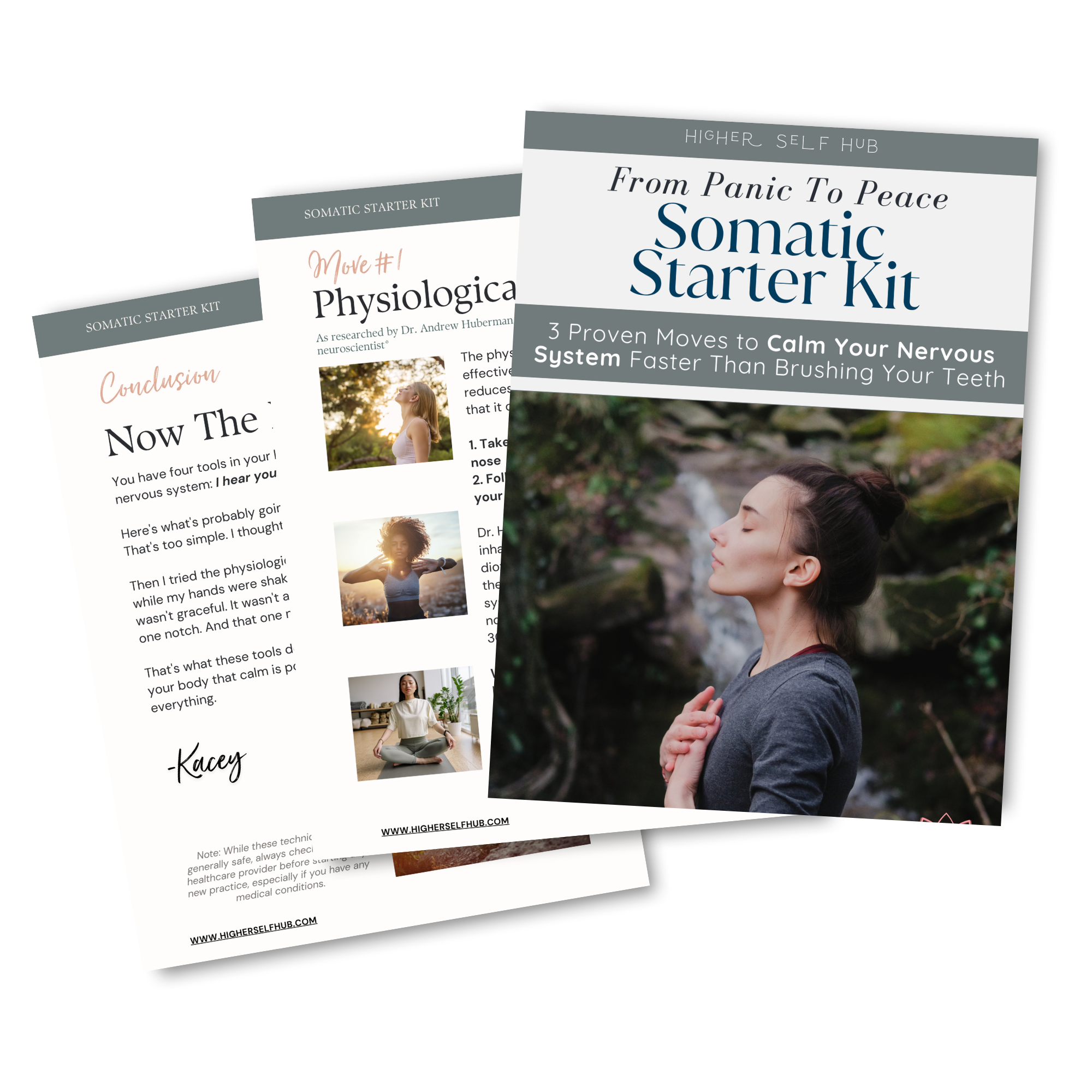
Your Free Somatic Starter Kit
3 science-backed tools to go from panic to peace in under 60 seconds.
Your inbox stays calm, too. Unsubscribe anytime. We respect your privacy.
Bessel van der Kolk and The Body Keeps the Score
Bessel van der Kolk brought one idea into the mainstream that changed how millions of people think about trauma: your body remembers what your mind tries to forget.
His research showed that trauma doesn’t just live in your memories. It shows up as chronic tension, unexplained pain, digestive issues, skin flare-ups, and that constant hum of something being wrong even when nothing visible is happening. Those physical symptoms aren’t separate from the emotional wound. They are the wound, stored in tissue and nervous system patterns.
This is what I found through my own experience. I didn’t realize there were held-on emotions until I was nearly 40. I was talking to a therapist and explained what had happened in my childhood. She said: that’s not normal. I had always just laughed it off. Once I started learning somatic work and understanding the nervous system, I realized that those unexplained body sensations (itchy skin, rashes, hypersensitivity to light) often tie back to unprocessed emotions.

Van der Kolk gave language to something many of us had been living with but couldn’t explain. His book became one of the most recommended reads in somatic healing for good reason. If you want to explore the research that shaped this field, these 8 books on somatic healing are worth keeping on your shelf.
For a deeper look at where your body might be holding onto emotions, body mapping is one practice that can help you start noticing those patterns.
Somatic healing starts with understanding what your body has been trying to tell you. If you want a simple place to begin, the free Somatic Starter Kit walks you through the basics of working with your nervous system instead of against it: Download the Somatic Starter Kit
Pat Ogden and Sensorimotor Psychotherapy
Pat Ogden developed Sensorimotor Psychotherapy, which bridges the gap between traditional talk therapy and body-based healing. Her approach recognizes something most therapy models miss: your body has its own intelligence, and it needs to be part of the conversation.
In traditional therapy, you talk about what happened. In sensorimotor psychotherapy, you pay attention to what your body is doing while you talk about it. The tension in your shoulders. How your breath gets shallow. The impulse to cross your arms or look away. Those physical responses carry information that words alone can’t capture.
Ogden’s work validated what so many women already feel but don’t have the vocabulary for: my body knows something my mind hasn’t caught up to yet. If that resonates, somatic journaling is one way to start listening to what your body has been trying to say.
Moshe Feldenkrais and Movement as Awareness
Moshe Feldenkrais took a different path. While other pioneers focused on trauma, Feldenkrais focused on movement. Specifically, on how becoming aware of your habitual movement patterns could change the way you feel in your body.
The Feldenkrais Method uses gentle, mindful movements to increase body awareness. It’s not about stretching harder or building strength. It’s about noticing how you move, where you hold tension without realizing it, and what changes when you pay attention.
For someone who lives in a body that feels tense, guarded, or disconnected, this kind of awareness can be quietly life-changing. It’s not dramatic. Not emotional. Just you, noticing that you’ve been clenching your jaw for the last three hours. And learning how to let it go.
If movement-based approaches feel like a good fit, these somatic exercises for emotional release explain why gentle movement often does more than pushing through an intense workout.
What Somatic Healing Means for You
You don’t need to study every one of these experts to benefit from their work. What matters is the thread that runs through all of them: your body holds what your mind can’t process, and body-based tools can help you release it.
That’s the foundation of everything we create at Higher Self Hub.
The Undercover Calm Method is a collection of 12 somatic grounding techniques specifically designed to be done anywhere. At your desk, in a meeting, in the school pickup line. Without anyone noticing. It was built on the same principles Levine, Porges, and Ogden spent decades researching. Just simplified into tools you can actually use on a Tuesday afternoon when your hands are shaking and your kids need snacks.
The Body Map Practice takes van der Kolk’s insight that the body keeps the score and turns it into something you can hold in your hands. It’s a systematic approach to discovering where your body holds emotions, what those sensations might mean, and what to do with that information.
These aren’t replacements for professional therapy. They’re the pieces that fit into the gaps therapy leaves. The tools you reach for between sessions, or instead of sessions, or long after they’ve ended.
Where to Start with Somatic Healing
If you’re reading this at 10pm with the house finally quiet, wondering where to even begin, here’s what I’d suggest:
Start with one thing. Not all five experts. Not a certification program. No 90-day protocol. Just one small tool that you try once, in your actual life, on an actual hard day.
A few places to begin:
- Body scanning: how to know if it can help you
- 11 things you need to know about somatic healing
- How to heal yourself with somatic awareness
Your body isn’t broken. It’s been doing its best with what it had. These experts spent their careers proving that healing doesn’t require you to relive every hard thing that happened. It just requires learning to listen to what your body has been holding, and giving it permission to let go. Not all at once. Not on a timeline. On your terms.
📌 Save This For Later
If this post helped you understand where somatic healing actually comes from, save it for later. Pinterest is a great place to keep things like this close for when you need them.

Download the Somatic Starter Kit
You don’t have to figure out somatic healing alone. The free Somatic Starter Kit gives you a simple starting point for working with your nervous system instead of against it. No jargon. No overwhelm. Just the basics, explained the way they should be: Download the Somatic Starter Kit
Related Posts
- What Are Somatic Exercises and Why Do They Work?
- Somatic Journaling Simplified: This Is How to Get Started
- 11 Things You Need to Know About Somatic Healing
And if all this has you ready to try somatic work yourself, start with the free Somatic Starter Kit below.
Your Free Somatic Starter Kit
3 science-backed tools to go from panic to peace in under 60 seconds.
Your inbox stays calm, too. Unsubscribe anytime. We respect your privacy.