

3 Easy Everyday Practices That Help Regulate Your Nervous System
You watch other moms handle chaos without losing it. They juggle the kids, the schedule, and the home with apparent calm. You wonder what they know that you don’t.
The truth? They’re not more disciplined. They’re not trying harder. Most people who feel more regulated are leaning on a few small practices that help their nervous system feel safe more often.
The Real Reason Calm People Stay Calm
If you have ever looked at someone who seems calm and steady and wondered how they do it, you are not alone.
It can feel like they have figured something out that you have not. In reality, most people who feel more regulated are not doing anything complicated. They are usually leaning on a few small, supportive practices that help their nervous system feel safe more often.
Why Habit Advice Backfires When You’re Already Overwhelmed
That said, if the word “habits” makes your shoulders tense, that makes sense. A lot of habit advice feels rigid and demanding, especially when your nervous system is already tired.
So let’s take the pressure off.
What Doesn’t Work vs What Actually Helps Your Nervous System
Before we get to the practices, let’s talk about what doesn’t work:
Morning routines that take an hour when you barely have 10 minutes. Your nervous system just feels more behind.
Meditation apps that make you feel guilty every time you skip a day. More shame doesn’t create more safety.
Rigid schedules that ignore your actual capacity. Following someone else’s routine when your body is already maxed out just adds pressure.
What Actually Helps:
One tiny predictable moment your body can count on. One protected transition. One second of actually listening. That’s it.
The practices below are not rules to follow or routines to perfect. They are gentle, everyday supports you can return to when you remember. Think small, doable, and human.
If you’re curious why so many regulation cues haven’t worked for you, this free guide explains what’s really going on with your body.
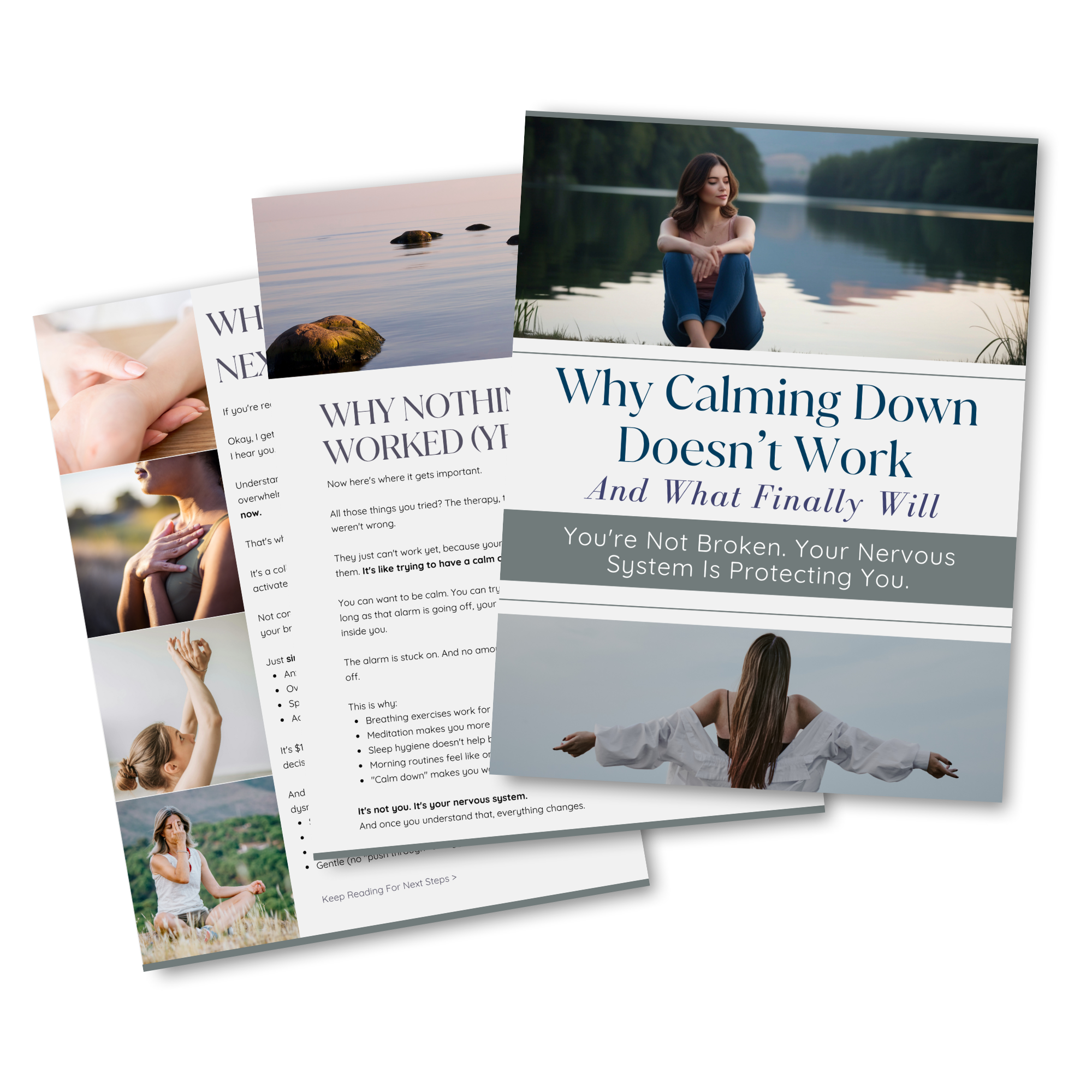
Free Guide: Why Calming Down Doesn’t Work
(And What Finally Will)
You’re Not Broken. Your Body Is Protecting You.
Your inbox stays calm, too. Unsubscribe anytime. We respect your privacy.
Before We Begin
Let go of any expectation of perfection here. You do not need to do all three of these.
Even practicing one of these occasionally can help your nervous system recognize safety more often. Over time, that adds up.
3 Nervous System Practices At a Glance:
- One predictable pause daily
- Protect one transition
- Notice one body signal
Start Here: Which Practice Fits Your Life Right Now?
Not sure which practice to start with?
Feeling constantly rushed → Start with Practice #1 (Predictable Pause)
Can’t turn off at night → Start with Practice #2 (Protected Transition)
Disconnected from your body → Start with Practice #3 (Body Signal)
1. Create One Predictable Pause
One of the simplest ways to support your nervous system is to give it a small moment of predictability.
This does not need to be a long break or a formal practice. It can be as simple as choosing one moment in your day where you pause for a minute or two.
For example:
- sitting on the edge of your bed before starting the day
- taking a few breaths in the car before going inside
- standing at the sink after washing your hands
What matters is not what you do, but that your body begins to recognize this moment as familiar and safe.
This works when:
- You’re a homeschooling mom who never gets a real break
- Your days blur together and you can’t remember the last time you stopped
- You feel like you’re running on fumes by 2pm
[Video: What A Predictable Pause Actually Looks Like]
If you’re wondering what this practice looks like in real life (because “pause” can feel vague), this short video shows you exactly how simple it can be:

Watch how a 60-second pause can look different depending on your day. There’s no right way to do this.
At first, you might forget. That is normal. Over time, your body often starts to expect the pause on its own.
If you like writing things down, this is exactly what the Somatic Journal sample is designed for. It’s one simple page that helps you track what your body feels like before and after these small pauses, so patterns become visible without you having to overthink it. Grab it here (it takes 2 minutes).
The One Transition That Matters Most
2. Protect One Daily Transition
Transitions are often where the nervous system stays activated.
Moving from sleep to waking, from work to home, or from busy time to rest can be jarring for the body. Without support, tension tends to carry over.
Instead of trying to overhaul your day, focus on protecting just one transition.
This might look like:
- dimming the lights in the evening
- changing clothes as soon as you get home
- stepping outside for a moment between tasks
- lowering noise or screens before bed
The goal is not relaxation. The goal is signaling that one phase is ending and another is beginning.
When transitions are supported, the nervous system does not have to stay on high alert as long. Over time, this can reduce the buildup of stress in the body.
This works when:
- You’re still in work mode at bedtime
- You snap at your kids the second you walk in the door
- You can’t shut your brain off even when the day is “done”
Pin this so you can come back when you forget. Even one of these practices, done imperfectly, helps.
How To Tune Into Your Body Without Overthinking It
3. Notice One Body Signal Each Day
Regulation often begins with awareness, not action.
Once a day, try noticing one body signal without fixing it. This could be tension in your neck, shallow breathing, hunger, fatigue, or restlessness.
Simply ask yourself, “What do I notice right now?”
Then stop there.
You do not need to respond perfectly. This is your permission slip to just notice without giving it meaning. Practicing listening to your body is the real skill here.
Writing down one word or short sentence about what you notice can be surprisingly helpful. This is another place where the Somatic Journal sample can offer support, especially if body sensations feel hard to name at first.
Over time, this practice can help you recognize patterns, such as when stress shows up or what helps it ease.
This works when:
- Your body feels numb or disconnected
- You ignore hunger, exhaustion, or tension until you crash
- You have no idea what you actually need in any given moment
A Gentle Wrap-Up
These are not habits you need to master.
They are supports you can come back to when life feels busy or overwhelming.
Your body doesn’t need a perfect routine. It needs one predictable moment it can count on.
Nervous system regulation does not happen because you try harder. It happens because your body feels safe often enough.
Start with one practice. Let it be imperfect. Let it fit your life.
And if you miss a day, nothing is lost. You can always return.
If it helps to have a place to reflect on what your body is responding to, you can explore the Somatic Journal as a gentle companion. Many people use it simply to notice patterns, not to fix themselves.
Your nervous system does not need more pressure. It needs more moments of safety. And those moments can be small.
If this feels different from the usual “just calm down” advice, that’s intentional. There’s a deeper reason why calming doesn’t land when your nervous system feels unsafe. I explain that more fully in a short, free guide if you want to explore it at your own pace.
Free Guide: Why Calming Down Doesn’t Work
(And What Finally Will)
You’re Not Broken. Your Body Is Protecting You.
Your inbox stays calm, too. Unsubscribe anytime. We respect your privacy.