

The Winter Somatic Journaling Prompts You Will Love
I sat on the couch at 3pm on a gray January afternoon, completely frozen.
Christmas decorations half-packed. Kitchen counter a mess. Kids playing in the other room. I knew I should move, but I couldn’t.
Here’s the thing about somatic journaling: we don’t have to label what’s happening as freeze mode, seasonal depression, or ADHD. We just bring our attention to it and write down the feeling. We just name it.
And by naming it, it loses its grip.
I grabbed my journal and listed what I felt: heavy limbs, shallow breathing, cold tightness in my belly, foggy head. The act of writing brought light to these sensations. I recognized the pattern. My nervous system was responding to short days and long darkness. Then I could stand up, walk to the window, and let daylight touch my face for sixty seconds.
This is the power of somatic journaling.
These winter somatic journaling prompts will help you work with your body instead of against it. Your nervous system isn’t broken when it wants to slow down in winter; it’s responding exactly as nature intended.
If you feel like your body is acting against what your mind wants it to do, there’s a reason. This free guide explains the nervous system cure in the simplest terms .
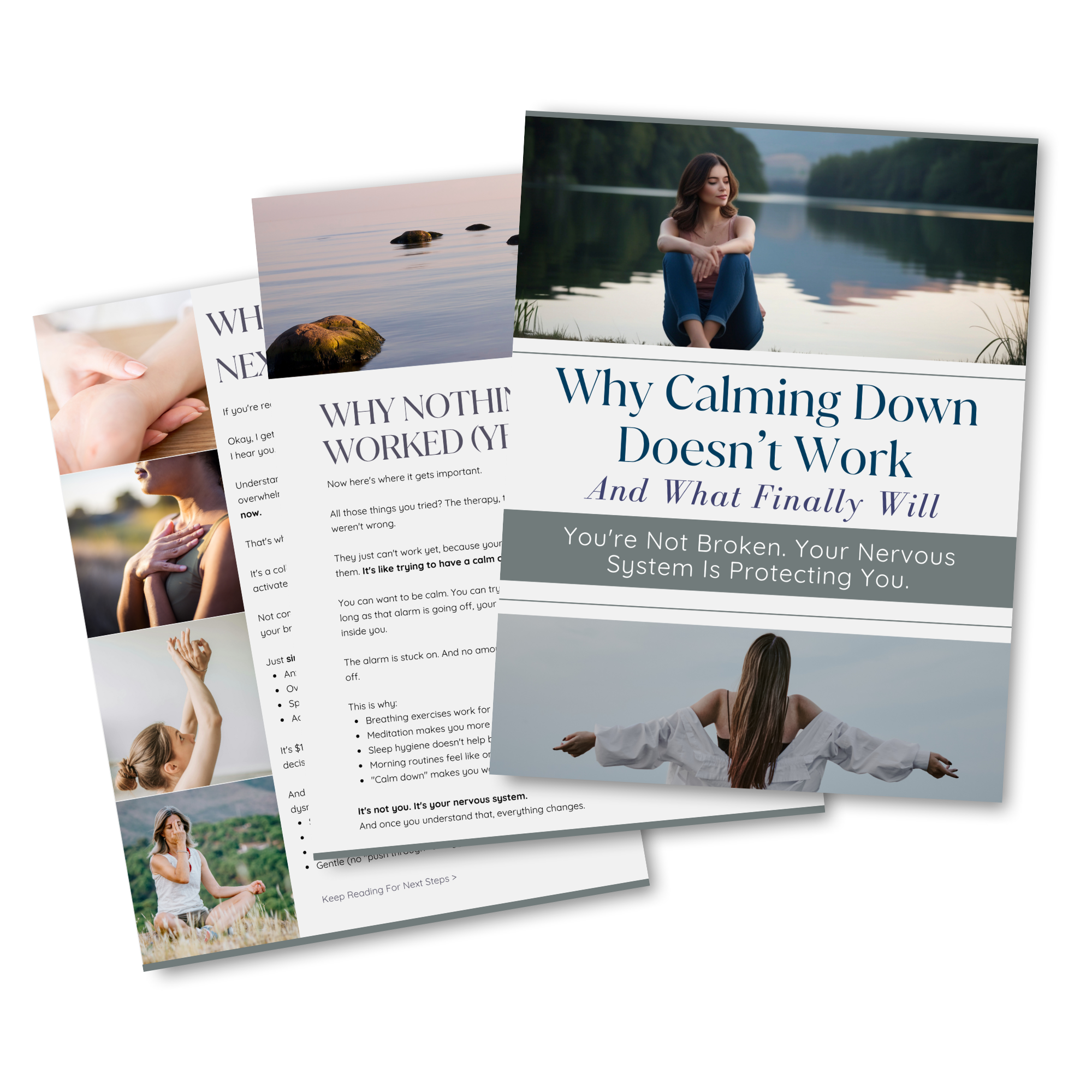
Free Guide: Why Calming Down Doesn’t Work
(And What Finally Will)
You’re Not Broken. Your Body Is Protecting You.
Your inbox stays calm, too. Unsubscribe anytime. We respect your privacy.
Embracing Winter’s Somatic Invitation
Winter’s energy naturally supports introspection, rest, and conservation. Your nervous system is already responding to these seasonal shifts. The key is learning to listen without judgment.
The prompts below helped me understand why I freeze on gray afternoons, why my body craves stillness in January, and why fighting against winter only makes everything harder. They’ll guide you in translating your body’s winter experiences into healing insights and nervous system regulation.

Cold and Contraction
- How does winter cold feel in different parts of your body? Notice where you feel tension, tightness, or protective bracing.
- What does your energy feel like during short winter days versus longer summer ones? Track the sensations of withdrawal or turning inward.
- When you step from indoor heat into winter cold, what happens in your chest, shoulders, and breath?
Stillness and Slowness
- How does your body want to move differently in winter? Notice any urges to curl up, move slowly, or stay small.
- What does walking on frozen ground, crunchy snow, or icy surfaces tell you about grounding and connection?
- How do your muscles and joints feel when you’re wrapped in blankets or bundled against the cold? What emotions arise with these sensations?
Rhythms and Rest
- How does your sleep feel different in winter darkness? What does your body need for deeper hibernation?
- Notice your natural energy peaks and dips during shorter daylight hours. What patterns emerge?
- When you’re inside during winter, what sensations arise in your belly, heart, or throat about rest without productivity?
Sensory Awareness
- How does your skin respond to cold air, dry heat, and layered clothing? What memories or emotions surface with these sensations?
- What happens in your body when you eat warm winter foods? Notice temperature, texture, and comfort.
- How do winter scents (wood smoke, pine, hot drinks) register in your body before your mind labels them?

Boundaries and Retreat
- With more clothing and less exposure, how does your body feel about protection and boundaries?
- What sensations arise when you think about winter social obligations? Notice any tension or softening in your chest or stomach.
- How does quiet feel different in your body during cozy winter moments versus summer silence?
Warmth and Comfort
- When you first wrap yourself in something warm, trace the sensations from your skin inward. What does comfort feel like in your nervous system?
- How does your breathing change when you’re in a heated space versus cold air? Notice the rhythm and depth.
- What happens in your pelvis and lower back when you’re near a fireplace or radiator?
Darkness and Candlelight
- How does winter darkness feel on your body versus bright summer light? What emotions live in these different sensations?
- When you light candles or turn on soft lights, what shifts in your chest, face, and shoulders?
- Notice how your eyes and forehead respond to the predominance of darkness in winter.
Dormancy and Preservation
- What parts of your body feel like they’re “sleeping” or conserving energy during winter months?
- How do your lungs respond to cold, dry air versus warm, humid air? What does each tell you about your needs?
- When you’re inside looking at bare trees and frozen landscapes, what resonates in your own body?
Tension and Release
- What emotions or memories surface when your body tenses against the cold? Notice without judgment.
- How does your body feel before, during, and after warming up from being cold? Track the complete cycle.
- What wants to be released from your body during winter’s natural slowing down process?
Deep Stillness
- When it’s too cold to move freely, what does your body teach you about surrender?
- How do your internal rhythms slow down or change in winter cold?
- What sensations arise when you consciously embrace stillness rather than fighting the urge to hibernate?
That frozen feeling on the couch? That’s your nervous system’s winter response. Instead of forcing yourself to “snap out of it,” what if you wrote down exactly what that stillness feels like in your body?
Sometimes naming the heaviness is what allows movement to return naturally.
Connection and Touch
- How does skin-to-skin contact feel different in winter? What about touch through layers of clothing?
- What happens in your heart space when you share warmth with others, physical or emotional?
- How does your body respond to reduced casual touch in winter? Less handshakes, more distance, bundled greetings?
Morning and Darkness
- When you wake in darkness, what parts of your body “resist” or “accept” the new day first?
- How do winter storms register in your nervous system before, during, and after?
- What does your body know about the approaching end of winter that your mind hasn’t recognized yet?

The Practice: Writing from Body Wisdom
As you explore these somatic journal prompts, remember that somatic journaling isn’t about perfect prose or profound insights. It’s about creating a bridge between your body’s intelligence and your conscious awareness.
When I sat frozen on that couch, I didn’t write “I feel bad” or “I’m being lazy.” I wrote exactly what I felt: heavy limbs, shallow breathing, cold tightness in my belly. That specificity matters. Your body speaks in sensations, not judgments.
Let your sensations guide your words rather than allowing thoughts to lead the way. Trust whatever arises without editing or analyzing in the moment. Sometimes you’ll write three words. Sometimes three pages. Both are perfect.
Set aside time each day to sit with one or two prompts, allowing at least 10-15 minutes for your nervous system to settle and your body’s voice to emerge. You might find that certain sensations carry emotional charge. This is your body’s way of offering healing opportunities. Stay present with these feelings, breathing deeply and allowing them to move through you.
Learning To Love Winter’s Healing Gifts
The pattern I noticed that gray January afternoon? It shows up almost every winter day around 3pm now. The difference is that I recognize it.
I don’t panic when my body gets heavy, nor do I judge myself for wanting to curl up on the couch. I grab my journal, write down what I’m feeling, and let my body tell me what it needs. Sometimes it’s sixty seconds of daylight, sometimes it’s permission to rest. Sometimes it’s just naming the sensation so it stops controlling me.
The insights you gain about your nervous system’s responses to cold, darkness, stillness, and the pull toward rest become valuable information for year-round healing and self-regulation. You’re building a vocabulary of body awareness that will serve your holistic health journey in every season.
Your Nervous System Knows Exactly What It’s Doing
Through this practice with somatic journal prompts, you’re cultivating a deeper relationship with your higher self through body awareness. Each sensation you explore, each pattern you notice, each moment of presence you create contributes to the ongoing process of nervous system regulation and somatic healing.
As winter unfolds around you, remember that your body is your wisest teacher and most trusted guide. That frozen feeling? It’s not failure. It’s information. Write it down. Name it. Let it guide you toward what you actually need instead of what you think you should be doing.
Your nervous system knows exactly what it’s doing. Let it lead you toward greater wholeness, one sensation at a time.
Your nervous system is trying to tell you something. You can learn to listen.
If the calming techniques aren’t working, it’s not because you’re doing it wrong. It’s because most of us were never taught to listen to what our bodies are actually asking for. I created a free guide that explains why and what helped me get off that couch.
Free Guide: Why Calming Down Doesn’t Work
(And What Finally Will)
You’re Not Broken. Your Body Is Protecting You.
Your inbox stays calm, too. Unsubscribe anytime. We respect your privacy.


