

5 Daily Grounding Techniques For Better Nervous System Regulation
You know that feeling when you’re getting by just fine on the surface, but something feels… off? Like you’re running on empty even after a full night’s sleep. Or when you snap at your partner over something tiny and immediately think, “Where did that come from?”
Maybe your mind races at 2 AM when you desperately need sleep. Or you feel this weird, wired energy during the day that coffee can’t fix and rest doesn’t touch.
Welcome to nervous system dysregulation. It’s not in your head—it’s in your body’s stress response system that’s been working overtime.
Why Your Nervous System Gets Stuck
Your nervous system is basically your body’s security guard. It’s constantly scanning for threats and deciding whether you’re safe or need to fight, flee, or freeze.
The problem? Modern life tricks this ancient system into thinking everything is an emergency. Your boss’s email feels the same to your nervous system as a saber-toothed tiger.
When you’re stuck in this state, your body can’t access its natural healing and rest modes. That’s where grounding techniques come in—they’re like a reset button for your overwired system.
Want to dive deeper?
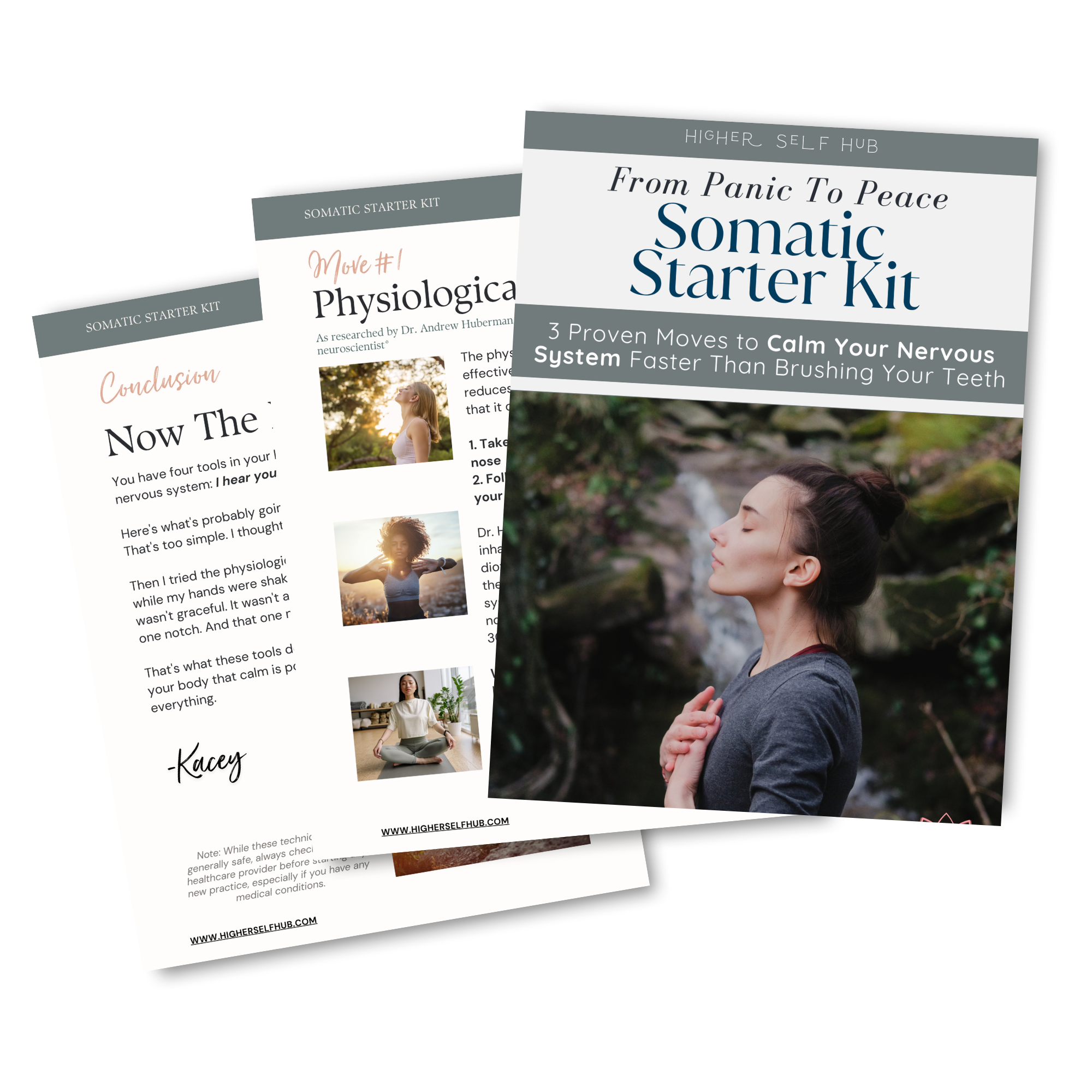
Your Free Somatic Starter Kit
3 science-backed tools to go from panic to peace in under 60 seconds.
Your inbox stays calm, too. Unsubscribe anytime. We respect your privacy.
Signs Your Nervous System Needs Grounding
Physical signals:
- Tight chest or shallow breathing
- Clenched jaw or hunched shoulders
- Digestive issues or headaches
- Restless legs or fidgeting
Emotional red flags:
- Snapping at people you love
- Feeling overwhelmed by normal tasks
- Emotional numbness or feeling “outside yourself”
- Anxiety that seems to come from nowhere
Mental patterns:
- Racing thoughts that won’t slow down
- Inability to focus or make decisions
- Catastrophic thinking spirals
- Mind going blank under pressure
Behavioral changes:
- Procrastinating on things that matter
- Withdrawing from social situations
- Compulsive scrolling or other behaviors
- Sleep issues—either can’t fall asleep or can’t stay asleep
Sound familiar? You’re not broken. Your nervous system just needs some TLC.
How to Recognize When You’re Dysregulated
Your body gives you early warning signals before you hit full overwhelm. Learning to catch these signals is like having a smoke detector for stress.
Maybe your breathing gets shallow first. Or your shoulders creep up toward your ears. Some people notice their thoughts speeding up or their patience wearing thin.
The key is tuning into YOUR patterns. What happens in your body right before you feel “off”?
Once you recognize these early signals, you can use grounding techniques to course-correct before things spiral. Think of it as preventive medicine for your nervous system.

5 Science-Backed Grounding Techniques That Actually Work
1. Humming and Vocal Toning
This might sound weird, but stick with me. Humming is like a massage for your vagus nerve—the main pathway between your brain and body that controls your rest-and-digest response.
The science: When you hum, the vibrations stimulate your vagus nerve, which signals your nervous system to chill out. It also increases nitric oxide production, which helps with heart rate variability and overall calm.
I bring this grounding technique up first because it’s so versatile. Humming in public is a normal activity and doesn’t raise any eyebrows or draw attention to yourself. I hum when I get antsy in checkout lines, out on my walks, and when I’m driving. It’s so easy to work into every day life.
How to do it:
- Find a comfortable position and close your eyes
- Take a deep breath and hum on the exhale
- Try different pitches—find what feels good in your chest
- Continue for 2-3 minutes, or until you feel a shift
You can do this anywhere. In your car before a meeting. In the bathroom at work. Even humming while doing dishes counts.
Humming sounds so simple, but is it? My guide to using humming to disrupt racing thoughts delves deeper, so both your body and mind can trust this grounding technique.
2. Mindful Walking
This isn’t about getting your steps in. It’s about using movement to drop out of your head and into your body.
The science: Walking creates bilateral stimulation—your left and right brain hemispheres start communicating better. It also increases BDNF (brain-derived neurotrophic factor), which helps with emotional regulation, and naturally reduces cortisol.
This last year, I’ve really leaned into walking as my go-to calming practice. I recently did a 1-mile-a-day for 100 days challenge that shifted so much more than I was expecting!
It’s incredible how better I feel with even a five-minute walk to reset. This grounding technique is totally accessible to you in every day life.
How to do it:
- Start with just 5 minutes
- Focus on the sensation of your feet touching the ground
- Notice your breathing rhythm naturally syncing with your steps
- If your mind wanders, gently bring attention back to your feet
Indoor alternative: March in place or walk up and down stairs mindfully. The key is intentional, slow movement.
Wondering why walking is often the best first step for nervous system healing? My story about discovering the walking habit for nervous system regulation explains why this simple practice is so powerful for beginners.
3. The 5-4-3-2-1 Sensory Grounding Technique
This is your emergency brake for overwhelm. It pulls you out of fight-or-flight by engaging your prefrontal cortex—the part of your brain that stays calm under pressure.
The science: When you’re anxious or stressed, your amygdala (fear center) hijacks your brain. By deliberately engaging your senses, you activate your prefrontal cortex, which can override the amygdala’s panic response.
Do you need special time set aside to do this? Nope! Build it into your daily routine. Going for a walk? 5-4-3-2-1 grounding. Putting your kids to bed? This is a great practice to share with them. Sitting in meetings, waiting rooms, and traffic… they’re all perfect moments to try this grounding technique out.
How to do it:
- 5 things you can see: Look around and name them
- 4 things you can touch: Feel textures around you
- 3 things you can hear: Notice sounds in your environment
- 2 things you can smell: Take a moment to really notice
- 1 thing you can taste: Maybe your morning coffee or gum
This works because it’s impossible to be fully present with your senses and stuck in anxious thoughts at the same time.
4. Progressive Muscle Relaxation

Most of us walk around with chronic tension we don’t even realize we’re holding. This technique helps you identify and release that stored stress.
The science: When you deliberately tense and release muscle groups, you activate your parasympathetic nervous system. This triggers the relaxation response and helps lower cortisol levels. It’s also been shown to improve sleep quality and reduce anxiety.
I learned this technique when I was recovering from an MTBI (traumatic brain injury) after getting hit by a car – another story for another time. All that to say, this a technique that has a ton of research to back it and is practiced by the best professionals, even in extreme cases of panic.
How to do it:
- Start with your toes—tense them for 5 seconds, then release
- Work your way up: calves, thighs, glutes, abdomen, hands, arms, shoulders, face
- Notice the contrast between tension and relaxation
- End with a few deep breaths and a full-body scan
Pro tip: Do this in bed for better sleep. Your body will start associating this sequence with rest time.
Feeling frazzled? I’ve got the 7 best body scanning meditations you can try here.
5. Barefoot Earth Connection
This isn’t just hippie nonsense—there’s real science behind connecting with the earth’s energy.
The science: The earth has a natural electrical charge, and direct skin contact allows you to absorb electrons that act as antioxidants. Studies show earthing can reduce inflammation, improve sleep, and help regulate cortisol rhythms.
Now, we all love that feeling of bare feet in the sand or the grass, so practice this as often as you can but don’t feel bad if it doesn’t work like a magic pill. None of these techniques I’ve shared are panaceas for lifestyle change and consistent nervous system support.
To be totally transparent, I tried this technique when I experienced my first full-blown panic attack and was devastated when it didn’t fix everything instantly. Not uncommon. I just needed more understanding at the time, and had to find a way to feel grounded before I could feel totally grounded.
I still use this technique daily, just as a support system and not as crisis intervention.
How to do it:
- Spend 10-20 minutes barefoot on grass, sand, or dirt
- Focus on the sensations in your feet
- Take deep breaths and imagine roots growing from your feet into the earth
- If weather doesn’t allow, try touching a tree with your hands
Winter alternative: Place your hands on a tree trunk or large rock. The key is direct skin contact with something natural.

Making These Techniques Work for You
The magic happens when you use these techniques consistently, not just during crisis moments. Think of them as daily vitamins for your nervous system.
Start with whichever technique feels most doable. Maybe it’s humming in your car or walking mindfully to the mailbox.
Red flag moments to use these:
- Right when you wake up feeling anxious
- Before difficult conversations
- After checking stressful emails
- When you notice that “off” feeling creeping in
Remember: You’re not trying to eliminate stress completely. You’re teaching your nervous system that it’s safe to relax.
Struggling to make these practices stick? My guide to building microhabits for nervous system health shows you how to create lasting change without overwhelming yourself.
When Grounding Techniques Don’t Work
Sometimes these techniques might feel impossible or even make you more anxious. That’s actually information—not failure.
If you feel more agitated, try shorter sessions or gentler techniques. Your nervous system might need to build tolerance gradually.
Some people need to release trapped emotions or trauma before grounding techniques feel accessible. That’s totally normal and might be a sign that working with a somatic practitioner could help.
Your Nervous System Deserves This Care
You don’t have to live with that constant “off” feeling. Your body wants to feel calm, grounded, and at peace—these techniques just help remember how.
Start with one technique today. Notice what happens in your body. Pay attention to the subtle shifts.
Your nervous system has been working overtime to keep you safe. Now it’s time to teach it how to rest.
Ready to dive deeper into nervous system regulation?
Download my free Somatic Starter Kit – everything you need to start feeling more grounded and at peace in your body.
Your Free Somatic Starter Kit
3 science-backed tools to go from panic to peace in under 60 seconds.
Your inbox stays calm, too. Unsubscribe anytime. We respect your privacy.
Need grounding techniques you can do at work without anyone noticing? Our guide to grounding techniques you can do at your desk has 7 stealth-friendly options for meetings, Zoom calls, and everything in between.
Remember: These techniques are tools for self-care, not replacements for professional mental health support. If you’re struggling with trauma, severe anxiety, or depression, please reach out to a qualified practitioner who can provide personalized guidance.