60-Sec Calming Techniques: A Nervous System Reset You Can Use Anywhere
You know the breathing thing. The one where you exhale longer than you inhale. You’ve read about it, saved the post, maybe even tried it once in the car after a brutal morning. It helped, sort of. But the next time your chest tightened at your desk or your jaw locked at 2 AM, you couldn’t remember what to do.
That’s not a willpower problem. That’s what happens when calming techniques haven’t been practiced enough for your nervous system to trust them yet.
Here’s the thing: knowing a tool exists and being able to reach for it mid-spiral are two completely different things. Your brain forgets an exercise after a single try. It needs repetition. It needs to feel the relief enough times that it starts to believe, oh, this actually works. This is safe.
So the problem isn’t that you haven’t found the right calming strategies. The problem is that you haven’t had a simple enough system to practice them consistently. Not a 30-day challenge. Not a morning routine overhaul. Just a few go-to tools, used often enough that your body starts reaching for them on its own.
Stick with me and we’ll get those practices so ingrained they stick. Let’s build a calm toolkit that works in 60 seconds, wherever you are.
Why Calming Techniques Don’t Stick (And What Actually Helps)
Most people try a calming technique once, feel a little better, and then forget about it until the next wave hits. By then, the nervous system is already in survival mode. And a dysregulated brain is terrible at recalling what helped last time.
This isn’t a flaw. It’s neuroscience. When your body shifts into fight-or-flight (or freeze), your prefrontal cortex goes partially offline. That’s the part responsible for planning, decision-making, and yes, remembering which breathing exercise you bookmarked three weeks ago. According to researchers at Harvard Health, a stress response redirects resources away from higher thinking and toward immediate survival.
So it’s not about discipline. It’s about neurological familiarity.
The more your body practices a specific technique in calm moments, the more likely it is to remember that technique in activated moments. Repetition builds a neural shortcut. Over time, your nervous system starts to recognize the tool as safe, and reaching for it becomes almost automatic.
That’s why calming strategies work best when they’re simple, fast, and repeated often (not perfectly). A 60-second technique you use three times a week will do more for your nervous system than a 20-minute meditation you do once a month.
How to Build a Calm Toolkit That Works in 60 Seconds
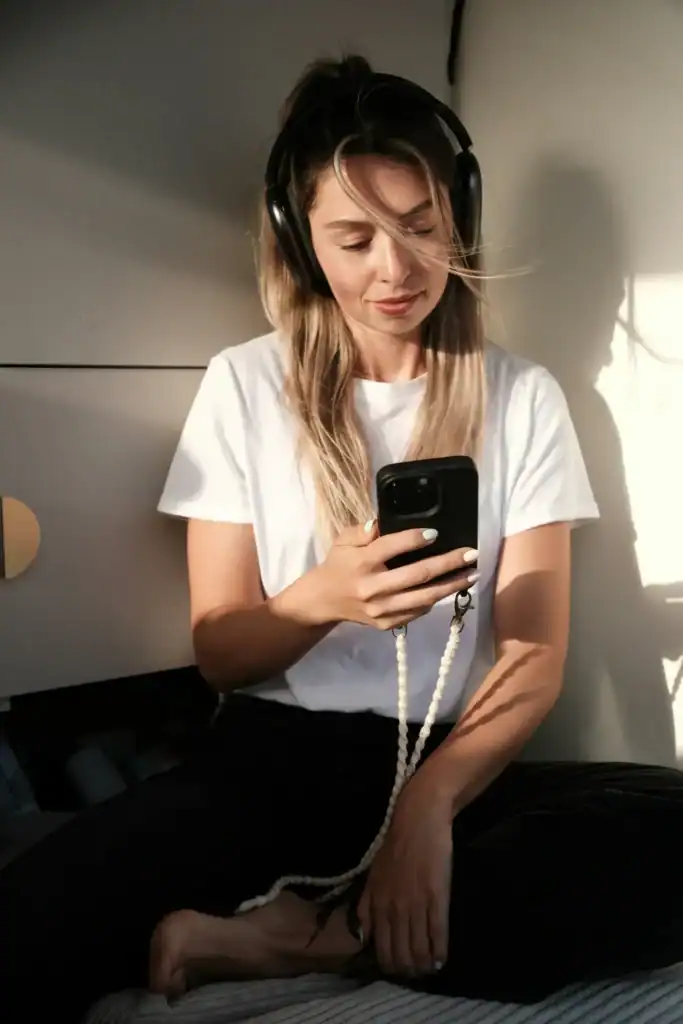
Think of a calm toolkit as your personal collection of 2 to 3 go-to calming techniques. Not a long list. Not a Pinterest board with 47 saved posts. Just a handful of tools you know by heart because you’ve used them enough times.
Here’s the key: your toolkit should include both types of techniques.
Calming techniques are for when you’re wired, on edge, heart racing, jaw clenched, thoughts spiraling. These bring your energy down. Think long exhales, grounding, gentle touch.
Activating techniques are for when you’re frozen, numb, foggy, stuck on the couch, unable to get moving. These bring your energy up. Think tapping, cold sensations, rhythmic movement.
Pick one from each category. That’s it. Practice those two for a week. If one doesn’t click, swap it. There are no wrong answers here, only what your body responds to.
If you’re already familiar with the basics of building nervous system microhabits, this is the next layer. Instead of building one habit, you’re building a flexible toolkit you can pull from depending on what your body needs in the moment.
7 Calming Techniques That Work in 60 Seconds or Less
Each technique below takes under a minute. They’re labeled so you can sort them into your own toolkit based on what you tend to need most.
1. The Physiological Sigh (Calming)

What: Two quick inhales through your nose, then one long exhale through your mouth.
When: Your heart is racing, you feel panicky, or you can’t settle down at night.
Why it works: Research from Stanford University found that this specific breathing pattern activates your parasympathetic nervous system faster than traditional deep breathing. In fact, the double inhale reinflates tiny air sacs in your lungs, which sends an immediate calming signal through your vagus nerve. Three cycles takes about 30 seconds.
2. Extended Exhale Breathing (Calming)

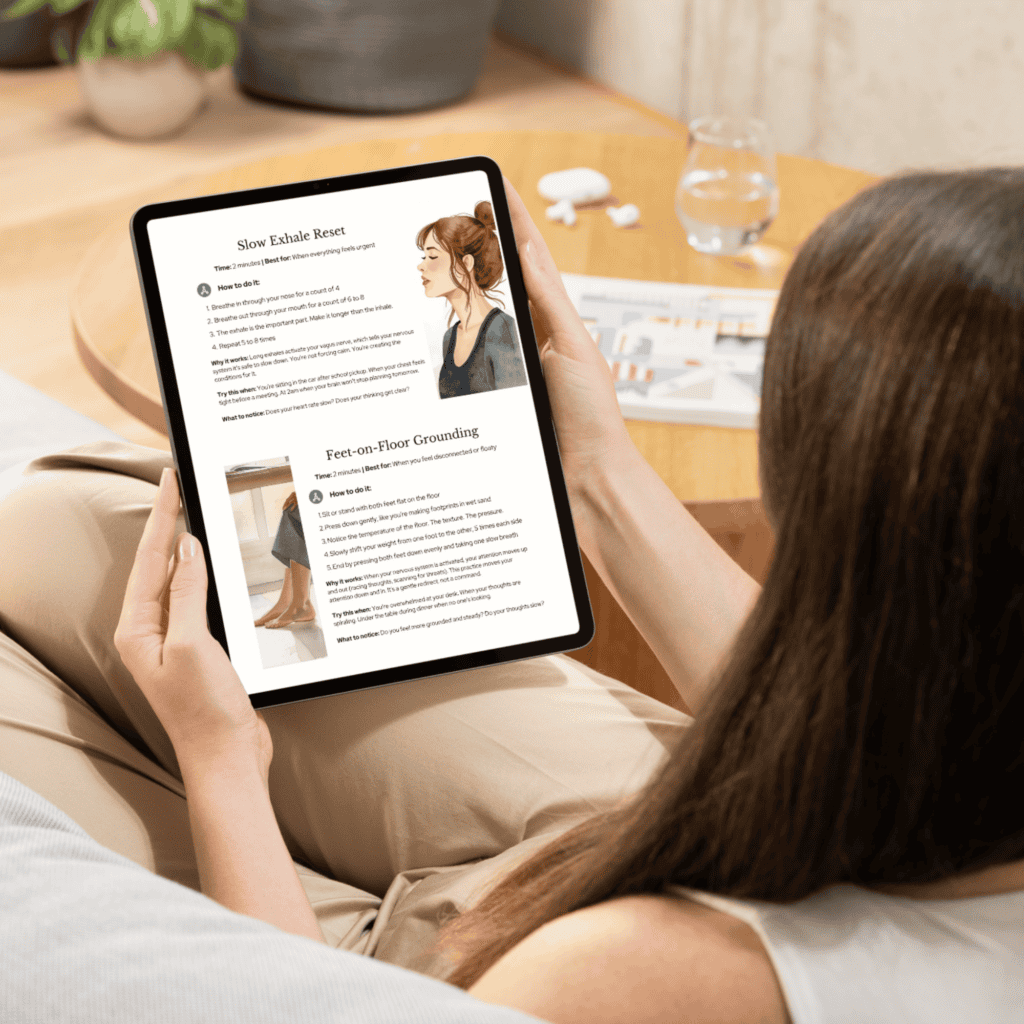
What: Inhale for 4 counts, exhale for 6 to 8 counts. Repeat 4 to 5 times.
When: You’re lying in bed with a racing mind, sitting in traffic, or trying to wind down after an overwhelming day.
Why it works: A longer exhale shifts your nervous system from sympathetic (alert) to parasympathetic (rest). Essentially, you’re telling your body the threat is over. No one around you even has to know you’re doing it.
3. 5-4-3-2-1 Sensory Grounding (Calming)

What: Name 5 things you see, 4 you can touch, 3 you hear, 2 you smell, 1 you taste.
When: You feel disconnected from your body, spacey, or like you’re watching your life from outside yourself.
Why it works: Sensory input pulls your brain out of threat-scanning mode and anchors it in the present moment. It interrupts the loop. Try it at your desk, in a waiting room, or during school pickup when your mind is seven places at once. For more on using grounding at work, check out these desk-friendly grounding techniques.
Free Guide: Why Calming Down Doesn’t Work
(And What Finally Will)
You’re Not Broken. Your Body Is Protecting You.
Your inbox stays calm, too. Unsubscribe anytime. We respect your privacy.
4. Ear Massage (Activating)
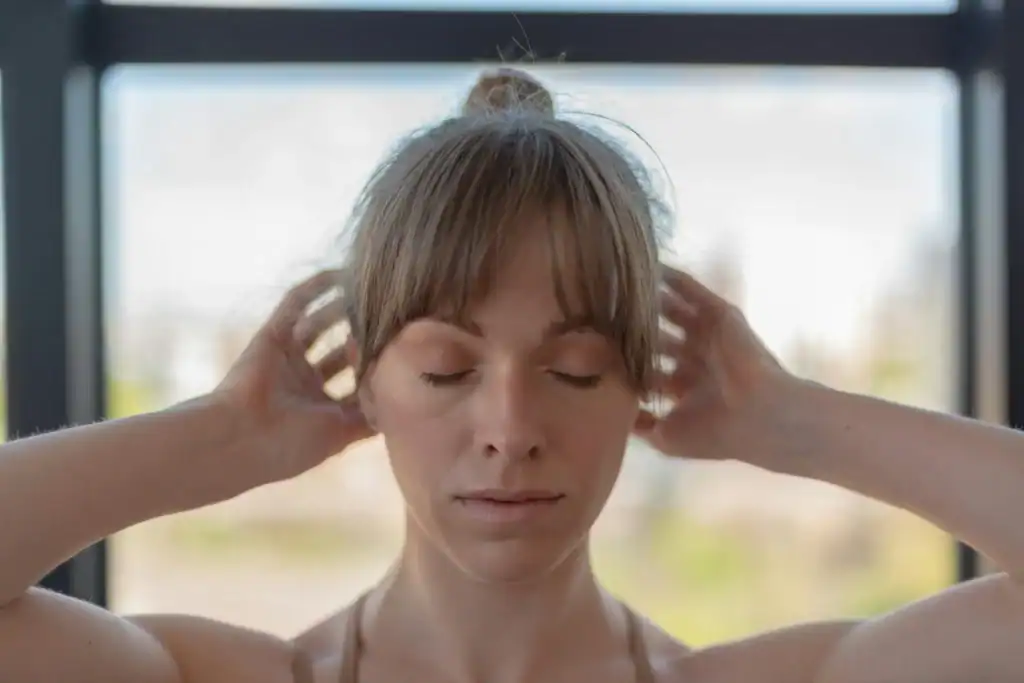
What: Gently rub and tug your outer ears from top to lobe for 30 to 45 seconds.
When: You’re foggy, can’t focus, or feel numb and need to “come back online.”
Why it works: Your ears are lined with vagus nerve branches. Stimulating them sends a gentle wake-up signal through your system without triggering more activation. It looks like you’re just adjusting your earrings or rubbing a headache. On top of that, the rhythmic pressure creates a grounding sensation that helps your brain reconnect to your body.
5. Cold Water Reset (Activating)

What: Run cold water over your wrists for 15 to 30 seconds. Or hold something cold (an ice cube, a chilled water bottle) against the inside of your wrists or the back of your neck.
When: You’re dissociating, shut down, or can’t feel your body.
Why it works: Cold activates the dive reflex, which triggers your vagus nerve and shifts your nervous system state quickly. It’s one of the fastest calming strategies for pulling yourself out of a freeze response. You can do this in any bathroom without drawing attention.
Want to understand more about why traditional “calming down” advice doesn’t always work (and what does)? I break it all down in this free guide: Why Calming Down Doesn’t Work (And What Finally Will).
6. Press Feet Into the Floor (Calming)
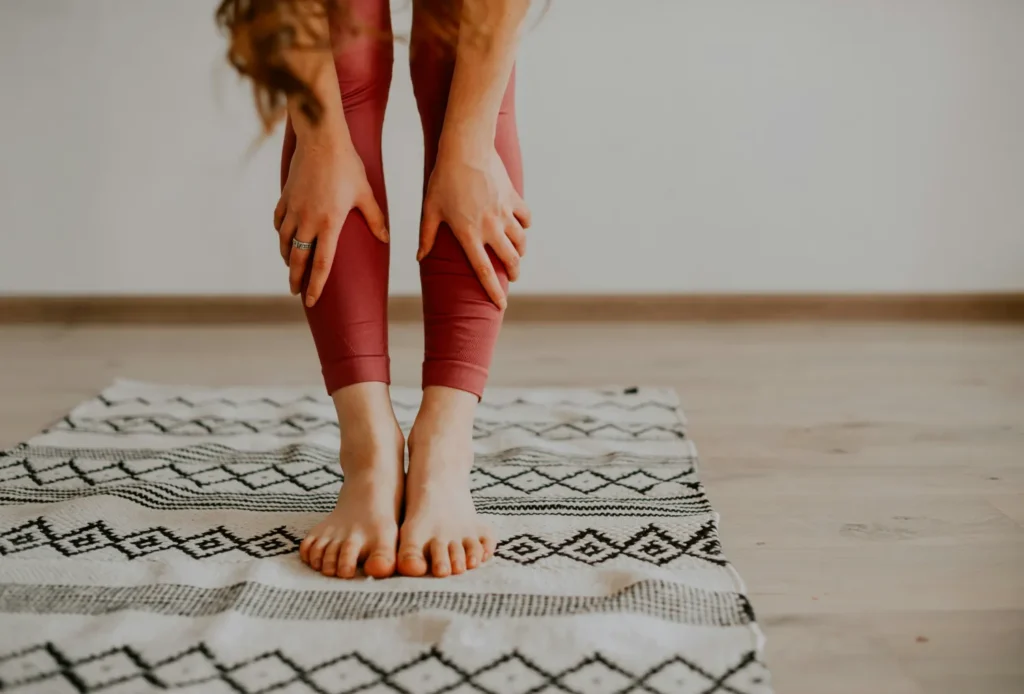
What: Press both feet flat into the ground, hard. Hold for 10 seconds, release, repeat 3 times.
When: You’re in a meeting, at a dinner table, or anywhere you can’t close your eyes and breathe without someone asking if you’re okay.
Why it works: Downward pressure activates your body’s proprioceptive system, which sends safety signals to your brain. It’s the same reason weighted blankets feel calming, just smaller. Also, no one can see you doing it. It’s one of those calming techniques that’s genuinely invisible. That matters when you’re trying to regulate in public.
7. Butterfly Tap (Activating)

What: Cross your arms over your chest, hands resting on opposite shoulders. Alternate tapping left, right, left, right for 30 to 60 seconds.
When: You feel emotionally stuck, heavy, or like you can’t process what just happened.
Why it works: Bilateral stimulation (alternating left-right input) helps your brain process and integrate. It’s used in EMDR therapy, but you don’t need a therapist to tap your own shoulders on the couch. The rhythm is what matters. Even 30 seconds can shift something. Try it under a blanket, in the car, or with your arms tucked under a sweater so it just looks like you’re hugging yourself.
The Micro-Reminder Trick (Why Phone Wallpapers Work for Calming Techniques)
So you’ve picked your 2 to 3 go-to tools. You’ve practiced them a few times. Now comes the part most people skip: the reminder.
Because here’s the truth. When your nervous system is activated, your brain can’t recall what to do. That’s the whole problem. Willpower doesn’t fix it. Having a list in a journal doesn’t fix it (because your journal is in the other room, or you forgot you even wrote it down).
What does work is reducing friction to almost zero.
That’s where phone wallpapers come in. The average person glances at their phone over 96 times a day. What if just one of those glances reminded you of a calming technique that actually works for your body? Not an app to open. Not a notification to swipe away. Just a lock screen that says, exhale longer than you inhale or press your feet into the floor.

It sounds almost too simple. But that’s the point. The best calming strategies are the ones that require the least effort to start. A phone wallpaper skips every barrier: no searching, no remembering, no deciding. You just see it.
Over time, those micro-reminders do something powerful. They keep the technique alive in your memory so that when you actually need it, your body can reach for it without your brain having to go looking.
Your Body Already Knows What to Do
You don’t have to master all seven of these. You don’t have to build the perfect morning routine or commit to a 21-day challenge. You don’t even have to remember everything you just read.
Start with one technique. Whichever one sounded like the least amount of effort. Try it tonight before bed, or tomorrow in the car, or the next time your jaw clenches and you think here we go again.
Then try it again the next day. And the day after that. Not because you’re disciplined, but because your nervous system is starting to learn: this is what we do now. This is safe.
That said, if you want a ready-made toolkit so you don’t have to build one from scratch, that’s exactly what The Undercover Calm Guide was designed for. Twelve calming techniques, sorted by what they do (activating vs. calming), with step-by-step instructions and phone wallpapers so your favorites are one glance away. No app. No routine to remember. Just a lock screen that reminds you what to do when your body forgets.
Ultimately, consistency isn’t about trying harder. It’s about making the right thing easier to reach for. On your terms. At your pace.
Free Guide: Why Calming Down Doesn’t Work
(And What Finally Will)
You’re Not Broken. Your Body Is Protecting You.
Your inbox stays calm, too. Unsubscribe anytime. We respect your privacy.
If this post helped, save it for later as a gentle reminder that your body already knows the way back to calm.
Related posts you might like:
Nervous System Regulation in Real Life: How to Calm Down Without Anyone Noticing
9 Calming Activities That Actually Work When You’re Overwhelmed