Watercolor as Art Therapy for Your Nervous System (Why Something This Simple Actually Works)
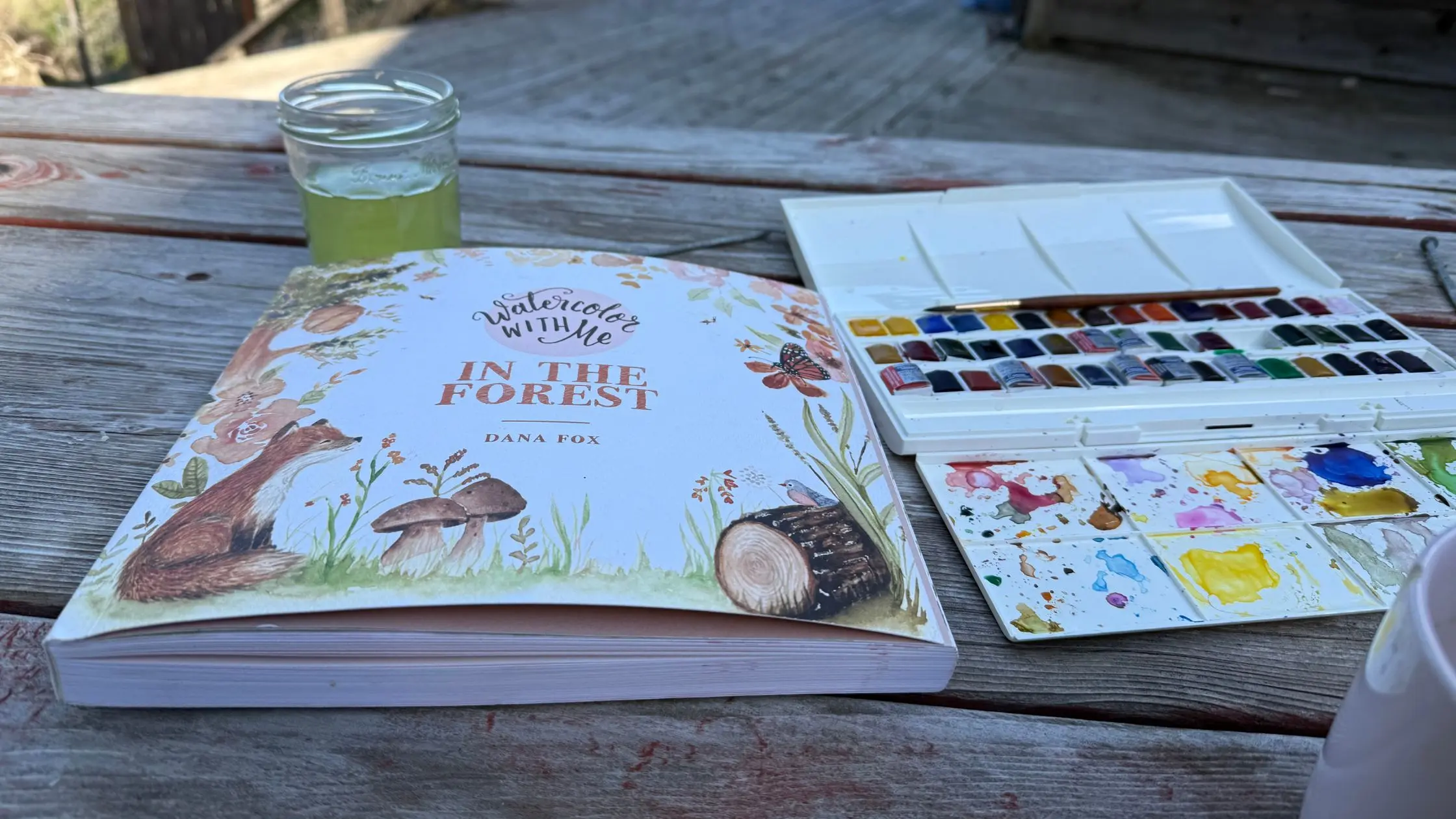
This spring, I’ve been watercoloring on my back deck. The trees in the background and the air smelling like pine and dirt. I sit down, open the book to whichever page I left off on, and just… paint.
No timer. No goal. No screen telling me what to do next.
Just color meeting paper and my hands finally doing something that isn’t productive.
That’s when I noticed it. My whole system downshifted. My shoulders dropped, my jaw unclenched, and my breathing became even.
Not because I was doing a breathing exercise or running through a regulation technique. Because I was painting a little yellow moth in a watercolor book on my porch.
Watercolor as art therapy for your nervous system is exactly what it sounds like: using the slow, sensory act of painting with water and pigment as a way to calm your body, quiet your mind, and bring your nervous system back to a regulated state. It’s not clinical. It’s not complicated. It’s creative, it’s gentle, and it works.
And the best part? You don’t need to be good at it.
Why Creative Activities Actually Regulate Your Nervous System
Here’s the thing about your nervous system that doesn’t get talked about enough: it doesn’t just respond to danger. It responds to engagement. When your hands are busy with something sensory and low-stakes, your brain gets a signal that says, “We’re safe enough to create right now.”

That signal matters.
Research has shown that creative activities like painting and drawing reduce cortisol levels, even in people who don’t consider themselves artistic. A 2016 study published in the Journal of the American Art Therapy Association found that just 45 minutes of creative activity significantly lowered cortisol, regardless of skill level or prior art experience. Your body doesn’t care if the painting is gallery-worthy. It cares that your hands are moving, your eyes are focused on color, and your mind has somewhere gentle to land.
When you’re in a state of chronic activation (that wired-but-tired feeling where your body is running even when nothing is technically wrong), your nervous system needs more than rest. It needs experiences that tell it the threat is over. Somatic exercises work this way too, and so does watercolor. The repetitive brush strokes, the focus on blending and color, the way water moves pigment in ways you can’t fully control. All of it pulls you into the present moment without forcing you there.
It’s the difference between telling your body to calm down and giving it a reason to.
Why Watercolor Specifically (and Not Just “Art”)
I’ve tried journaling. I’ve tried coloring books. I’ve tried the adult mandala pages that are supposed to be calming but honestly just make my hand cramp. Watercolor is different. Here’s why.
- It’s forgiving. You put color on wet paper and it bleeds in directions you didn’t plan. Instead of that being a mistake, it’s just what watercolor does. There’s something deeply calming about an art form that doesn’t punish imperfection.
- It’s sensory. The feel of the wet brush. The way pigment dissolves in water. Watching colors blend on the page. Your hands and eyes are engaged in a way that pulls your attention into your body instead of your spiraling thoughts.
- It’s simple to set up. When you’re overwhelmed, anything that takes too many steps doesn’t happen. Period. I know this about myself. If it requires 12 supplies and a dedicated workspace, I won’t do it. Watercolor needs a palette, a brush, water, and paper. That’s it.
- It works outside. This is the part that changed everything for me. Taking watercolor outside, into fresh air and natural light, doubles the regulation. Nature is already doing nervous system work on its own. Your body responds to birdsong, wind, green light through leaves. Add a creative activity on top of that, and you’re layering two of the most effective calming inputs your body can receive. That’s what makes watercolor as art therapy for your nervous system so uniquely powerful.
If you’re looking for more ways to calm your nervous system with simple, body-based tools, I put together a free guide that breaks down why calming down doesn’t always work and what to do instead: Why Calming Down Doesn’t Work (And What Finally Will)
Free Guide: Why Calming Down Doesn’t Work
(And What Finally Will)
You’re Not Broken. Your Body Is Protecting You.
Your inbox stays calm, too. Unsubscribe anytime. We respect your privacy.
The Book That Made This Effortless
I want to tell you about a specific book because it solved the one problem that kept me from watercoloring more often: the setup.

Watercolor With Me: In the Forest by Dana Fox is a watercolor book that’s printed on actual watercolor paper. The pages have soft pencil sketches of woodland creatures already drawn for you. Little foxes, mushrooms, moths, birds. Each page includes simple instructions for which colors to use and how to layer them.
So you open the book, pick up your brush, and start painting. That’s it.
No sketching. No choosing a subject. No staring at a blank page, wondering what to make. The decisions are already made for you, and when your brain is tired, that matters more than you’d think.
I love this book because I live in the forest. The woodland creatures feel like neighbors. But more than that, I love it because it removes every barrier between me and the thing that actually helps my body feel calm. The how-to is right there. The paper is right there. The sketch is right there. All I need to bring is a palette, a brush, and a jar of water.
You can follow the color suggestions exactly or go completely off-script. Paint outside the lines, use whatever colors feel right, make it yours. The book gives you structure without taking away your creative freedom. For someone whose nervous system is already overloaded with decisions, that balance is everything.
The Palette That Goes Everywhere

The other piece of this that I want to mention is my Winsor & Newton watercolor palette. It’s a travel palette that closes up into a small, flat case. High-quality pigments, easy to carry, and it takes about three seconds to set up.
I’m mentioning it because “easy to carry” is the whole point. If I had to set up an easel and squeeze paint from tubes and arrange a workspace, this would never happen. The palette closes. I grab it, a brush, a jar, and the book. I walk outside. Done.
That low barrier to entry is not a small thing when your body is already spending all its energy just getting through the day. The simpler the tool, the more likely you’ll actually reach for it.
When My Daughter Sat Down and Started Painting
Then my daughter brought even more joy to the moment.
I had my watercolor book open on the deck. My palette was out, my jar of water catching the afternoon light. I was painting a page with a little moth, not thinking about anything, not trying to make it look a certain way. Just moving the brush.
My six-year-old walked up, sat down next to me, and started watercoloring too.
Nobody told her to. Nobody made it a structured family activity. She just saw something quiet and beautiful happening and she wanted to be part of it.
That moment hit me in a way I didn’t expect. Because this is the thing I’m building. Not just a regulated nervous system for myself, but a home where calm is something my kids can feel. Where creativity isn’t a performance or a project with a due date. Where sitting outside with paint and water and no agenda is just… something we do.
She didn’t know she was regulating her nervous system. She just knew it felt good to sit with her mom and paint.
That’s how watercolor as art therapy for your nervous system is supposed to work. Not forced. Not prescribed. Just available. And when it’s available, people reach for it.
How to Start Using Watercolor as Art Therapy for Your Nervous System
If watercolor as art therapy for your nervous system sounds appealing but you’re not sure where to begin, here’s what I’d suggest.
Get a watercolor book with guided pages. Watercolor With Me: In the Forest is the one I use, but any book that’s printed on watercolor paper and includes sketches you can paint over will work. The key is removing the blank-page pressure.
Keep your supplies together in one spot. Palette, brush, water jar, book. If you have to gather supplies from three different drawers, you won’t do it. Keep them stacked and ready to grab.
Go outside if you can. A porch, a deck, a patio chair, a blanket on the grass. Calming activities work better when your body has fresh air and natural light, and watercolor is portable enough to take anywhere.
Don’t aim for pretty. Aim for present. The point is not the painting. The point is what happens in your body while you’re painting. If your shoulders drop, if your breathing shifts, if your jaw softens, you’re doing it right. No matter what the page looks like.
Let your kids join if they want to. Don’t make it a lesson. Don’t structure it. Just leave the supplies accessible and see what happens. Kids are wired to co-regulate with us. If they see you calm and creative, some of them will gravitate toward it on their own.
This Isn’t About Becoming a Painter
I want to be clear about that. This isn’t about picking up a new hobby or developing a skill or adding one more thing to your already full list.
This is about giving your nervous system something it’s been missing. A sensory experience that’s gentle, creative, slow, and completely within your control. Something that tells your body: right now, in this moment, we’re safe. We can make something. We don’t have to produce anything.
Vagus nerve exercises work because they send safety signals through your body. Watercolor does the same thing, just with a paintbrush instead of a breathing pattern.
Sometimes the most regulating thing you can do is something that has nothing to do with regulation at all.
You Already Know What Your Body Needs
Remember the deck? The trees. The pine smell. The palette open, the jar catching light, the page with the little moth.
My body didn’t need me to run through a technique. It needed something beautiful to do with my hands while the forest held the rest.
That’s watercolor as art therapy for your nervous system. Not a program. Not a protocol. Just paint, water, paper, and permission to be still enough to use them.
Start with whichever page looks like the least amount of effort. That’s always the right one.
📌 Save This for Later
If this post resonated with you, save it to Pinterest so you can come back to it whenever you need a reminder that healing can look like a paintbrush and a quiet afternoon.

If you want to understand more about why calming down doesn’t always work (and what does), I break it all down in this free guide: Why Calming Down Doesn’t Work (And What Finally Will)
Free Guide: Why Calming Down Doesn’t Work
(And What Finally Will)
You’re Not Broken. Your Body Is Protecting You.
Your inbox stays calm, too. Unsubscribe anytime. We respect your privacy.