

9 Signs of Burnout You Should Know (So You Don’t Get Caught in the Cycle)
You’re sitting on the couch after the kids are finally asleep. You have two hours to yourself. You could read, take a bath, work on that project you keep talking about.
Instead you pick up your phone and scroll. Thirty minutes passes. You didn’t even realize what you were doing.
That’s not laziness. That’s not a screen addiction. That’s one of the most common signs of burnout, and your nervous system is the one running the show.
Signs of burnout aren’t always what you’d expect. They’re not just exhaustion or crying at your desk. They’re your body’s quiet signals that it’s been operating in emergency mode for too long, and it’s starting to shut down the things it considers non-essential (like joy, presence, and the ability to make a simple decision). Most people don’t recognize them because they look like personality flaws, not nervous system overload.
Here are nine signs that your body might be trying to tell you something.
The 9 Signs of Burnout Your Body Wants You to Notice
1. You Can’t Rest Even When You Have Time
You finally get a Saturday with nothing planned. Or the kids are at grandma’s. Or you took a day off work. And instead of feeling relieved, you feel… restless. Agitated. Like something is wrong but you can’t name it.
That’s not you being bad at relaxing. That’s your nervous system stuck in a loop where “go” is the default setting. When you’ve been running on cortisol and adrenaline for months, your body doesn’t trust stillness. It reads rest as danger.
2. You Dissociate Into Your Phone
Thirty minutes of scrolling you don’t remember. Watching reels without actually seeing them. Picking up your phone and putting it down and picking it up again.
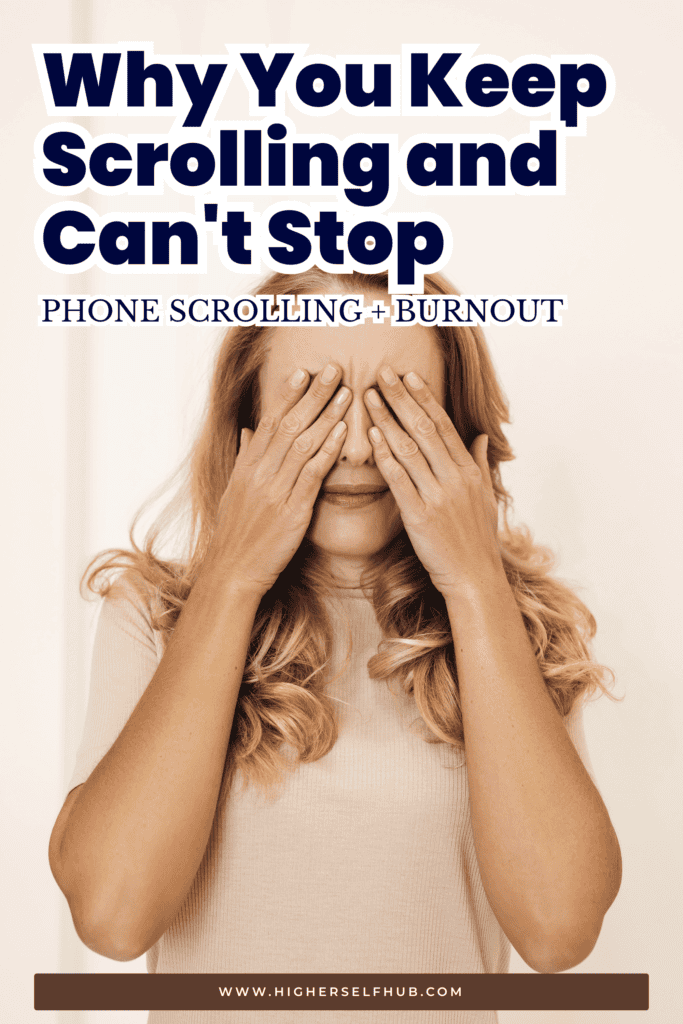
It’s a protective pattern. It’s not something to blame yourself for. But it’s a pattern to understand.
When your nervous system is overwhelmed, dissociation is one of the ways it protects you. Your brain checks out because being fully present in your body feels like too much. The phone gives it somewhere safe to go.
3. You Snap at Your Kids (and Then Feel Guilty for Hours)
The outburst itself takes three seconds. The guilt spiral lasts all night.
This isn’t a patience problem. When your nervous system is in chronic overdrive, your prefrontal cortex (the part that pauses before reacting) goes offline faster. Your amygdala takes over. It’s designed to act first, think later. That’s a protective response in actual danger. In a kitchen with a toddler throwing cereal, it just looks like you lost your temper.
The guilt is real. The failing isn’t.
4. Your Jaw Is Clenched and You Didn’t Notice
Right now, as you read this. Where is your jaw? Are your teeth touching? Are your shoulders near your ears?
Most people with burnout carry chronic tension they’re not even aware of. The jaw, the shoulders, the hands. Your body is bracing for something that hasn’t happened yet. It’s been doing it so long that clenched feels normal.
This is your body keeping score.
If you recognize these physical patterns in your body, grab the Somatic Starter Kit for the body-based way to release the tension.

Your Free Somatic Starter Kit
3 science-backed tools to go from panic to peace in under 60 seconds.
Your inbox stays calm, too. Unsubscribe anytime. We respect your privacy.
5. You Can’t Remember the Last Time You Felt Present
Not happy. Not productive. Just… here. Fully in a moment without your brain running three timelines at once.
Burnout steals presence. You’re at dinner but planning tomorrow’s logistics. You’re reading to your kid but mentally drafting an email. You’re in bed but your brain won’t stop scanning for what you forgot.
I couldn’t genuinely connect with people because my body was still managing. I was still in fight-or-flight, trying to talk myself down.
That’s not distraction. That’s a nervous system that doesn’t feel safe enough to be where it is.
6. Small Decisions Feel Impossibly Heavy
What to make for dinner. Which email to answer first. Whether to go to the thing or stay home.
Decision fatigue is one of the clearest signs of burnout, but it doesn’t get talked about enough. When your nervous system has been processing threat signals all day (even low-grade ones like email notifications, kid arguments, and mental load), it runs out of capacity for choices. Your brain literally cannot prioritize because everything registers at the same urgency.
7. You Feel Guilty for Doing Nothing AND Guilty for Doing Too Much
The double bind of burnout. Rest feels lazy. Working feels unsustainable. You’re too tired to keep going and too wired to stop.
This is what happens when your body is stuck between sympathetic activation (fight/flight) and dorsal vagal shutdown (freeze/collapse). You’re not indecisive. You’re caught between two nervous system states that are both trying to protect you.
8. Your Body Is Always Fighting Something
Headaches that come and go. A stomach that’s never quite right. Skin flaring up. Catching every cold your kids bring home.
Chronic high cortisol suppresses your immune system and disrupts digestion. It’s not in your head. It’s in your tissue. Your body is spending so much energy managing the internal emergency that it doesn’t have resources left for maintenance.
9. You’ve Tried Everything and Nothing Sticks

The meditation app you used for three days. The morning routine that lasted a week. The journal that’s still on your nightstand with two pages filled in.
This one hurts the most because it feels like proof that you’re the problem. But here’s what actually happened: those tools were talking to your brain. Your burnout lives in your body. When your nervous system is in chronic protection mode, top-down approaches (think your way calm, journal your way out, meditate your way through) can’t reach the part that’s actually stuck.
Body-first tools can. That’s not a pitch. That’s neuroscience.
What These Signs of Burnout Actually Mean
Nine signals. Not nine failures.
Every single one of these is your nervous system doing exactly what it was designed to do. Protecting you. Conserving energy. Managing threat. The problem isn’t that these responses exist. The problem is that they’ve been running for so long your body forgot how to turn them off.
Recognizing the signs of burnout isn’t the same as fixing them. But it’s the first step toward understanding that what’s happening in your body isn’t a character flaw. It’s a system that needs a different kind of input.
Your body isn’t broken. It’s protecting you. And it’s been doing it for a really long time.
If you want to start working with your body instead of against it, the Somatic Starter Kit is a good first step. It’s free, it takes five minutes, and it gives you something to actually feel in your body (not just read about).
Your Free Somatic Starter Kit
3 science-backed tools to go from panic to peace in under 60 seconds.
Your inbox stays calm, too. Unsubscribe anytime. We respect your privacy.
What to Do Next
You don’t have to fix all nine today. Just notice which ones felt familiar. That’s enough.
If you want to go deeper, these might help:
- Your Burnout Recovery Plan: A Somatic Approach That Actually Works (the full roadmap)
- You’re Not Lazy: It’s High Cortisol and a Stuck Nervous System (Sign #8, explained)
- What Emotional Burnout Actually Feels Like (when it goes deeper than tired)
If this landed for you, save it for later. Or send it to someone who needs to hear that they’re not failing. They’re just running on a nervous system that hasn’t had a chance to stop.

That’s it. Nine signals. Not nine failures.