Your Burnout Recovery Plan: A Somatic Approach That Actually Works
The morning I dropped my kids off at summer camp, my hands were sweating before I even pulled out of the driveway.
I had the tools. I had the exposure. I could get through it. But I had to talk myself through it the whole time. My vision narrowed. My body was managing. And when I got to drop-off and saw friends I hadn’t seen in months, I couldn’t actually be present with them. My nervous system was still running the show.
I got through it. I was grateful. But that’s the thing about burnout that nobody talks about. You can function. You can show up. And there’s still a cost.
Burnout recovery is the process of helping your nervous system shift out of a chronic state of emergency, where your body has been running on survival mode for so long that it’s forgotten how to rest, even when rest is available. It’s not a mindset problem. It’s a body problem. And a real burnout recovery plan starts there.
Why Most Burnout Recovery Plans Don’t Work
Here’s what most burnout advice sounds like: take a bath. Set boundaries. Practice gratitude. Go on vacation.

None of that is wrong. But if your nervous system is stuck in fight-or-flight (or freeze, which looks like scrolling your phone for 30 minutes without realizing it), a bubble bath isn’t going to override a system that’s been wired for emergency for months or years.
Your autonomic nervous system processes threat signals in as little as 80 milliseconds (Porges, Polyvagal Theory). That’s faster than conscious thought. Which means your body decides you’re unsafe before your brain even registers what happened.
So telling yourself to “just relax” is like telling someone mid-sprint to stop running. The legs are already going. You need to talk to the legs.
That’s what somatic burnout recovery does differently. It works with the body, not around it.
What a Somatic Approach to Burnout Recovery Actually Looks Like
A somatic approach means working with your body’s signals instead of overriding them. It’s the difference between forcing yourself to meditate for 20 minutes (when your body is screaming to move) and doing a 60-second crossbody swing that actually brings your thinking brain back online.
Here’s what makes it different from traditional burnout advice:
- It’s body-first, not mind-first. Instead of journaling your way out of burnout (which can help, but often isn’t enough on its own), you start with physical signals. Where is your jaw right now? Are your shoulders near your ears? That’s data.
- It’s designed for your worst day. Most recovery plans assume you have time, energy, and motivation. A somatic approach assumes you have none of those things, and gives you tools that work anyway. Two minutes at the kitchen counter. Thirty seconds in the car at pickup.
- It builds safety, not discipline. Burnout isn’t a discipline problem. It’s a safety problem. Your nervous system doesn’t trust that it’s okay to slow down. Somatic tools teach it, one small signal at a time.
Your Burnout Recovery Plan: 5 Somatic Tools That Actually Reset Your Nervous System
You don’t need to do all five. Start with whichever one sounds like the least amount of effort. That’s the right one.
1. The Physiological Sigh (60 Seconds)

One inhale through your nose, then a second small sip of air, then a long exhale through your mouth. That’s it. Research from Stanford Medicine shows that extended exhale breathing activates the parasympathetic nervous system within 90 seconds.
This is the most effective physical shift I’ve found. Not a magic pill, because none of these are. But it creates a pattern you can actually feel in your body, of going from highly sensitized to something calmer.
Do it once. See what happens.
2. Crossbody Movement (2 Minutes)

Stand up and swing your arms across your body, left to right and back. In yoga, this is called “knocking on heaven’s door.” It looks like nothing. It does a lot.
When you’re in fight-or-flight, your prefrontal cortex (the thinking, planning part of your brain) goes offline. Crossbody movement re-engages both hemispheres. Your thinking brain comes back. The spiraling slows.
You can do this in a hallway, a bathroom, or your backyard while the kids play. Nobody needs to know.
3. The 5-Minute Reset Walk

Not a power walk. Not exercise. Just walking. Outside if you can, inside if you can’t.
When your body is stuck in burnout mode, movement is one of the fastest ways to complete the stress cycle. You’re not walking to burn calories. You’re walking to signal to your nervous system that you’re not actually trapped.
“Mom needs a reset. I’m going to go outside and walk.” That’s what we say in our house. No expectations on it solving everything. But it does reset my nervous system.
4. The Grounding Check-In (30 Seconds)

When your mind is spiraling and you can’t think clearly, name what’s true right now:
It’s Saturday afternoon. My hands are holding a cup. I’m in my kitchen. The sun is shining.
That’s it. Simple awareness statements that bring your attention back to the present moment instead of the future your brain is already catastrophizing about. This isn’t meditation. It’s just noticing where you are.
5. Toe Relaxation (10 Seconds)

This one sounds ridiculous. But when everything feels like too much, when your whole body is clenched and you can’t figure out how to calm down, try this: relax just your toes.
Not your shoulders. Not your jaw. Not your whole body. Just your toes.
If I can’t relax my entire body or my entire nervous system, can I relax just my toes? I focused on the sensation of just relaxing my toes and repeated that to myself. That got me through.
You don’t have to calm your entire body at once. Start with the smallest thing.
Building Your Own Burnout Recovery Routine
The tools above work in the moment. But burnout recovery isn’t a one-time event. It’s a daily practice of reminding your body that safety exists.
Here’s a simple framework:
The Calm Toolkit: Pick 2-3 tools from the list above that felt accessible to you. Those are your go-to. You don’t need a dozen techniques. You need a few that you’ll actually reach for on a hard day.
The 60-Second Reset: Build one tool into a daily moment you already have. Waiting for the coffee to brew. Sitting in the car before going inside. The 30 seconds after you put the kids to bed before you reach for your phone. That’s your window.
The Undercover Calm Method: If your burnout is happening in spaces where you can’t exactly start swinging your arms around (meetings, pickup lines, family dinners), you need tools that are invisible. Toe relaxation. Physiological sigh. Grounding check-in. Nobody has to know what you’re doing.
The somatic therapy market is projected to reach $12.4 billion by 2032 (Coherent Market Insights), driven largely by the burnout epidemic. That number exists because these approaches work. Not in theory. In bodies. In the car at the coffee drive-through. At the summer camp drop-off.
If you want to understand more about why calming down doesn’t always work (and what actually does), I break it all down in this free guide. It’s the thing I wish I’d had when I was white-knuckling my way through every day.
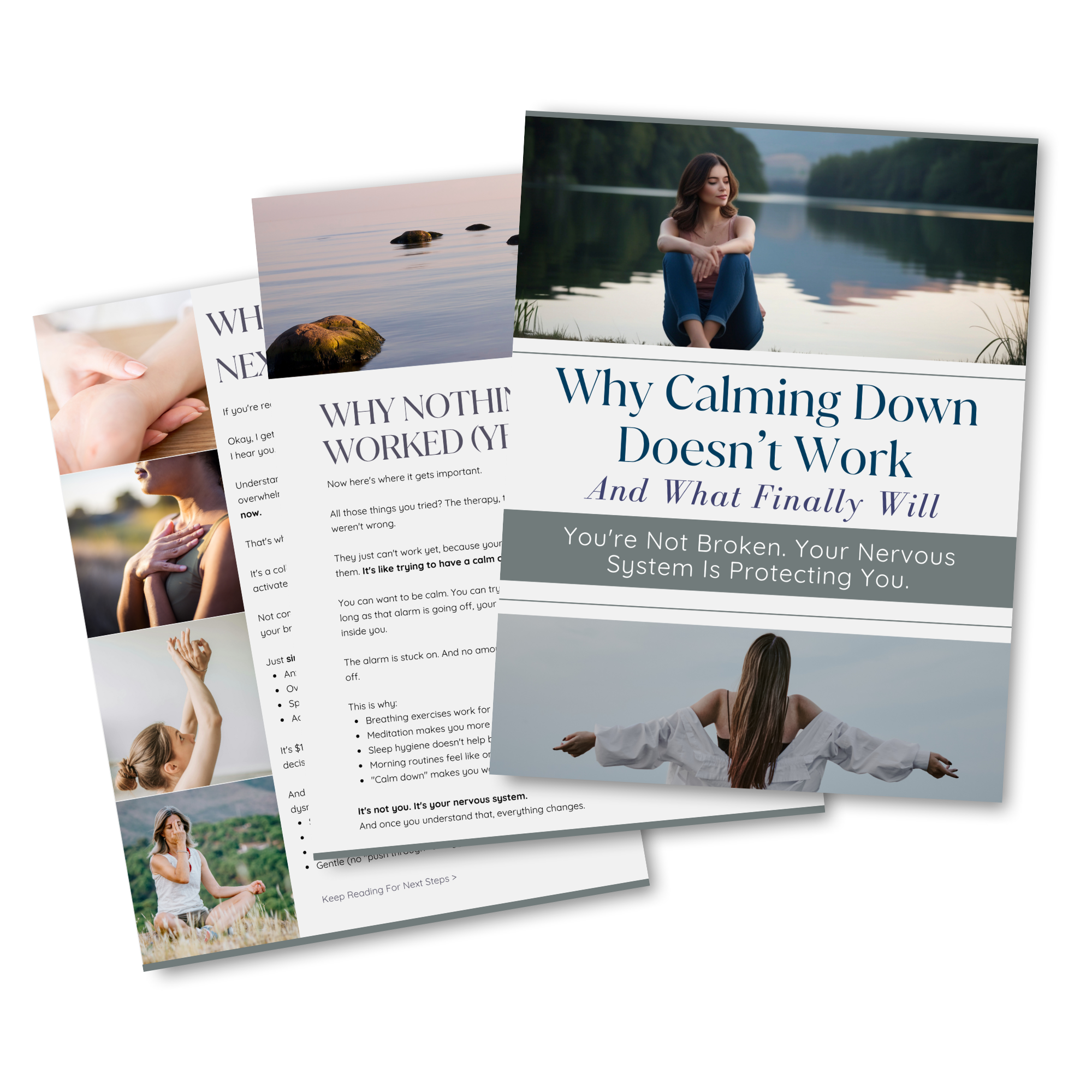
Free Guide: Why Calming Down Doesn’t Work
(And What Finally Will)
You’re Not Broken. Your Body Is Protecting You.
Your inbox stays calm, too. Unsubscribe anytime. We respect your privacy.
What Burnout Recovery Actually Feels Like

Recovery isn’t a switch. There’s a whole season where you’re capable but not present. Where you’re getting through it but still managing on the inside.
The tools work. Your nervous system starts to trust them. And slowly, the cost of showing up gets a little lower.
You don’t have to go from burnout to bliss. You just have to go from “I can’t think straight” to “okay, I can figure out what’s next.” That’s a real nervous system regulation shift. And it’s enough.
If you’ve been running on empty for months (or years), this isn’t about adding more to your plate. It’s about teaching your body that it’s allowed to put something down.
That’s not burnout discipline. That’s your body asking for a different kind of recovery.
You don’t have to earn your way back to feeling okay. You just have to start with your toes.
If this post landed for you, save it for later. You might need it on a day when your brain can’t remember any of this.
Start Here
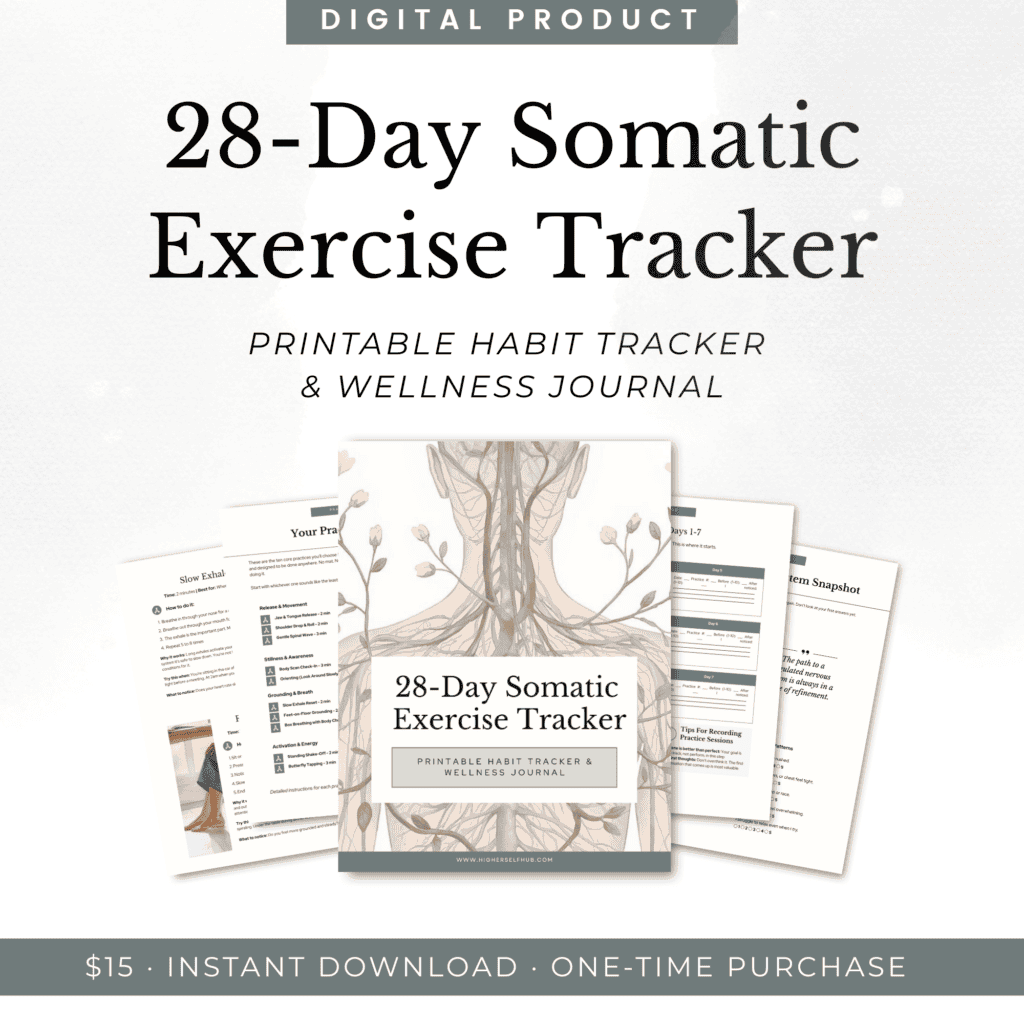
If you’re looking for a simple way to build these tools into your day, the 28-Day Somatic Exercise Habit Tracker was designed for exactly this. It’s not a program. It’s a printable system that meets you where you are.
Or grab the free guide and start there.
Free Guide: Why Calming Down Doesn’t Work
(And What Finally Will)
You’re Not Broken. Your Body Is Protecting You.
Your inbox stays calm, too. Unsubscribe anytime. We respect your privacy.
Related posts:
- Somatic Exercises to Reduce Cortisol (when burnout shows up as physical symptoms)
- 9 Calming Activities That Actually Work When You’re Overwhelmed (for the moments you can’t think straight)
- Nervous System Regulation in Real Life (the bigger picture of what your body is doing)