7 Gentle Habit Tracker Printable Ideas for Women Who’ve Quit Every Planner Before
You bought the cute one. The one with the soft pastel circles and the inspirational font. You filled it in for four days. By day five, you forgot. By day eight, you were avoiding it. By day twelve, the sight of it on the kitchen counter actually made your chest tight.
You weren’t lazy. You weren’t undisciplined. Your nervous system was doing exactly what it was built to do: protect you from one more thing demanding to be perfect.
Most planners are designed for women whose lives already have margin. The rest of us need something gentler.
A habit tracker printable can be one of the most useful tools a tired nervous system has, but only if it’s built around how your body actually works on a hard day. Not how you wish it worked on a good one.
A habit tracker printable is a single-page or multi-page sheet you print at home to mark off small daily, weekly, or monthly habits. The gentle version (the one that actually works for an overwhelmed nervous system) tracks fewer things, forgives missed days, and doubles as a soft reset when life knocks you off course.
Below are 7 ways to use one without burning yourself out, plus the kind of simple journal habit tracker ideas you can sketch into a notebook tonight if you want to start before you find the perfect template.
Why Most Habit Trackers Backfire
Habit trackers were built around a productivity model. Track every day. Don’t break the chain. Score yourself.
That model assumes your body is a machine that responds to repetition the same way every day. If you’re a woman who has lived through anything (chronic stress, sleep deprivation, a hard childhood, the actual weather of motherhood), you already know that’s not how you work.
Some days you wake up regulated. Some days you wake up bracing.
When the same tracker asks the same things of both versions of you, the regulated version succeeds and the bracing version drowns. Within two weeks, the bracing version associates the tracker with failure. So she stops opening it.
That’s not a discipline problem. That’s a nervous system signal. Your body is telling you the system is too rigid for the life you actually live.
The fix isn’t a better planner. It’s a gentler one.
Regulation Before Discipline (Always)
Here’s the part most habit advice skips. You can’t build consistency on top of dysregulation. Willpower runs on a regulated nervous system. When your body is in fight, flight, or freeze, the part of your brain that initiates new behavior is offline. That’s biology, not a character flaw.
So the first job of a useful habit tracker printable isn’t tracking habits. It’s reducing friction. The simpler the page, the lower the bar. The lower the bar, the more often you’ll actually pick it up.
If a habit can’t survive a hard day, it’s too big for the tracker.
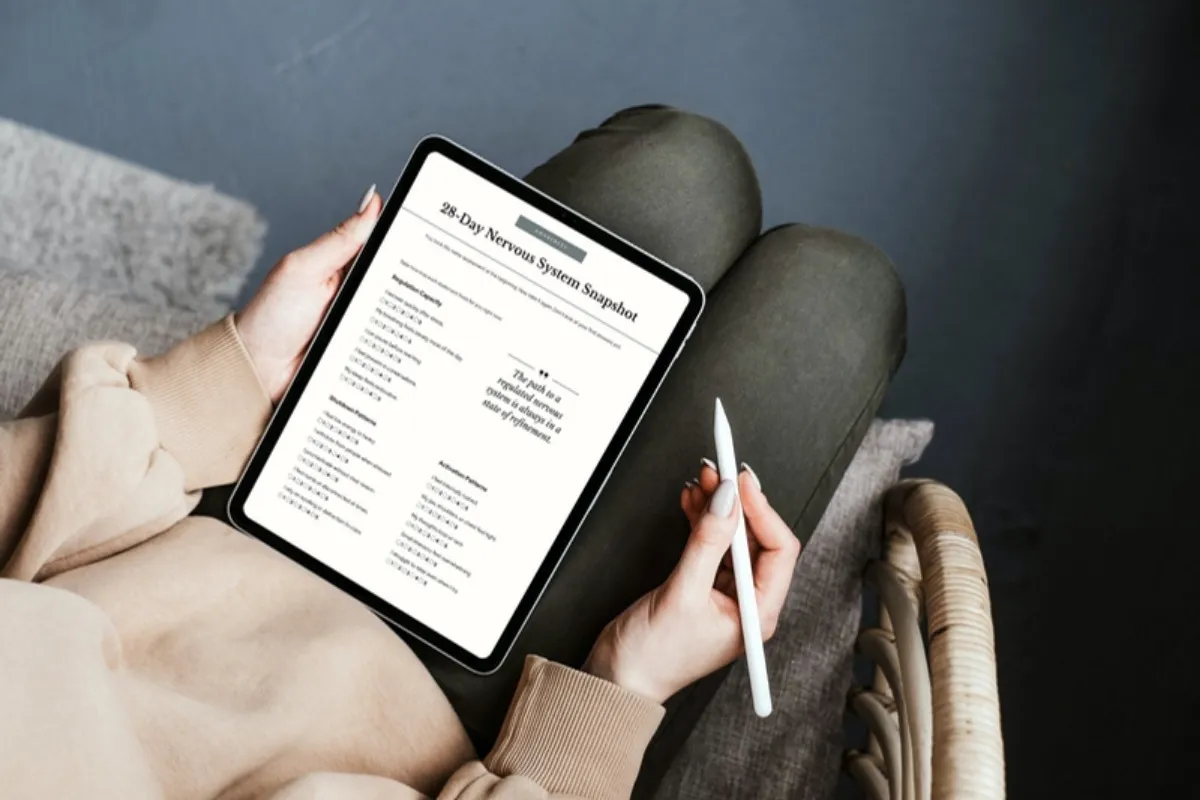
7 Gentle Habit Tracker Printable Ideas (That Work for a Sensitive Nervous System)
Each of these is a small variation on the same idea: track less, forgive more, repeat often enough that your body starts to trust the page. You can mix and match. Start with whichever one sounds like the least amount of effort.
1. The Three-Habit Daily Planner
Most daily planners try to organize your whole day. This one only asks for three habits.
Pick three things your body actually needs (not what you wish it needed). Maybe water before coffee. Maybe a 60-second body scan after school pickup. Maybe lights out before 10:30. That’s it.
A daily planner with only three lines on it is a daily planner you’ll still use on a Tuesday in February.
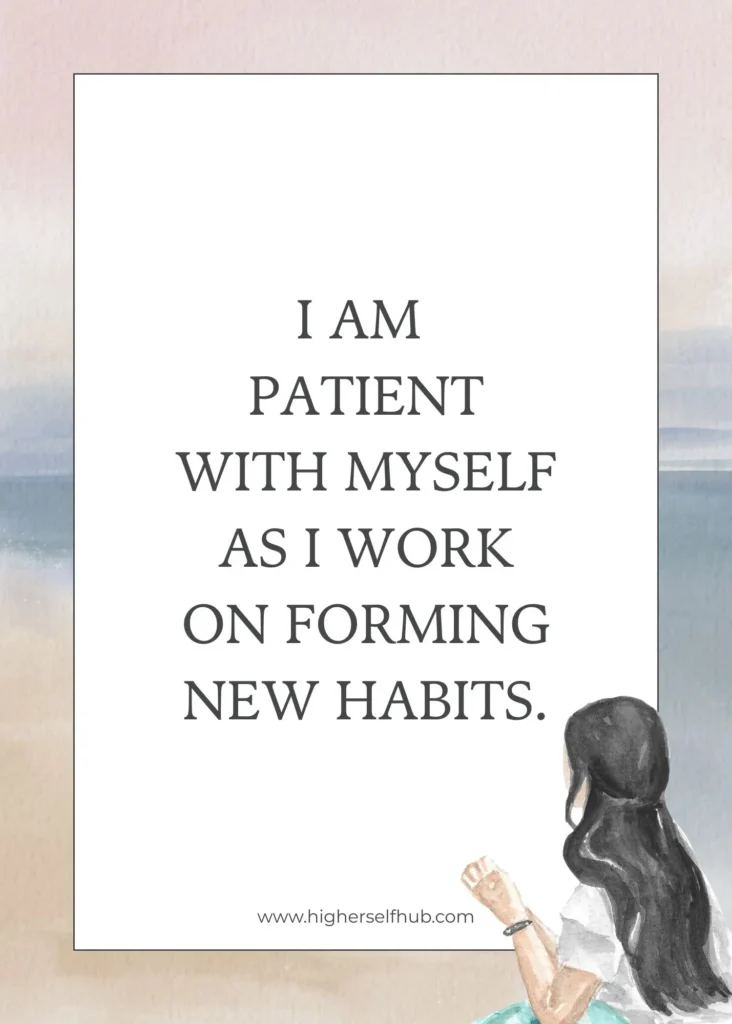
2. The Weekly Habit Tracker (with Built-In Off Days)
A weekly habit tracker that gives you 7 boxes per habit assumes 7 perfect days. A nervous-system-friendly weekly habit tracker gives you 5 boxes and labels two of them “rest” or “off.”
You’re not failing if you don’t fill them. You’re following the design.
This is the version most useful for women who’ve tried tracking before and quit because one missed day broke the chain.
3. The Monthly Planner (One Word per Day)
Some months you’re not going to track habits. You’re going to survive.
A monthly planner with one tiny square per day, just big enough for a single word, gives you a soft place to land. Tired. Overwhelmed. Steady. Better. Cycle. Sun.
You can use the words to spot patterns later. Or you can just use them as proof that you showed up at all. Both count.
If you’ve quit every tracker you’ve ever printed, it was never about willpower. My free guide explains the nervous system piece.
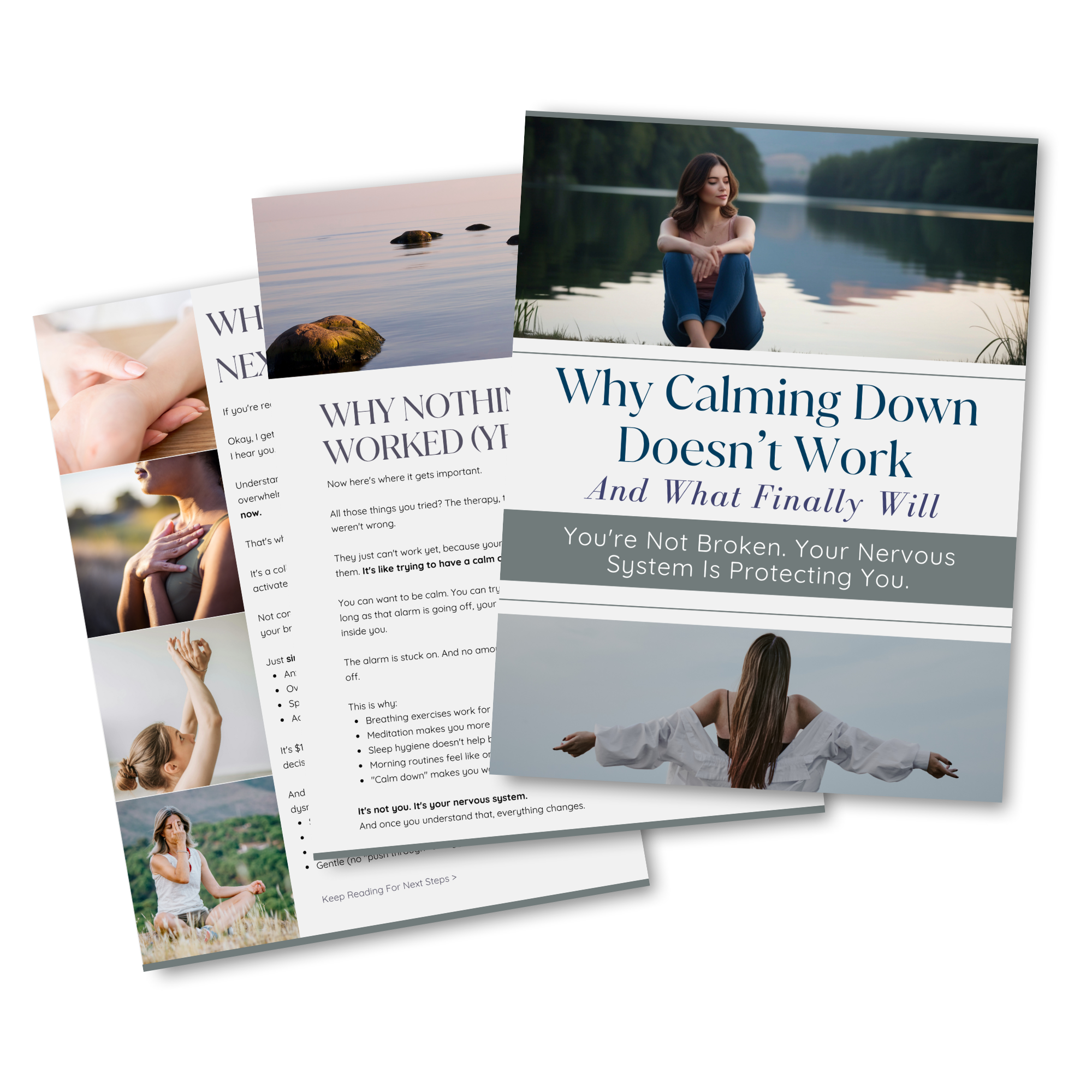
Free Guide: Why Calming Down Doesn’t Work
(And What Finally Will)
You’re Not Broken. Your Body Is Protecting You.
Your inbox stays calm, too. Unsubscribe anytime. We respect your privacy.
4. The Monthly Habit Tracker Template (Three Columns Only)
If you want something that looks more like a traditional monthly habit tracker template, keep it to three columns: morning anchor, midday reset, evening wind-down.
Don’t list specific habits. List categories. Your body gets to choose what each one looks like that day. Some mornings the morning anchor is a 5-minute walk. Some mornings it’s drinking your coffee with both feet on the floor. Both check the box.
This is the version that holds up the longest because it’s flexible without being formless.
5. The Cute Habit Tracker (Visual Joy Counts as a Nervous System Cue)
A cute habit tracker isn’t a vanity choice. It’s a regulation choice.
Your nervous system responds to softness. Pastel colors, rounded shapes, plenty of white space, and pretty typography lower your baseline arousal before you’ve even filled in the first box. That’s part of why so many women buy the pretty one and stick with it longer than the utilitarian one.
Pick a cute habit tracker that you actually want to look at. The visual signal of “this is a safe page” matters more than the layout.
6. The Weekly Planner with Themed Days
Instead of tracking the same habits every day, give each day of the week a gentle theme.
Monday: movement. Tuesday: nourishment. Wednesday: rest. Thursday: connection. Friday: creative play. Saturday: outdoor time. Sunday: silence.
A weekly planner like this lets you focus on one nervous system input per day instead of trying to do everything at once. It also matches how a woman’s body actually wants to live, which is in rhythms, not in checklists.
7. The Journal Habit Tracker Page (Two Lines, Open Prompts)
If checkboxes feel cold, this is for you. The journal habit tracker ideas that work best are the simplest: two open lines per day.
One thing my body did well today. One thing my body asked for that I didn’t give it.
That’s the whole tracker. No grading. No streaks. Just a record of the conversation between you and your own body.
Over time, you’ll see patterns nobody else could have spotted. That’s where the real data lives.
How to Actually Start Without Overwhelming Yourself
Pick one. Just one of the seven.
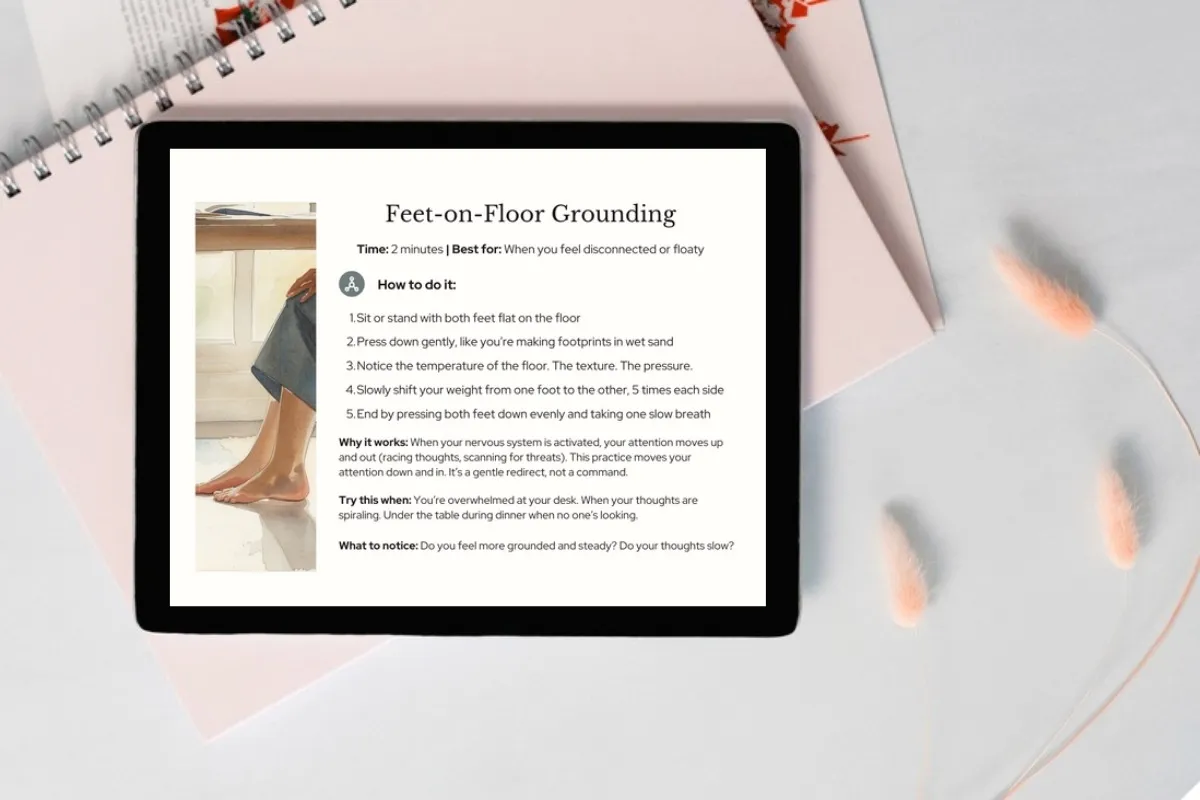
Print it (or sketch it into a notebook with a pen, no need to wait for a perfect template). Stick it somewhere your body already passes through. The kitchen counter. The bathroom mirror. The nightstand.
Don’t try to track for a month. Try to track for three days.
If you make it three days and it feels okay, do three more. If you don’t, switch to a different one of the seven. The tracker isn’t the goal. The relationship between you and your own body is the goal.
Microhabits for a healthy nervous system goes deeper into why small repetitions outperform big resolutions, if you want more on the science underneath this approach.
A Note for the Woman Who’s Quit Every Planner Before
You haven’t quit because you’re inconsistent. You’ve quit because every planner you tried was built for a different kind of life. One with more sleep, more help, fewer flare-ups, less invisible work.
The version of you who can stick with a habit tracker printable isn’t a more disciplined version of you. It’s a more regulated one. And the only way to get there is by doing small, repeatable things on a body that gets to feel safe doing them.
That’s not desperation. That’s discernment. You’ve been listening to your body the whole time. Now you finally have a system that listens back.
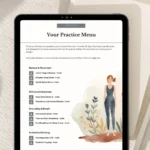
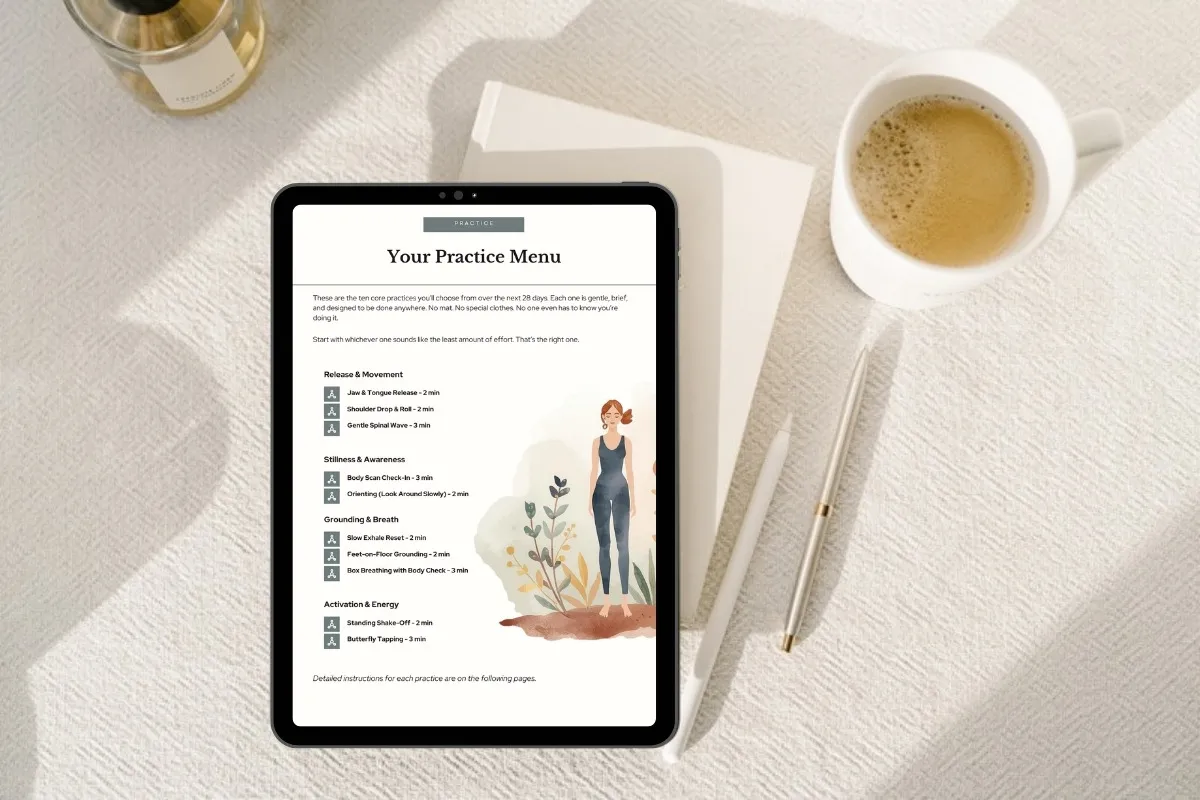
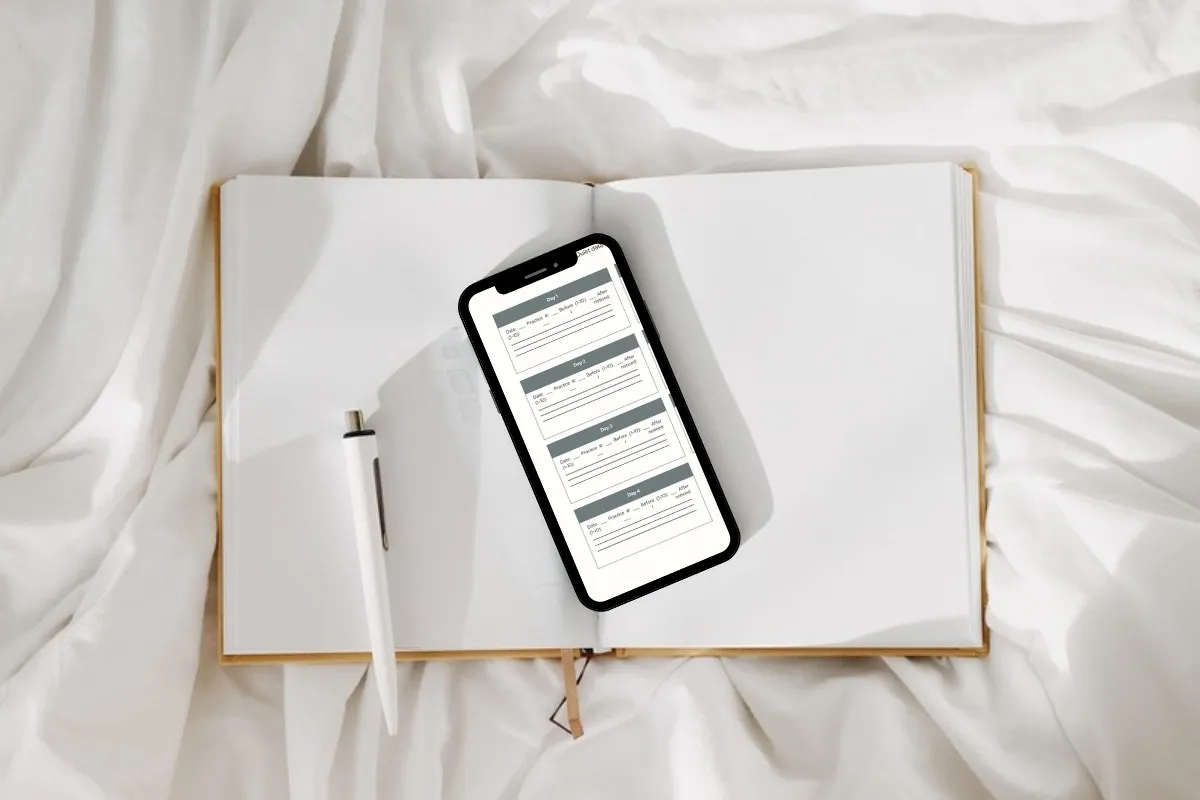
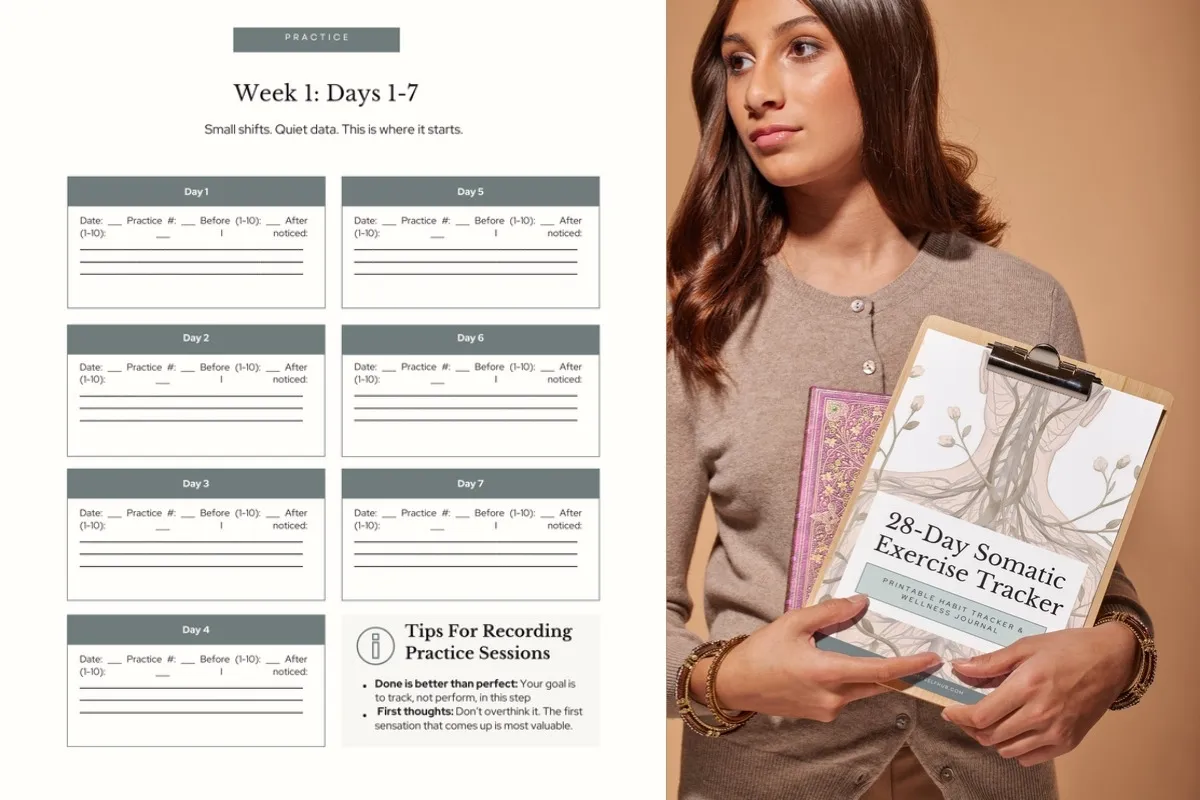
If you want a printable that’s already built around all of this (the three-habit page, the weekly version with built-in off days, the gentle journal pages), the 28-Day Somatic Exercise Habit Tracker & Wellness Journal is the version I made for women just like you. It’s not a productivity tool. It’s a soft, repeatable system you can pick up on a hard day and put down on a harder one without losing your place.
Save This For Later
If this is one of those posts that feels like permission you didn’t know you needed, save it to Pinterest so you can come back to it when you’re ready to print one of the seven and start gently.
If you want to understand more about why “just try harder” doesn’t work (and what your nervous system actually responds to), grab my free guide: Why Calming Down Doesn’t Work (And What Finally Will). It’s the deeper context underneath everything in this post.
Free Guide: Why Calming Down Doesn’t Work
(And What Finally Will)
You’re Not Broken. Your Body Is Protecting You.
Your inbox stays calm, too. Unsubscribe anytime. We respect your privacy.