Why Your Daily Healthy Habits Won’t Stick (And What Your Body Needs Instead)
You set the alarm for 6 AM. The journal was purchased, the app downloaded, the meals prepped on Sunday. A whole list of daily healthy habits, ready to go. By Wednesday, you hit snooze three times. By Friday, the journal is under a stack of mail and the containers in the fridge are growing something unidentifiable.
Sound familiar? You know what daily healthy habits you want. You’ve probably listed them out a dozen times. The problem was never information. It was never motivation, either.
The problem is that your nervous system treats every new habit like a threat.
Why Your Body Resists Daily Healthy Habits
Daily healthy habits are the small, repeated actions that support your physical and mental well-being over time. They sound simple on paper. Drink more water. Move your body. Go to bed earlier. But if your nervous system is stuck in survival mode, “simple” feels impossible.
Here’s why: your nervous system’s job is to keep you alive, and it does that by favoring what’s familiar. Familiar equals safe. New equals unknown. Unknown equals potential danger. So when you try to swap your 11 PM scroll session for a 10 PM bedtime, your body doesn’t celebrate. Instead, it resists.
That resistance isn’t laziness. It isn’t a character flaw. It’s your nervous system doing exactly what it was designed to do. In other words, until you work with that system instead of bulldozing through it, your daily healthy habits will keep falling apart by Thursday.
6 Ways to Build Daily Healthy Habits Your Body Won’t Reject
These aren’t the usual “set a reminder on your phone” tips. Instead, these work because they account for how your nervous system actually operates.
1. Design for Your Worst Day, Not Your Best
Most people build habits for the version of themselves that slept 8 hours, had a calm morning, and isn’t dealing with a headache. In fact, that version shows up maybe twice a month.
I learned this the hard way. When my world had shrunk and I was barely leaving the house, I set a goal: walk one mile a day for 100 days. It felt almost too small. But I was done with burnout discipline. So I designed the habit for my worst day. My migraine days. The days my body felt weak and exhausted.
On one of those days, instead of asking “How do I push through 20 minutes?” I asked, “Can I go outside for five?” I walked five minutes. Rested. Walked ten later. Rested. Walked five more. I didn’t override my body. I collaborated with it.
As a result, the best approach is simple: design your daily healthy habits for the day you have the least to give. If your habit still works on that day, it’ll work on every day.
2. Start With One Body-Based Habit
Before you try to overhaul your morning routine, your diet, your sleep schedule, and your screen time all at once, pick one habit that involves your body. For example, a two-minute breathing exercise. A walk around the block. Legs up the wall before bed.
Body-based habits work because they directly signal safety to your nervous system. In fact, your brain can argue with a to-do list, but it can’t argue with a physiological sigh that physically lowers your heart rate. When your body feels the shift, it starts to trust the new pattern. That trust is what makes daily healthy habits stick.
If you’re not sure where to start, nervous system regulation in real life walks you through techniques you can do anywhere, without anyone noticing.
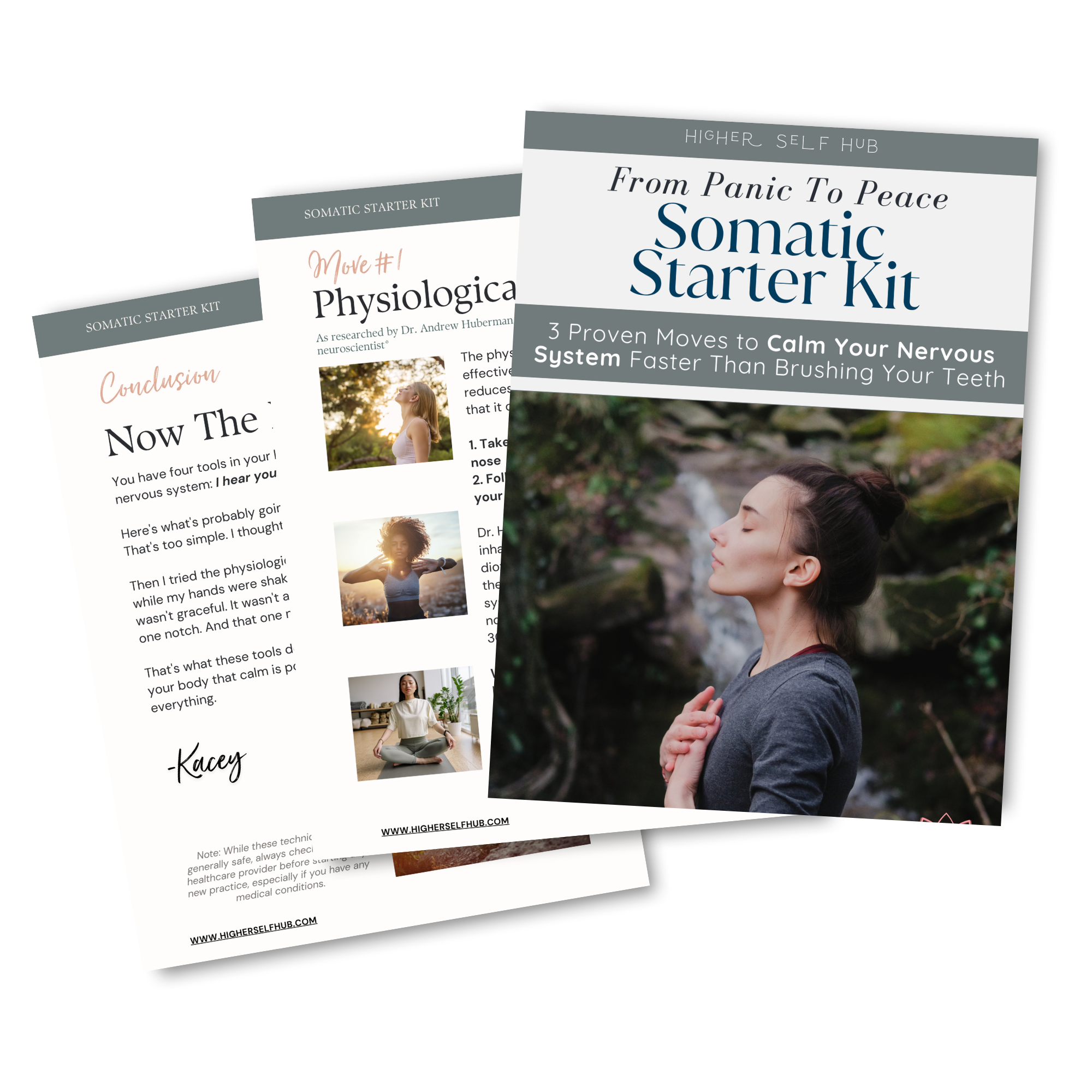
If body-based habits sound right but you want somewhere to actually start, our free Somatic Starter Kit gives you simple daily practices designed for exactly this. Grab it below.
Your Free Somatic Starter Kit
3 science-backed tools to go from panic to peace in under 60 seconds.
Your inbox stays calm, too. Unsubscribe anytime. We respect your privacy.
3. Use the Minimum Effective Dose
Two minutes counts. Five minutes counts. “I just did the breathing exercise while waiting for the microwave” absolutely counts.
Your nervous system doesn’t care about duration. It cares about repetition. Doing something small every day builds a stronger neural pathway than doing something impressive once a week. The goal isn’t to feel heroic. The goal is to feel trustworthy to yourself.

4. Track Without Judgment
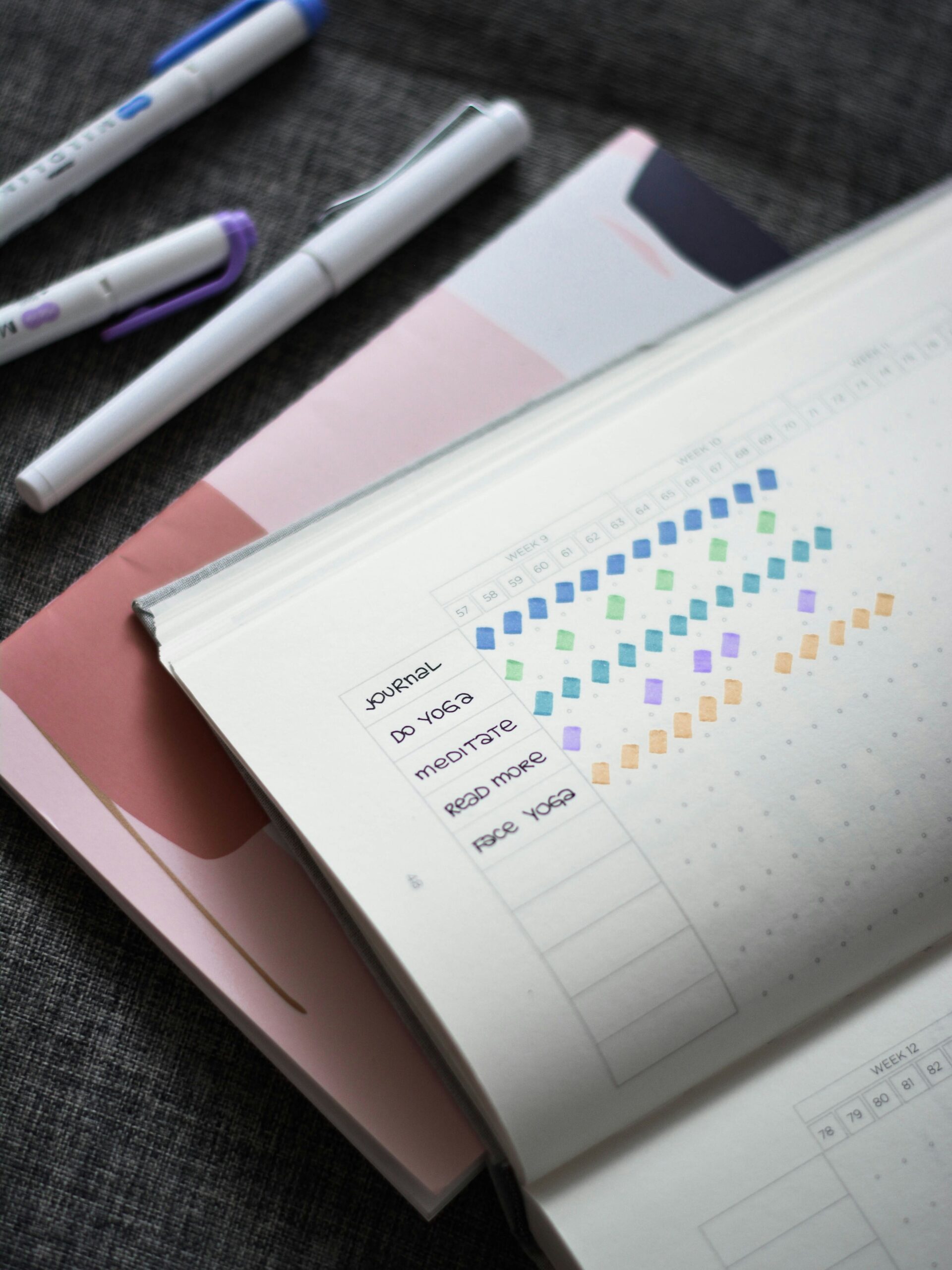
Tracking works. However, it’s not because it holds you accountable (that word makes most of us tense up). It works because it gives your brain evidence. Evidence that you showed up. Evidence that you’re building something.
The key is how you track. If missing a day sends you into a shame spiral, your tracking system is working against you. On the other hand, a good tracker is neutral. It says: I did something for my body today. Or: today I didn’t, and that’s information, not a verdict.
If you want to understand more about why calming down doesn’t always work (and what does), I break it all down in this free guide: Why Calming Down Doesn’t Work (And What Finally Will)
5. Build Safety Signals Into Your Routine
A safety signal is anything that tells your nervous system: we’re okay here. For instance, it might be a familiar mug, a specific playlist, or a blanket you reach for every evening. These small cues help your body feel settled enough to try something new.
When you pair a new habit with an existing safety signal, you borrow the trust your body already has. Instead of “I have to do breathwork now” (new, unfamiliar, resistance), it becomes “I’m having my tea, and while it steeps, I breathe” (familiar, safe, natural). Your daily healthy habits don’t need willpower when they’re woven into moments your body already trusts.
6. Let Rest Be Part of the Plan
This is the one most habit advice skips entirely. In fact, rest days aren’t failure. They aren’t “falling off the wagon.” They’re part of how your nervous system processes and integrates change.
Because if you push through exhaustion to check a box, you’re teaching your body that this new habit is just another thing that overrides its signals. That’s the opposite of what we’re building here. Microhabits for a healthy nervous system work precisely because they leave room for rest.
When You Miss a Day (Because You Will)
You will miss days. That’s not a prediction of failure. That’s just how real life works with kids, and jobs, and bodies that don’t always cooperate.
What matters isn’t the miss. It’s what you tell yourself about the miss. “I can’t stick to anything” is your nervous system’s old story. The new story is simpler: I stopped, and now I’m starting again. That’s the whole skill.
Setbacks are information. They’re not proof that you’re broken. They’re data about what your body needed on that particular day.
Daily Healthy Habits Start With Your Body, Not Your Willpower
If you’ve tried building daily healthy habits before and they didn’t stick, it wasn’t because you weren’t disciplined enough. It was because no one told you that your nervous system gets a vote. Now you know. Design for your worst day. Start with your body. Track without shame. Let rest be part of the plan.
That’s where a simple tracker can help. Something you can reach for at the end of a 2-minute exercise and just… mark it down. Not a gold star system. Not a guilt trip. Just a quiet note to yourself that says: I did something for my body today.
If this post landed for you, save it for later. Pinterest is a great place to keep things like this close.
And if you need more calming activities for when everything feels overwhelming, that’s a good next step too. Your body already knows how to do this. You’re just reminding it.
And if you want a gentle place to start putting this into practice, our free Somatic Starter Kit walks you through simple body-based exercises you can build into your day, no overhaul required.
Your Free Somatic Starter Kit
3 science-backed tools to go from panic to peace in under 60 seconds.
Your inbox stays calm, too. Unsubscribe anytime. We respect your privacy.