
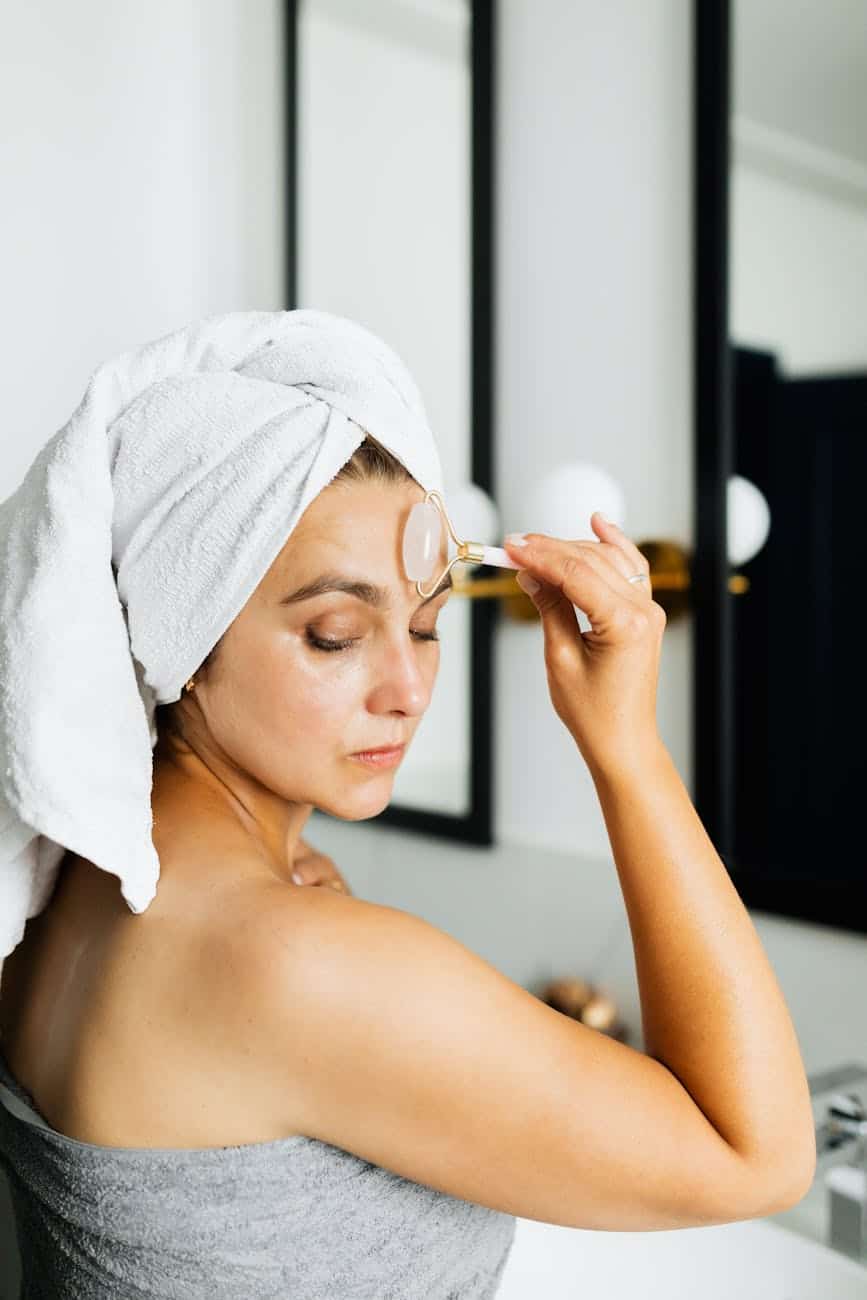
What Your Skin Is Telling You About Your Nervous System (And Why Toxin-Free Skincare Matters)
She tried everything. The high-end serums. The dermatologist-recommended cleansers. The “sensitive skin” line. The toxin-free skincare brand that still made her face burn. Every time she thought she found something that worked, her skin would flare again. Redness. Dryness. That tight, reactive feeling that made her afraid to try anything new.
She started to wonder if something was wrong with her skin. If she was just unlucky. If this was just how her body worked now.
But here’s what nobody told her: her skin wasn’t the problem. Her nervous system was.
Toxin-free skincare is the practice of choosing body care products made without synthetic chemicals, endocrine disruptors, or ingredients that add stress to an already overloaded system. It matters. But not just for the reasons most articles talk about. For women whose nervous systems are already running on overdrive, what goes on your skin is only half the equation. What’s happening inside your body is the other half.
Your Skin and Your Nervous System Share the Same Origin
This isn’t just a wellness theory. It’s biology. Your skin and your nervous system both develop from the same embryonic tissue: the ectoderm. They share a developmental origin, which means they stay deeply connected throughout your entire life.
When your nervous system is dysregulated (stuck in fight-or-flight, running a low-grade alarm all day), your skin responds. Rashes. Eczema flares. Hives that show up out of nowhere. Sensitivity to products that used to be fine. Research published in the journal Experimental Dermatology found that psychological stress directly impairs the skin’s barrier function, increasing sensitivity and slowing healing.
That’s not in your head. That’s your biology doing exactly what it was designed to do.
“Those unexplained body sensations often tie back to unprocessed emotions.”
Why Conventional Skincare Misses the Root
The skincare industry treats your skin like an isolated organ. One cream for redness. Another serum for texture. A prescription for breakouts. Sound familiar?
It’s the same pattern Higher Self Hub’s founder lived through with her own health. At 21, she was taking seven pills a day. One for migraines. Another for the side effects. Another for sleep. Around and around. The specialists couldn’t see the whole person because they were only looking at one piece.
“I was a 21-year-old girl popping seven pills a day.”
Skincare works the same way. A product for every symptom, but nobody asking why the symptoms keep coming back. If your nervous system is stuck in survival mode, your skin will keep reacting no matter what you put on it. Cortisol (the stress hormone) has been shown to break down collagen, trigger inflammation, and suppress the skin’s ability to repair itself (Harvard Health Publishing). No serum can outperform a nervous system stuck in overdrive.
If your skin keeps flaring no matter what you put on it, my free guide explains the stress side of the equation (and what calms it).

Free Guide: Why Calming Down Doesn’t Work
(And What Finally Will)
You’re Not Broken. Your Body Is Protecting You.
Your inbox stays calm, too. Unsubscribe anytime. We respect your privacy.
What Toxin-Free Skincare Actually Means (Beyond the Label)
Most “clean beauty” marketing is just that: marketing. “Natural” doesn’t mean regulated. “Organic” on a label doesn’t always mean what you think. And plenty of products labeled toxin-free still contain synthetic fragrances, endocrine disruptors, and ingredients that add to your body’s chemical load.
Real toxin-free skincare means fewer ingredients, simpler formulas, and nothing that forces your body to process more than it already is. For a woman whose system is already handling a backlog of stored tension, reducing that external load matters.
Here’s what to look for:
- Single-ingredient or short-ingredient-list products. If you can’t pronounce half the label, your body is working overtime to process it.
- No synthetic fragrances. Fragrance is one of the most common irritants and can contain dozens of undisclosed chemicals.
- Tallow-based or plant-oil-based options. These work with your skin’s natural biology instead of against it.
- Brands that are transparent about every ingredient. Not just “clean.” Actually transparent.
“We’re sold this idea that we can just take a magic pill. That’s just not true.”
If you’re looking for a brand our founder personally uses and trusts, Crunchi is her go-to for toxin-free skincare and cosmetics. Every product is independently tested and verified safe. No guesswork.
[lasso id=”929″ link_id=”1081″ ref=”crunchi”]
Why Toxin-Free Skincare Starts From the Inside Out
Switching your products is one layer. But the deeper shift is what’s happening inside your body.
If your nervous system has been in overdrive for years (maybe since childhood, maybe since a season of life that demanded everything you had), your skin is going to keep telling you that story. No product swap will fully resolve what a dysregulated nervous system is driving.
“It’s not the level of the trauma. It’s how it gets stuck and stored in our body if we don’t have the skills to process it at the time.”
This is where somatic tools come in. Breathwork. Gentle movement that processes tension instead of performing fitness. Nervous system regulation practices that teach your body it’s safe enough to stop sounding the alarm.
When the nervous system calms, the body follows. Including the skin.
If you want to understand how somatic work changes the body from the inside, the story of how somatic healing changed our founder’s life is a good place to start.
What Actually Helps (Simple Swaps and Deeper Work)
You don’t need a 12-step skincare routine. You need less interference and a calmer nervous system. Here’s what that looks like in real life:
On the outside:
- Swap one product at a time. Start with what touches your face the most (cleanser or moisturizer).
- Look for tallow-based or single-ingredient products. Simpler is almost always better.
- Stop layering. More products is not more care. It’s more work for a system that’s already carrying enough.
On the inside:
- Notice what your skin does when you’re stressed versus when you’re regulated. Start tracking the connection.
- Try a nervine herb like skullcap, which calms the oversensitized nervous system. Our founder uses it daily.
- Drink something warm that supports your system instead of depleting it. These herbal teas are a gentle place to start.
“It’s not always the herb suggested in the top-level recipes. Sometimes it takes a lot of trial and error.”
What works for someone else’s skin might not work for yours. Not because something is wrong with you. Because your system is yours. It has its own history, its own load, its own pace.
Your Skin Isn’t Failing You. It’s Talking to You.
Every flare, every reaction, every unexplained sensitivity is information. Your skin isn’t broken. Your skin is communicating.
And when you stop fighting it (with another product, another cream, another frustrated Google search at midnight) and start listening, something shifts. Not overnight. But steadily.
“You stop fighting your body. You stop labeling sensation as failure. You stop turning information into identity.”
Clean up what goes on your skin. Yes. That matters. But also tend to what’s happening underneath. Your nervous system is running the show whether you realize it or not. And when it finally feels safe enough to rest, your skin will be one of the first places you notice.
If you want to understand more about why calming down doesn’t always work (and what does), I break it all down in this free guide: Why Calming Down Doesn’t Work (And What Finally Will)
This is one of those posts worth saving for later. If you use Pinterest, pinning it makes it easy to find when you need it.
And if you want the full picture of what your nervous system is asking for, grab Why You Can’t Calm Down below.
Free Guide: Why Calming Down Doesn’t Work
(And What Finally Will)
You’re Not Broken. Your Body Is Protecting You.
Your inbox stays calm, too. Unsubscribe anytime. We respect your privacy.