How To Declutter For Inner Peace: The Vibrant Woman’s Guide
Welcome to our guide on how to declutter for inner peace. A peaceful and organized home is key for mental health. It begins with mindful decluttering and good organization.
Research from the University of California shows that people who describe their homes as “cluttered” are 40% more likely to experience anxiety and sleep disorders. Transform your living space into a sanctuary in just 30 days with our science-backed decluttering guide.
Ready to reclaim your space? Whether you have 15 minutes or two hours a day, this guide provides practical strategies tested by professional organizers. You’ll learn how to transform overwhelming spaces into organized havens, one area at a time.
Starting a decluttering journey might seem hard, but it can change your life. By adding mindful decluttering and organization to your day, you’ll make a space that cares for your mind, body, and soul.
Remember, learning to declutter for inner peace is more than just getting rid of stuff. It’s about making a space that helps you feel calm and well. With the right mindset and tools, you can live a more organized, peaceful, and vibrant life.
Key Takeaways
- Decluttering for inner peace is a journey that requires mindful decluttering and organization techniques.
- Creating a peaceful and organized living space is essential for mental wellness.
- Embarking on a decluttering journey can be transformative and lead to a more balanced life.
- Mindful decluttering and organization techniques can help promote mental wellness and serenity.
- A well-organized space can nurture your mind, body, and soul.
- Decluttering for inner peace is a process that requires patience, dedication, and the right mindset.
The Hidden Connection Between Clutter and Mental Chaos
Living simply can greatly improve our mental health. Clutter makes us feel anxious and disorganized, making peace hard to find. It’s not just about cleaning up; it’s about making a space that helps us think clearly and feel calm.
Studies show that messy places can make us feel tired and slow. By living more simply, we can feel less stressed and more productive. Small changes like decluttering and organizing can really help our mental health.
It’s important to understand how clutter affects our minds. Seeing how our surroundings impact our well-being helps us start to organize better. This leads to a more balanced life, where we can focus on what’s important.
Understanding the Psychological Impact of Cluttered Spaces
Clutter messes with our minds, making it hard to concentrate and think straight. By organizing our homes and living simply, we can create a peaceful space. This lets us live more intentionally and happily.
Why It’s More Than Just Cleaning: Declutter For Inner Peace
Decluttering is more than just cleaning. It’s a way to find peace and calm. By decluttering, you can reduce stress and improve your mental health. It makes your living and work spaces feel calm and clear.
Decluttering can bring many benefits. For example, it can help you feel less anxious and overwhelmed. It also improves your focus and creativity. Plus, it can lead to better sleep and health.
Here are some tips to start decluttering for inner peace:
- Start small and set achievable goals.
- Declutter a little bit each day.
- Keep your space organized to maintain peace.

When you declutter for inner peace you change your life. It helps you let go of clutter and find peace. By organizing your space, you can feel more at peace and mentally well.
| Benefits of Decluttering | Results |
|---|---|
| Reduced stress and anxiety | Improved mental health |
| Improved focus and concentration | Increased productivity |
| Enhanced creativity | Better problem-solving skills |
Creating Your Mindful Decluttering Strategy
Starting a mindful decluttering journey needs careful planning. It combines organization techniques and self-care. This way, you’ll make a space that shows your style and supports your well-being. First, think about what mindful decluttering means to you and how it can improve your life.
When creating your strategy, remember a few important things:
- Set clear decluttering goals that match your values and what’s important to you.
- Find an organization style that fits your life and what you like.
- Make a decluttering plan that lets you keep making progress and taking care of yourself.
These steps will help you build a plan to declutter for inner peace. It will bring calm and clarity to your space. Remember, it’s a journey, not just a goal. It’s about connecting more with your things and yourself.
Keep in mind, mindful decluttering is more than just removing clutter. It’s about making room for what’s truly important. This includes your well-being, relationships, and growth. By adopting this mindset, you’ll turn your space into a sanctuary for your mind, body, and spirit.
The Five-Space Method: Where to Begin Your Journey
The Five-Space Method: Your 5-Week Transformation Plan
Week 1: Entryway Revolution (2-3 hours)
- Create a “drop zone” with a floating shelf (15″ deep) for keys and mail
- Install hooks at 60″ height for frequently used items
- Add a bench with built-in storage for shoes
- Implement the “one-in-one-out” rule for coats and shoes
Week 2: Kitchen Command Center (4-6 hours)
- Clear countertops using the ‘frequency test’: if you use it less than weekly, store it
- Create zones: cooking, prep, cleaning, and storage
- Install drawer dividers for utensils
- Add clear containers for pantry items with expiration dates visible
Week 3: Living Room Refresh (3-4 hours)
- Assess furniture layout – remove pieces that block natural pathways
- Create a media station with hidden cord management
- Implement the “10-item surface rule” for tables and shelves
- Add dual-purpose furniture (ottoman with storage, coffee table with drawers)
Week 4: Bedroom Sanctuary (3-4 hours)
- Remove seasonal clothes and store in vacuum-sealed bags
- Install closet organizers with designated spaces for each category
- Add under-bed storage containers for rarely used items
- Create a calming bedside setup with minimal essentials
- Use drawer dividers for small items and accessories
Week 5: Home Office Command Center (3-4 hours)
- Establish zones: computer work, paper handling, and reference
- Set up a three-tray system for papers (In, Out, File)
- Install vertical storage to maximize wall space
- Create a dedicated charging station for electronics
- Label all folders and containers for easy reference
Implementation Tips:
Have supplies ready before starting (storage bins, labels, hangers, etc.)
Complete each space in the suggested order – the skills build upon each other
Take “before” photos to track progress
Schedule specific days/times for each task
Set a timer for focused 45-minute work sessions
Take 15-minute breaks between sessions
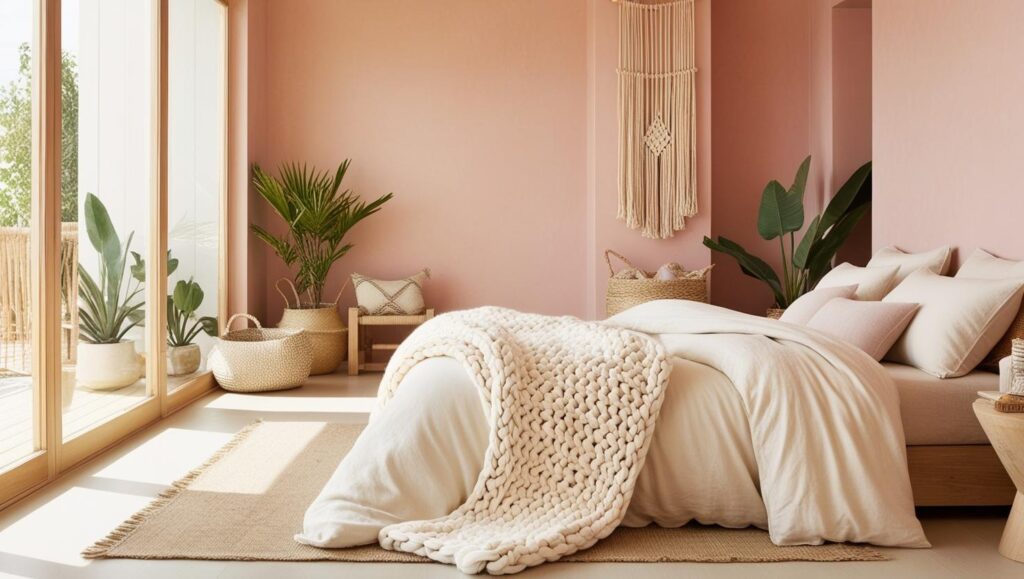
With dedication and effort, you can turn your home into a calm and organized retreat. Begin your journey today and enjoy a clutter-free, peaceful living space.
| Space | Decluttering Tips |
|---|---|
| Entryway | Use a shoe rack and a hook for hanging coats |
| Living Room | Sort items into categories and use storage bins |
| Kitchen | Purge expired food and use a spice rack |
| Bedroom | Use a bed frame with storage and a closet organizer |
| Office | Use a desk organizer and a file cabinet |
Mindfulness Techniques While Decluttering For Inner Peace
Starting your mindful decluttering journey is exciting. It’s key to use techniques that help you relax and take care of yourself. This way, you’ll not only tidy up your space but also find peace within.
If clutter makes your chest tight, that’s your nervous system talking. My free guide explains the connection (and what helps beyond the donate pile).
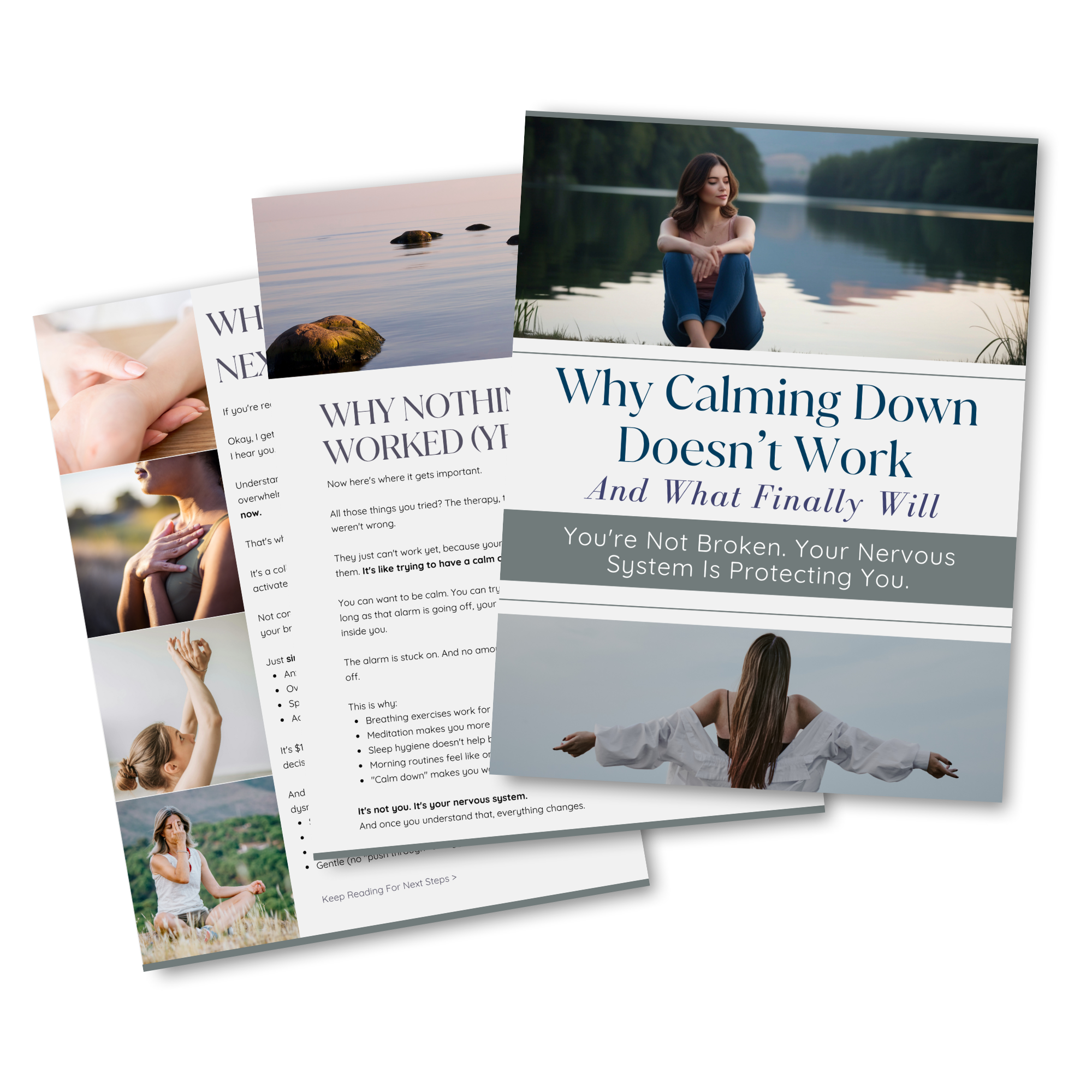
Free Guide: Why Calming Down Doesn’t Work
(And What Finally Will)
You’re Not Broken. Your Body Is Protecting You.
Your inbox stays calm, too. Unsubscribe anytime. We respect your privacy.
Practicing Presence During Organization
Focus on the moment while decluttering. Stay present and avoid distractions. This helps you decide what to keep and what to discard more mindfully.
Breathing Exercises for Decision Making
Use breathing exercises to guide your choices. Take deep breaths before deciding on an item. This connects you with your intuition, leading to wiser decisions.
Creating Ritual in Your Decluttering Process
Make decluttering a ritual by adding special touches. Light a candle or play calming music. This creates a serene environment, helping you stay focused and care for yourself.
- Set aside dedicated time for decluttering
- Use a mindful approach to decision making
- Create a peaceful and calming atmosphere
By adding these mindfulness practices to your decluttering, you’ll make your space more peaceful. This promotes both stress reduction and self-care.
| Mindfulness Technique | Benefits |
|---|---|
| Practicing Presence | Increased focus and intention |
| Breathing Exercises | Reduced stress and anxiety |
| Creating Ritual | Increased sense of calm and self-care |

Digital Decluttering: Finding Peace in the Virtual World
Digital clutter can affect our mental health and self-care. It’s important to keep our online and offline lives balanced. By cleaning up our digital spaces, we can feel less stressed and more productive.
Digital Decluttering: Your 3-Day Reset Plan
Day 1: Email Detox (45 minutes)
- Set a timer for 15 minutes: Delete or archive emails older than 6 months
- Spend 15 minutes unsubscribing from newsletters (use Unroll.me)
- Create 3 essential folders: Action Required, Waiting For, Archives
- Install SaneBox or similar to automatically sort incoming mail
Day 2: File Organization (1 hour)
- Create four root folders: Current Projects, Archives, Personal, Resources
- Move documents using the 1-2-6 rule:
• Current month → Desktop
• Last 2 months → Current Projects
• Last 6 months → Archives - Compress files older than 6 months
- Enable automatic cloud backup
Day 3: Phone Optimization (30 minutes)
- Delete unused apps (if not opened in 3 months, remove it)
- Group remaining apps into folders by function (Finance, Health, Communication)
- Set up app limits:
• Social media: 30 minutes per day
• News: 15 minutes per day - Clear cache and temporary files (can free up to 25% of storage)
These small changes can have a significant impact on your mental wellness and self-care.
Here are some additional tips for digital decluttering:
- Set up automatic backups to free up space on your devices
- Use a password manager to simplify your online security
- Take breaks from social media to reduce digital noise
By incorporating digital decluttering into your self-care routine, you can experience a sense of calm and clarity in your online interactions. Remember, digital decluttering is an ongoing process, and it’s essential to regularly review and update your digital spaces to maintain your mental wellness and self-care.
Maintaining Your Clutter-Free Sanctuary
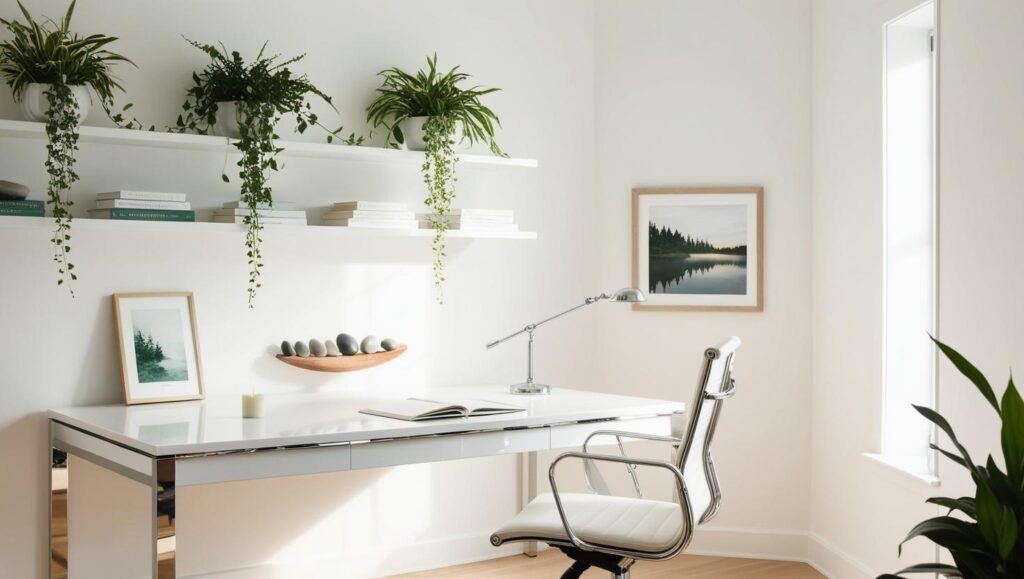
To keep your space tidy, start daily habits that help with home organization. Simple tasks like making your bed and putting away dishes after meals are key. Also, tidy up before bed to keep your space calm and controlled.
For effective decluttering tips, try the “one in, one out” rule. This means getting rid of an old item for every new one. It stops clutter from growing and keeps your space organized. Also, set aside time each week for mindful decluttering to stay focused and keep your space peaceful.
- Creating a weekly reset routine to review your space and make any necessary adjustments
- Setting reminders to stay on track with your daily and weekly tasks
- Practicing self-care and self-compassion when you make mistakes or encounter setbacks
Follow these tips and stay committed to your home organization goals. This way, you can create a peaceful and clutter-free space. Be patient and kind to yourself, and don’t hesitate to ask for help when needed.
The Emotional Benefits When You Declutter For Inner Peace
Living with less can deeply impact your emotional health. By choosing minimalist living, you can feel less stressed and anxious. This leads to more inner peace. Such peace can improve both your mind and body, making life more balanced and fulfilling.
Some key benefits of minimalist living are:
- Less clutter means more calm and clarity
- More focus and productivity help you focus on what’s important
- It also helps manage money better, reducing debt and expense stress
- It makes you appreciate what truly matters more
Adding stress reduction practices like meditation to your day can boost minimalist living‘s emotional benefits. This can make you feel more whole and purposeful, leading to a more intentional and meaningful life.
Letting go of unnecessary things makes room for new experiences and relationships. By choosing minimalist living and valuing inner peace, you can find deeper purpose and joy. This makes life more satisfying and joyful.
Creating Sacred Spaces in Your Home
Starting your journey to inner peace through home organization is exciting. It’s key to make spaces that care for your mind, body, and spirit. By adding self-care and thoughtful design, you can turn your home into a peaceful haven.
Designing your meditation corner is a great place to start. Think about adding plants, a water feature, or river rocks. These elements can make the space feel calm and connect you with nature. For instance, a small fountain or a vase with fresh flowers can make your meditation corner feel peaceful.
Designing Your Meditation Corner
To make a meditation corner that brings inner peace, follow these tips:
- Choose a quiet and private spot
- Use calming colors like blue or green
- Make sure it’s comfy with cushions and seating
- Add a meditation altar or a peaceful statue
Incorporating Natural Elements
Using natural elements can make your space feel more peaceful. Here are some ideas:
- Try a bowl of river rocks or a small fountain
- Bring in plants or a living wall
- Use natural materials like wood or bamboo
Color Psychology for Inner Peace
Color psychology can affect how you feel. Use calming colors like blue, green, or neutral tones. By following these tips, you can make a sacred space in your home. This space will help you find inner peace and practice self-care through good home organization.
| Color | Emotion | Effect |
|---|---|---|
| Blue | Calmness | Promotes relaxation and serenity |
| Green | Balance | Encourages growth and harmony |
| Neutral | Serenity | Creates a sense of calmness and peace |
Overcoming Common Decluttering For Inner Peace Roadblocks
- “I Don’t Have Time”
Solution: The 10-Minute Method
- Set a timer for 10 minutes
- Focus on one small area (single drawer or shelf)
- Stop when the timer rings
- Do this daily and track progress with photos
- “I Might Need It Someday”
Use the 90-Day Box Test:
- Place questionable items in a labeled box
- Note the date
- If not needed in 90 days, donate unopened
- “It Has Sentimental Value”
Digital Memory Preservation:
- Photograph meaningful items
- Create a digital scrapbook
- Keep one representative item from collections
- Frame photos of special clothing/toys instead of keeping the items
Decluttering your space is the first layer. If you want to go further, learn how to create a mindful home that actually supports your nervous system, not just looks clean.
Conclusion: Embracing Your New Path to Declutter For Inner Peace
As you finish this journey, celebrate your progress. Your journey to declutter for inner peace is a big step towards self-care. It brings more focus, energy, and calm to your life.
Think about how far you’ve come. Enjoy the lightness and clarity in your daily life now.
This is just the start of a new chapter. Keep up the mindful decluttering habits. They will help you stay organized and peaceful.
By doing this, you’ll grow closer to yourself and your surroundings. You’ll find more self-care and happiness.
Keep moving forward, trusting yourself and the process. You can make your life serene and vibrant. Celebrate your wins and know you’re on the right path. The journey is rewarding, and the best is yet to come.
Hope In Your Pocket: Somatic Nervous System Regulation Toolkit
$17.00
Something is off and your brain won’t stop reminding you. The replaying conversations at 2am. The spiraling before a meeting that hasn’t even started. The exhausting cycle of worry, second-guessing, and overthinking that steals your peace and your presence.
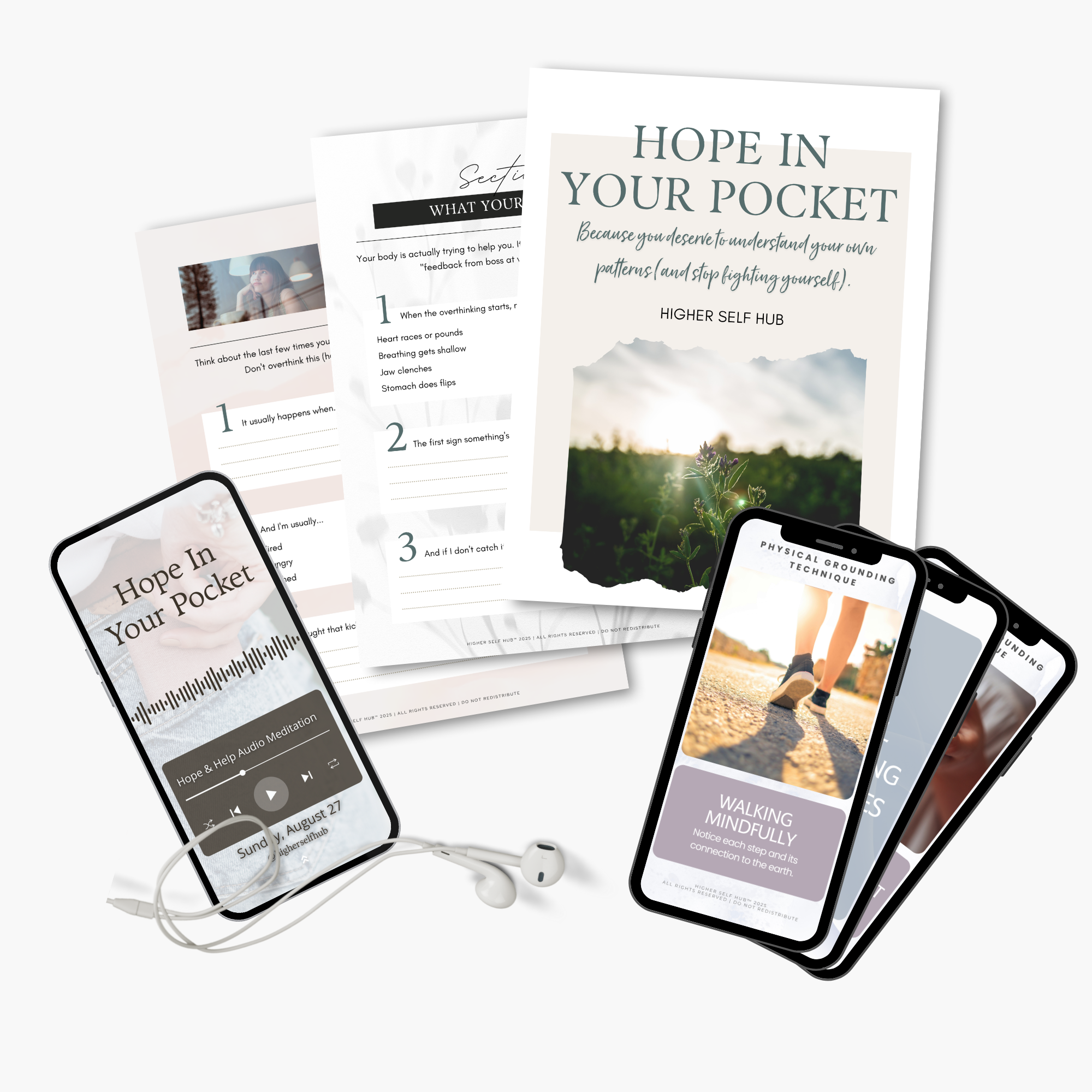
This digital toolkit gives you four tools that work WITH your nervous system instead of against it. A 14-page guide with the FACE method for real-time regulation, 21 somatic grounding cards for your phone, a 7-minute meditation audio based on Dr. Claire Weekes’ approach, and a 16-page bonus therapy guide.
You’ve been told to “just stop overthinking” like it’s a choice. It’s not. It’s a nervous system response you can learn to work with. This kit shows you how, for less than a single therapy co-pay.
Description
I remember the exact moment I realized I needed something different. I was sitting in my car after dropping my son at school, hands still shaking, heart still pounding from a conversation that should not have been that hard. I had all the “right” tools. The breathing app on my phone. The journal on my nightstand. The affirmation cards on my mirror. None of them worked when my body was already in full alarm mode. Not because the tools were bad. Because they were designed for a calm person trying to stay calm. Not for a woman whose nervous system had already left the building. That gap is why this toolkit exists.You’re Not Broken. Your Brain Is Trying to Keep You Safe.
When your mind treats every Tuesday like an emergency, it creates an exhausting cycle of worry, second-guessing, and mental spirals that steal your peace and your presence. You’ve probably been told to “just stop overthinking” like it’s a choice you’re making instead of a nervous system response you can learn to work with. I spent years trying to calm down the way everyone tells you to. Deep breath. Positive thought. Push through. My hands still got sweaty in the coffee shop drive-through. My vision still narrowed at the school drop-off line. My jaw was still clenched by noon every single day. What finally changed wasn’t trying harder. It was understanding what my nervous system was actually doing and giving it tools that spoke its language.What’s Actually Happening When “Calming Down” Doesn’t Work
When your nervous system shifts into a protective state, your thinking brain goes partially offline. You can’t journal your way out of it. You can’t affirm your way through it. You need tools that work with your body first, then let your mind catch up. One of our buyers described her before state as simply: “chaos.” Another said she was “stuck in fight or flight.” They didn’t need more information about why they felt the way they felt. They needed something to do about it, right now, in the middle of it.What’s Inside Your Toolkit
The Hope In Your Pocket Guide (14 pages, $12 value) This walks you through understanding YOUR specific nervous system patterns and building YOUR personal somatic toolkit. It includes the FACE method, a framework for regulation in real moments, not theoretical ones. Not a textbook. One reader described it as “coffee with a friend who totally gets it.” 21 Somatic Grounding Cards ($12 value) Digital cards you save to your phone. One body-based technique per card. For meetings, waiting rooms, the school pickup line, or 2am when your brain won’t stop. Pick the card. Do the thing. When overthinking hits, your rescue is just a glance away. Hope & Help Meditation Audio, 7 minutes ($15 value) Based on Dr. Claire Weekes’ revolutionary approach to working with anxiety instead of against it. This isn’t about emptying your mind. It’s about changing your relationship with your thoughts. Not too long, not too woo-woo. Just practical help when you need it most. FREE Bonus: Somatic Therapy Guide (16 pages, $10 value) Covers the science behind why these tools work. Trauma and the body, mindfulness techniques, advanced somatic tools, and nervous system regulation explained in plain language. For when you want to understand the “why,” not just the “how.” Total value: $49. Your price: $17.This Isn’t About Perfect Calm. It’s About Coming Home to Yourself.
You don’t need to eliminate overthinking completely. You just need to know you can bring your mind back to the present moment enough to:- Actually enjoy your coffee instead of spiraling about tomorrow’s meeting
- Fall asleep peacefully instead of replaying every conversation from the day
- Make decisions confidently instead of second-guessing yourself into paralysis
- Show up fully in moments that matter most
Why This Instead of Free Resources?
Because free resources give you information. This gives you a system. The guide helps you identify your patterns. The cards give you something to reach for in the moment. The audio meets you when your body needs more than reading. The bonus fills in the science when you’re ready for it. Compare:- One therapy session: $100-200 (and you’re still waiting weeks for the next appointment when overthinking hits)
- Meditation app subscriptions: $60-120/year (for 20-minute sessions you’ll never have time for)
- Self-help books: $15-25 each (that collect dust while your mind keeps spinning)
- This complete toolkit: $17 (and unlike therapy sessions, you own these tools forever)
This Toolkit Is For You If:
- Your mind spins in worry loops that feel impossible to break
- “Just breathe” feels patronizing when you’re in a mental spiral
- You’re new to somatic work and want a starting point that isn’t a 30-day course
- You feel “off” but can’t quite name what’s going on in your body
- You want tools that work in real moments, not just during meditation
- You’re in counseling and want something to practice between sessions
- You need clinical support (this is a self-guided toolkit, not a replacement for therapy)
- You’re looking for a one-time fix
How It Works
Download the bundle. Save the grounding cards to your phone. Print the guide or read it digitally. Listen to the audio when you need it. Start with whatever feels right. There’s no order, no curriculum, no wrong way to use it. 30-day money-back guarantee. If it doesn’t feel right, email hello@higherselfhub.com and it’s handled. Your body has been trying to protect you. These tools help you work with it instead of against it. It’s time to put hope back in your pocket. Not sure yet? Start with our free guide: Why Calming Down Doesn’t Work (And What Finally Will)Related products


And for the version of decluttering that happens inside your body, grab my free guide Why You Can’t Calm Down below.
Free Guide: Why Calming Down Doesn’t Work
(And What Finally Will)
You’re Not Broken. Your Body Is Protecting You.
Your inbox stays calm, too. Unsubscribe anytime. We respect your privacy.






Reviews
There are no reviews yet.