

17 Nervous System Balance Habits That Actually Fit Into Your Real Life
You’re lying in bed at 11 PM, body exhausted, brain running through tomorrow’s to-do list for the third time. Your jaw is sore from clenching. You know you need to sleep, but your body didn’t get the memo. That disconnect between what you want (rest) and what your body is doing (running at full speed) is a sign your nervous system balance is off.
Understanding What Your Nervous System Does
Nervous system balance is your body’s ability to shift between activation (fight-or-flight) and rest (calm and connected) without getting stuck in either one.
When it’s working well, you handle a stressful moment and come back down afterward. When it’s not, you live in that wired-but-tired place where even small things feel like too much.
Your nervous system has two main modes: sympathetic (the gas pedal) and parasympathetic (the brake). Most of us are driving with one foot slammed on the gas all day. Your body is preparing for danger while you’re just trying to get through the school pickup line or answer one more email before dinner.
Signs that your nervous system might be dysregulated include:
- Racing thoughts and difficulty concentrating
- Trouble falling or staying asleep
- Digestive issues
- Frequent anxiety or panic symptoms
- Feeling wired but tired
- Difficulty relaxing or “shutting off”
- Heightened startle response
- Irregular appetite
Here’s what changed things for me: I stopped trying to fix my nervous system all at once and started with the smallest thing I could actually do.
One habit. One moment. Not a complete lifestyle overhaul.
If your list of “things I should be doing for my health” already feels like a second job, take a breath. You don’t need all 17 of these. You need one that fits into the life you already have.
Foundation Habits for Nervous System Balance
These are the non-negotiables for nervous system balance. Not because someone told you to do them, but because your body physically cannot regulate without them. Think of these as the foundation your body needs before anything else can work.
1. Breathwork: The Fastest Reset You Have
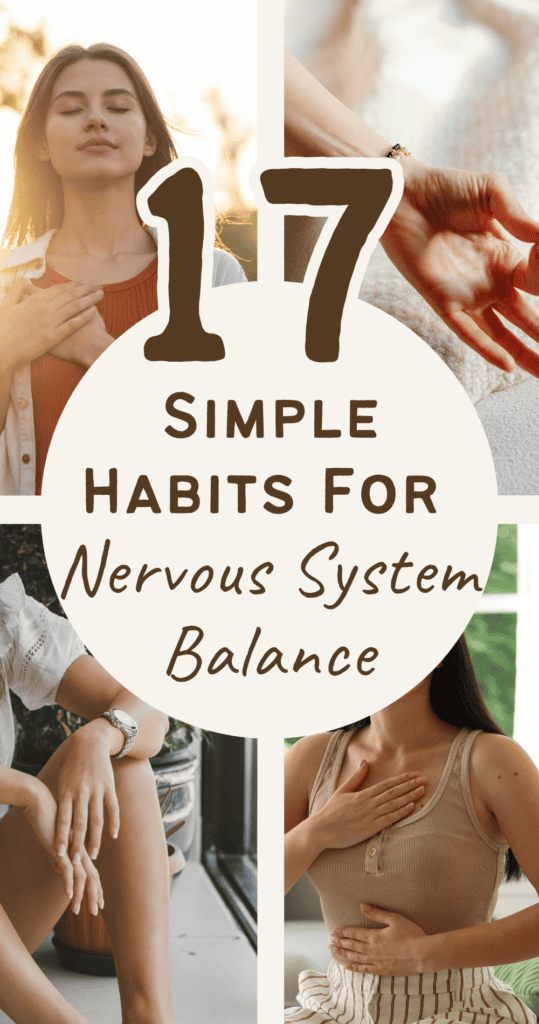
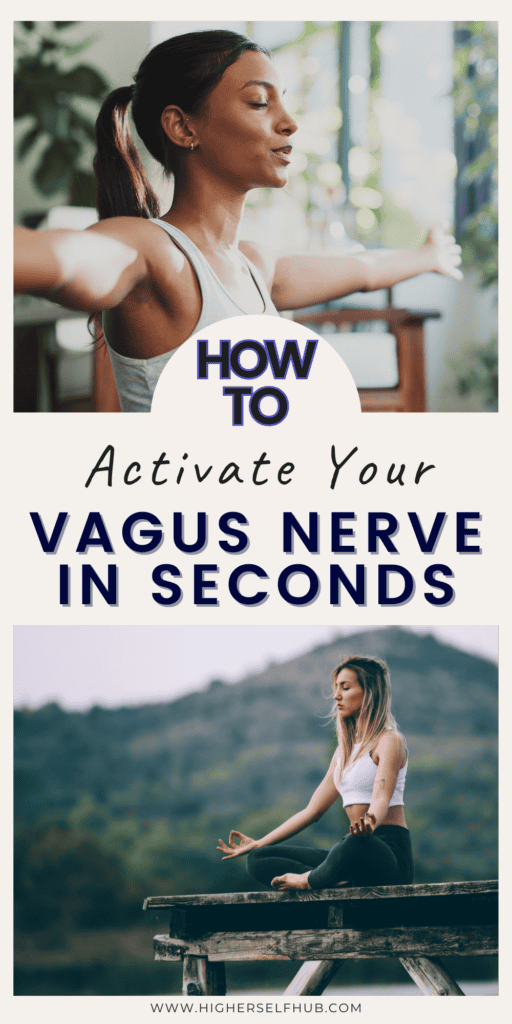
This is the one tool I come back to more than any other. A slow exhale activates your vagus nerve, which is the direct line between your brain and your body’s calm-down system. Try this: inhale for 4 counts, hold for 4, exhale for 6, hold for 2. Five rounds of that can shift your entire state. I do this in the car, in the grocery store, at 2 AM when my brain won’t stop. Nervous system regulation starts here.
2. Sleep: When Your Nervous System Actually Heals
Your nervous system does its deepest repair work while you sleep. If you’re skipping sleep or waking up feeling like you ran a marathon, your body never fully comes down from the day. A consistent sleep schedule matters more than you’d think:
- Going to bed and waking up at the same time daily
- Creating a dark, cool sleeping environment
- Avoiding screens 1-2 hours before bed
- Developing a calming bedtime routine
Free Guide: Why Calming Down Doesn’t Work
(And What Finally Will)
You’re Not Broken. Your Body Is Protecting You.
Your inbox stays calm, too. Unsubscribe anytime. We respect your privacy.
3. Movement: Completing the Stress Cycle
Movement tells your nervous system that you’re safe. Not intense, punishing exercise (that can actually keep you stuck in fight-or-flight). Gentle movement. A walk around the block. Some stretching on the living room floor while the kids watch a show. The goal isn’t to burn calories. It’s to complete the stress cycle your body started hours ago.

4. Nutrition: Feeding Your Nervous System
What you eat directly affects your nervous system’s ability to regulate. This isn’t about a perfect diet. It’s about giving your brain and body the building blocks they need to actually do their job:
- Magnesium-rich foods (dark leafy greens, nuts, seeds)
- Omega-3 fatty acids (fatty fish, flaxseeds, chia seeds)
- B-complex vitamins (whole grains, eggs, legumes)
- Protein for neurotransmitter production
- Antioxidant-rich foods for nervous system protection
5. Hydration: The One You Keep Forgetting
This one sounds too simple to matter, but dehydration mimics the symptoms of a dysregulated nervous system. Racing heart, brain fog, irritability. Before you spiral into “what’s wrong with me,” drink a glass of water. Aim for half your body weight in ounces throughout the day. Add electrolytes if you’re active or running on coffee.
Daily Practices for Nervous System Balance
6. Morning Routine for Nervous System Success
The first 30 minutes of your day set the tone for your entire nervous system. Not because of some magical morning routine, but because your body is most receptive to input right after waking. Even 10 minutes of intention can change how reactive you feel by noon:
- Gentle stretching or yoga before checking your phone
- 5 minutes of conscious breathing
- Exposure to natural light within 30 minutes of waking
- A nourishing breakfast
- Brief meditation or mindfulness practice
7. Technology Boundaries
You know that feeling when you check your phone first thing and suddenly your chest is tight and your brain is already three hours ahead? That’s your nervous system responding to stimulation before it’s had a chance to regulate. A few simple boundaries go a long way:
- Designated phone-free times
- Social media time limits
- Notifications off except for essential communications
- Regular digital detox periods
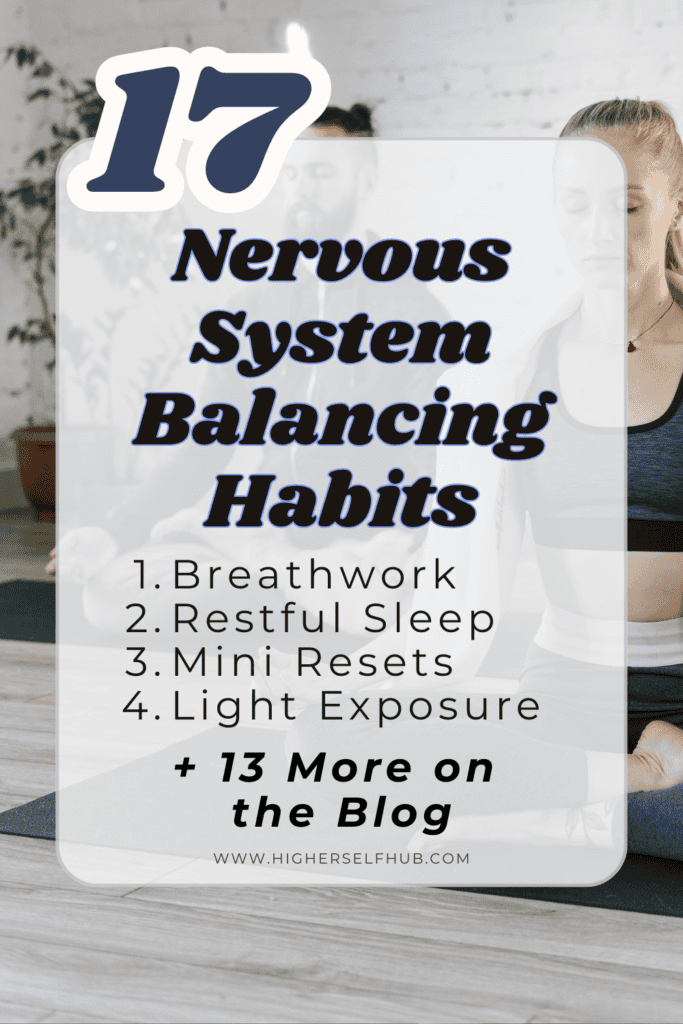
8. Mini Resets Throughout the Day
In our house, we call these “resets.” When things get heated or overwhelming, someone says the word and we all take a pause. It works for my kids. It works for me. Grounding techniques you can do at your desk are a great place to start if you need ideas. Schedule a few of these throughout your day:
- 2-minute breathing breaks between tasks
- Short outdoor walks
- Quick stretching sessions
- Mindful tea breaks
- Brief meditation moments
9. Evening Wind-Down Practices
The transition from day to night matters more than most people realize. Your nervous system needs a clear signal that the day is done and it’s safe to power down. Without that signal, you end up lying in bed with your body still running on daytime fuel:
- Dim lights after sunset
- Gentle stretching or yin yoga
- Relaxing bath or shower
- Journaling or reading
- Calming tea (chamomile, lavender, or passionflower)
Environmental Factors That Impact Nervous System Balance
Your nervous system doesn’t just respond to what’s happening inside you. It’s constantly reading your environment for cues of safety or threat. Colors, sounds, clutter, lighting. All of it registers, even when you’re not consciously noticing.
10. Creating a Calm Home Environment
- Declutter regularly to reduce visual stress
- Incorporate calming colors and natural materials
- Add plants for better air quality and biophilic benefits
- Create dedicated relaxation spaces
- Use essential oils or natural scents for aromatherapy
11. Light Exposure
Light is one of the strongest signals your body uses to set its internal clock. When that clock is off, your sleep suffers, your mood dips, and your nervous system loses its rhythm:
- Get morning sunlight when possible
- Use blue light blocking glasses in the evening
- Install dimmer switches or use lamp lighting at night
- Consider a SAD lamp during darker months
12. Sound Therapy
Sound bypasses your thinking brain and goes straight to your nervous system. That’s why a siren makes you tense before you even process what it is. You can use that same pathway in the other direction:
- White or pink noise for focus
- Nature sounds for relaxation
- Binaural beats for specific brain states
- Classical music for stress reduction
Social Connections That Support Nervous System Balance
This one doesn’t get talked about enough. Your nervous system was designed to co-regulate, meaning it calms down in the presence of other regulated people. That’s why being around certain people feels like exhaling, and being around others feels like holding your breath.
13. Creating Safe Relationships
- Identify and nurture relationships that feel supportive
- Practice vulnerability with trusted friends
- Join communities with shared interests
- Regular check-ins with loved ones
- Consider working with a therapist or coach
14. Setting Healthy Boundaries
- Learn to say no without guilt
- Communicate your needs clearly
- Honor your energy limits
- Create space between work and personal life
- Respect your own time and resources
Advanced Techniques for Deep Regulation & Nervous System Balance
Once the basics feel like second nature (and only then), these deeper practices can take your nervous system balance to another level. None of these are required. They’re options for when you’re ready.
15. Somatic Experiencing
- Body scanning practices
- Tension and release exercises
- Emotional release techniques
- Movement integration
- Trauma-informed practices
16. Cold Exposure
Cold exposure trains your nervous system to handle discomfort without flipping into panic. It’s not about suffering. It’s about proving to your body that uncomfortable doesn’t always mean dangerous. Start small:
- End showers with 30 seconds of cool water
- Gradually increase duration and decrease temperature
- Consider ice baths or cold plunges
- Always respect your body’s limits
17. Heart Rate Variability Training
- Use apps or devices to track HRV
- Practice coherence breathing
- Regular HRV biofeedback sessions
- Track progress over time
Not sure where to begin with 17 habits? That’s completely fair. Start with just one. These 3 easy everyday practices for nervous system regulation are a simple entry point you can build on over time.
Conclusion
Your nervous system didn’t lose its balance overnight, and nervous system balance won’t come back overnight either. That’s not a failure. That’s just how bodies work. The habits on this list aren’t assignments. They’re invitations. Pick the one that sounds like the least amount of effort and try it once. That’s enough for today.
If you want to understand more about why calming down doesn’t always work (and what does), I break it all down in this free guide: Why Calming Down Doesn’t Work (And What Finally Will)
Free Guide: Why Calming Down Doesn’t Work
(And What Finally Will)
You’re Not Broken. Your Body Is Protecting You.
Your inbox stays calm, too. Unsubscribe anytime. We respect your privacy.
And if you’re looking for something to help you actually track which habits are working for your body, vagus nerve exercises paired with a simple daily check-in can make a real difference. Sometimes the hardest part isn’t doing the thing. It’s remembering that you already know what helps.
If this post landed for you, save it for later. Pinterest is a great place to keep things like this close.
And if today is one of those overwhelming days where even this list feels like too much, try starting with calming activities that actually work when you’re overwhelmed. Your body already knows how to do this. You’re just reminding it.


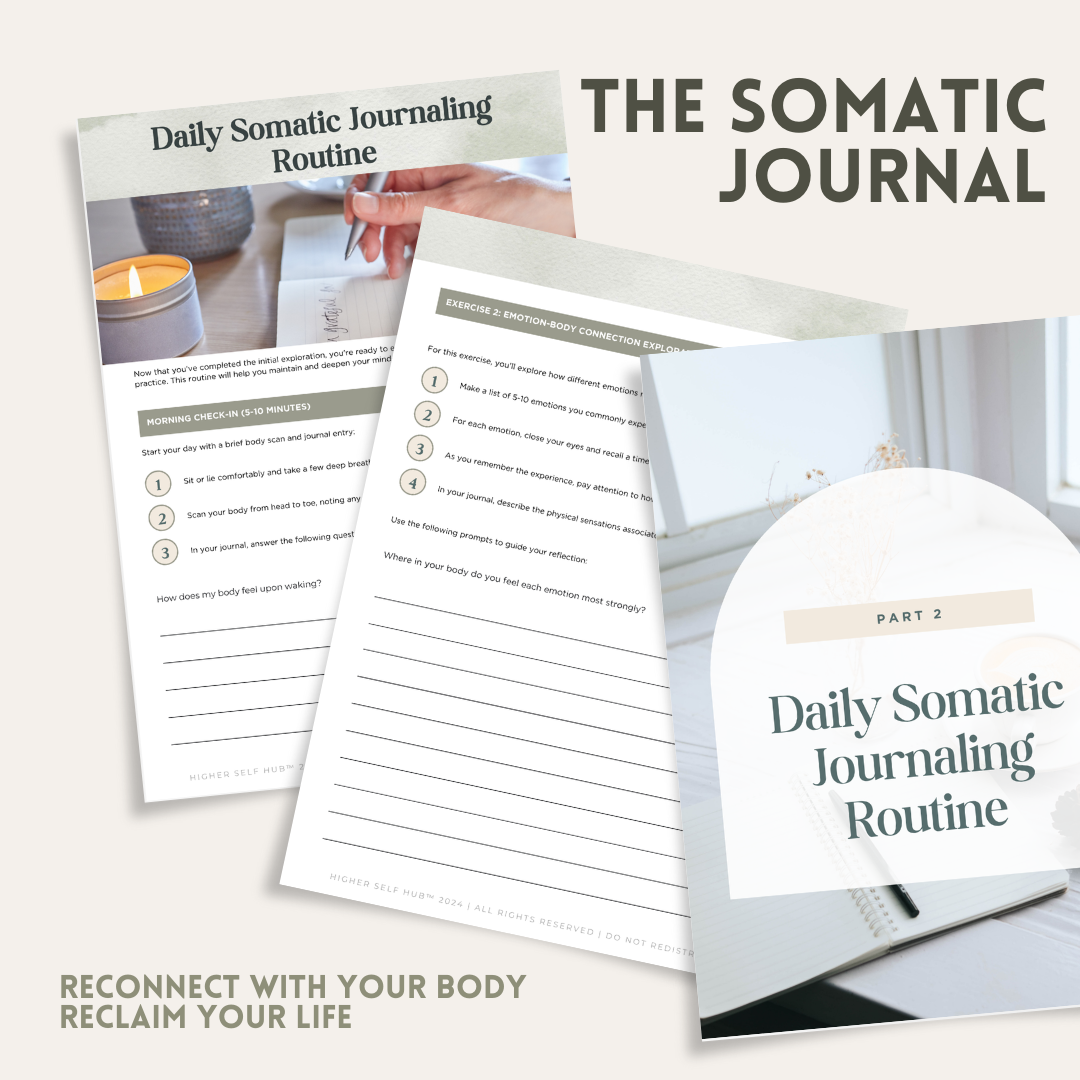
The Somatic Journal
$7.00
Something is off and you can’t name it. The tension in your neck, the racing thoughts at 2am, the feeling of being stuck in your own body without a way out.
This 52-page printable journal helps you stop guessing and start noticing what your nervous system is actually trying to tell you. Daily body awareness check-ins, pattern tracking, and guided reflections that take 5-10 minutes.
Not a gratitude journal. Not a mood tracker. A 30-day nervous system conversation with your own body.
Description
I used to think anxiety was something to push through. Ignore it. Outwork it. I’d wake up with my heart racing and spend the day trying to think my way out of what my body was feeling. Then I learned something that changed everything for me: it wasn’t a mind problem. It was a nervous system problem. Positive thinking isn’t the enemy. Ignoring the physical is. That’s what this journal is built around. Not writing about your feelings. Writing WITH your body.The difference between regular journaling and somatic journaling
Regular journaling asks: “How do I feel today?” Somatic journaling asks: “What is my nervous system trying to tell me?” One of our readers put it this way: “Now I understand.” Two words. That’s the whole transformation this journal is after. Not healing. Not fixing. Understanding.What’s Inside (52 pages)
- Daily check-in pages with simple body awareness prompts (5 minutes)
- Pattern recognition tracking so you can spot your unique triggers and stress signals
- Weekly integration exercises to make sense of what your body is teaching you
- Emergency reset techniques for moments of overwhelm
- Progress pages to track your wins (because noticing your jaw unclenched counts)
Your 30-Day Path
Week 1: The physical sensations start making sense. Week 2: You catch stress signals before they escalate. Week 3: Your body starts feeling like an ally, not an enemy. Week 4: You handle triggers that used to derail your entire day.Why this instead of just asking yourself the questions?
Because you won’t. Not consistently. Not with a system that shows you the pattern over time. One check-in is a snapshot. Thirty days of check-ins is a map. And the map is where the clarity lives. One of our buyers said she came here because she was “struggling with not feeling good enough and feeling like I don’t know what’s going on in my head and body.” This journal was made for exactly that. For the space between knowing something is off and understanding what it is.This journal is for you if:
- You feel things in your body but don’t know what they’re trying to say
- You want practical tools, not “think positive” advice
- You’d rather spend 10 minutes with a focused prompt than hours overthinking
- You’ve tried journaling before and it felt like writing in circles
This journal is NOT for you if:
- You need clinical support (this is a self-guided tool, not therapy)
- You’re looking for a one-time fix






Reviews
There are no reviews yet.