

Somatic Release Exercises: Pros And Cons From An Insider
Your nervous system is a smoke detector that won’t stop beeping—except there’s no fire. Why?
You’ve got the green smoothies down. The meditation app notifications are pinging. Your supplement drawer looks like a wellness influencer’s dream.
Yet your heart races for no reason. Sleep is something you have vague memories of. And that knot in your stomach? It’s as familiar as family.
If your body feels like it’s recovering from a marathon when all you did was check your email, you’re not alone.
That’s not weakness talking. It’s not you being “too sensitive” or “dramatic.”
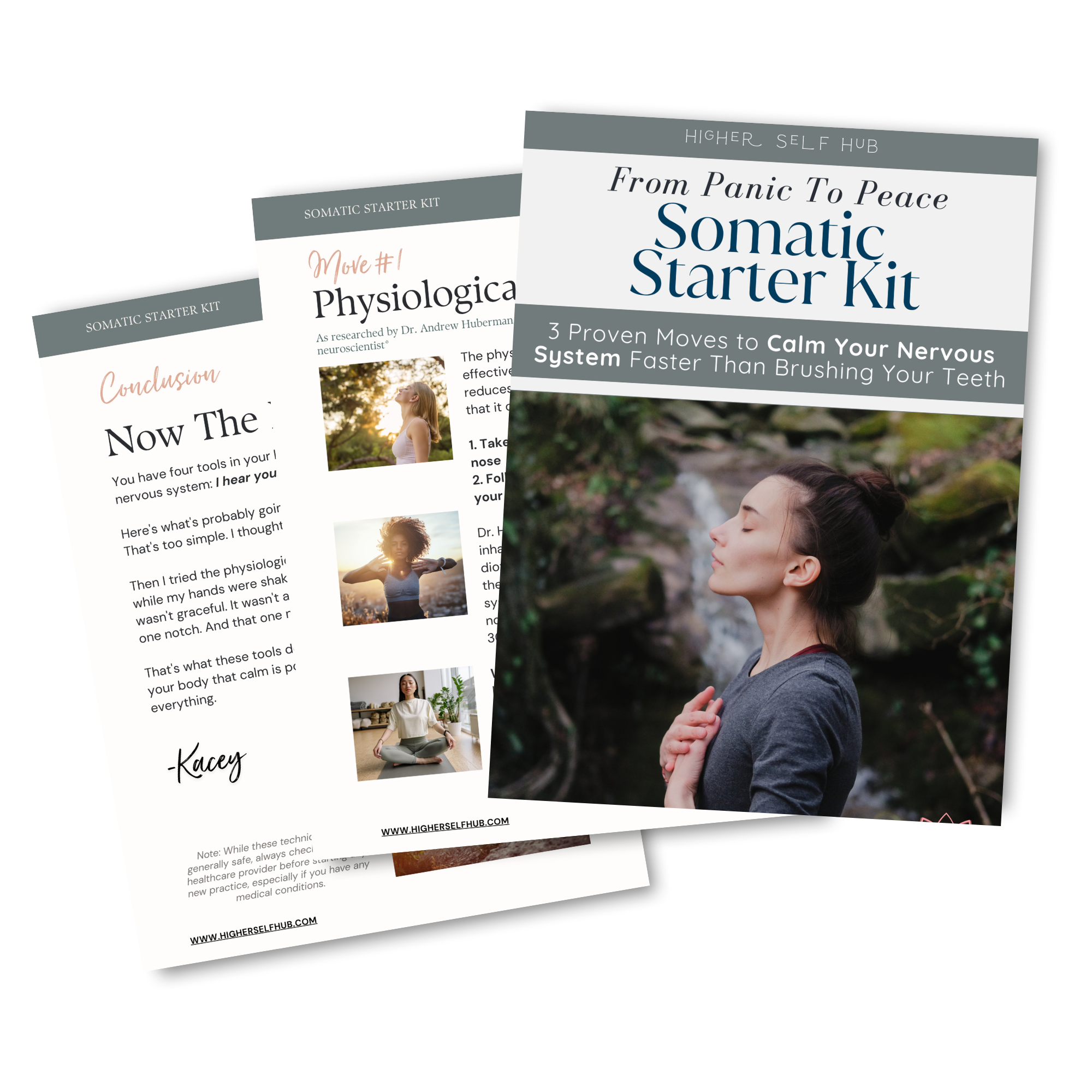
Your Free Somatic Starter Kit
3 science-backed tools to go from panic to peace in under 60 seconds.
Your inbox stays calm, too. Unsubscribe anytime. We respect your privacy.
Heads up: Some links in this post may be affiliate links, which means I may earn a small commission if you choose to purchase, at no extra cost to you. I only share what I love.
Your Nervous System Is Working Perfectly
It’s stuck in overdrive, and nobody gave you the manual for downshifting. That’s where somatic release exercises come in.
Here’s the thing nobody talks about in those glossy wellness circles: your body keeps the score. It reacts to events you don’t even remember.
Every stressful meeting. Every sleepless night with a crying baby. Every time you swallowed your words to keep the peace.
Your muscles, your fascia, your very cells are keeping a detailed record. And sometimes they refuse to let go of information that’s no longer serving you.
Until you find somatic release exercises—the practice that’s got everyone from trauma therapists to yoga teachers buzzing.
Before you think, “Here we go again with another miracle cure,” let’s get real about the pros and cons of somatic release exercises.

The Promising Pros Of Somatic Release Exercises
Your body becomes your ally, not your enemy.
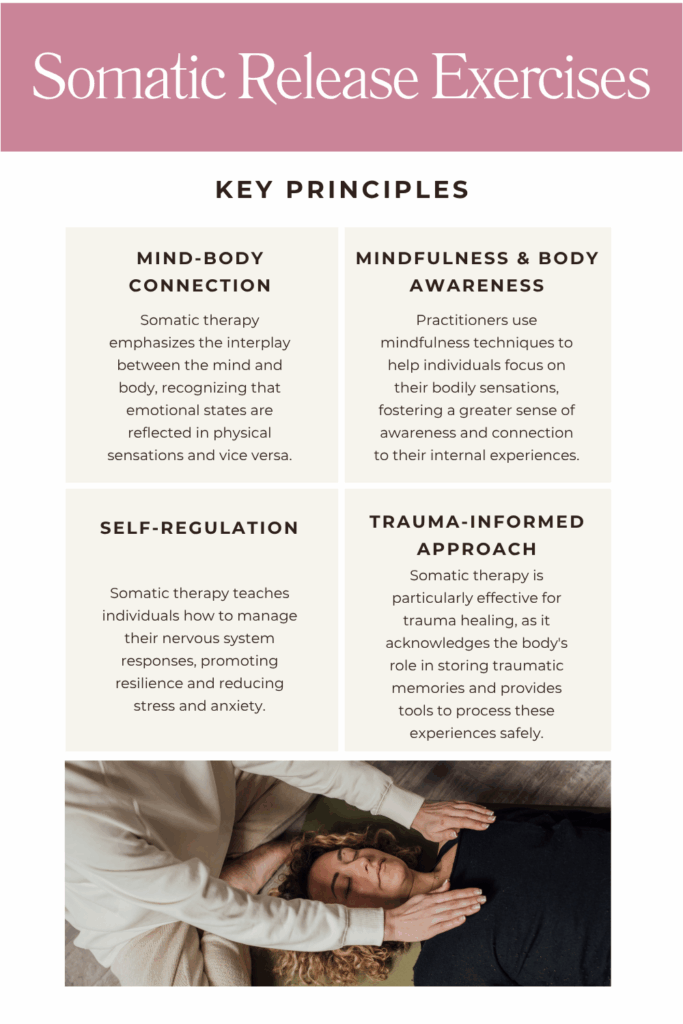
Somatic release exercises help you notice physical sensations without fixing or suppressing them. That chronic shoulder tension? Maybe it’s an important message about setting boundaries. The shallow breathing? Could be your system’s way of telling you to take a break.
It works with your nervous system, not against it.
You won’t hear useless advice to “Just relax” (eye roll). Somatic release exercises acknowledge that your body’s responses are understandable given your experiences. They help your body switch off stress mode and finish processing stress that got stuck. This allows your system to exhale finally.
You don’t need to relive trauma to release it.
No need to dig up painful memories or have dramatic breakthroughs on a therapist’s couch. Somatic exercises are gentle movements, breathwork, and grounding practices. You’ll practice awareness that honors your pace and comfort level.
It’s accessible and doesn’t need special equipment.
No expensive gadgets, supplements, or monthly memberships. Your body is the tool, and it’s already with you wherever you go.
Many people feel different immediately.
While deeper patterns take time to shift, it can happen fast. You may notice changes in tension, breathing, or sleep quality within days or weeks of consistent practice.
Ready to experience what we’re talking about? Let’s try something right now.
Ground and Release Tension Pattern

Press your feet firmly into the floor—really push down like you're trying to leave footprints in concrete. Hold that pressure for 5-6 seconds, then completely let go.

Notice what happens next. Your feet might feel warmer, tingly, or somehow more "there" than before. That's your nervous system finishing a stress cycle that was stuck.

You can do the same thing with your hands. Grip the edges of your chair or press your palms together as hard as you can, hold for a few seconds, then release completely. Pay attention to the wave of sensation that follows—that's tension finally getting permission to leave your body.

This isn't about forcing relaxation. It's about giving your muscles a chance to contract fully so they can truly let go. Your body knows what to do; you're just giving it the space to finish what it started.
The Reality Check: What Could Go Wrong
The practicality problem.
It can feel awkward in real life. Try explaining to your coworkers why you’re doing weird breathing exercises in the bathroom stall. Quiet space and uninterrupted time to practice are luxuries you don’t always have.
Practitioners vary wildly in quality and training.
Somatic therapy is booming, which means there are many new somatic exercise professionals. Someone who took a weekend workshop isn’t the same as a trauma-informed pro with years of experience.
It might feel weird at first.
If you’re used to pushing through physical discomfort or ignoring your body’s signals, this will be new. The practice of tuning in can feel foreign or uncomfortable to start.
Progress isn’t linear.
Some days you’ll feel amazing, others you might feel more activated or emotional. This doesn’t mean it’s not working—it’s often part of the process as your system recalibrates.
It’s not a magic bullet.
Somatic work is powerful, but it is most effective with a holistic health approach. If you’re dealing with heavy stuff—trauma, depression, anxiety disorders—somatic work is just one piece of the puzzle. Combining somatic exercises with other healing modalities might be best.

The Bottom Line: Are Somatic Release Exercises Right for You?
You’re a good fit for somatic release exercises if:
You’ve tried therapy, meditation, and exercise, but your body still feels “off.” Maybe you sleep well but wake up exhausted, or you’re calm mentally but your shoulders live up by your ears.
You notice your emotions show up in your body first. Your stomach knots before big meetings. Your jaw clenches when you’re frustrated. Your breathing gets shallow when you’re overwhelmed.
You’re tired of fighting your body and ready to work with it instead. It’s time to understand what your tension is trying to tell you, rather than just making it go away.
You have 10-15 minutes a day for gentle movement or breathing exercises. You don’t need to overhaul your life—just add some body awareness to what you’re already doing.
Proceed with extra care if:
You’re in active crisis—panic attacks, severe depression, or fresh trauma. Somatic work can still help, but understanding how trauma shows up is essential groundwork.
You have a complicated relationship with your body due to past trauma or abuse. Your body might not feel like a safe place to tune into right now, and that’s completely valid.
You have a history of complex trauma or eating disorders. Your relationship with your body might need healing before somatic exercises feel safe.
In these cases, start with a trauma-informed practitioner who can guide you safely.
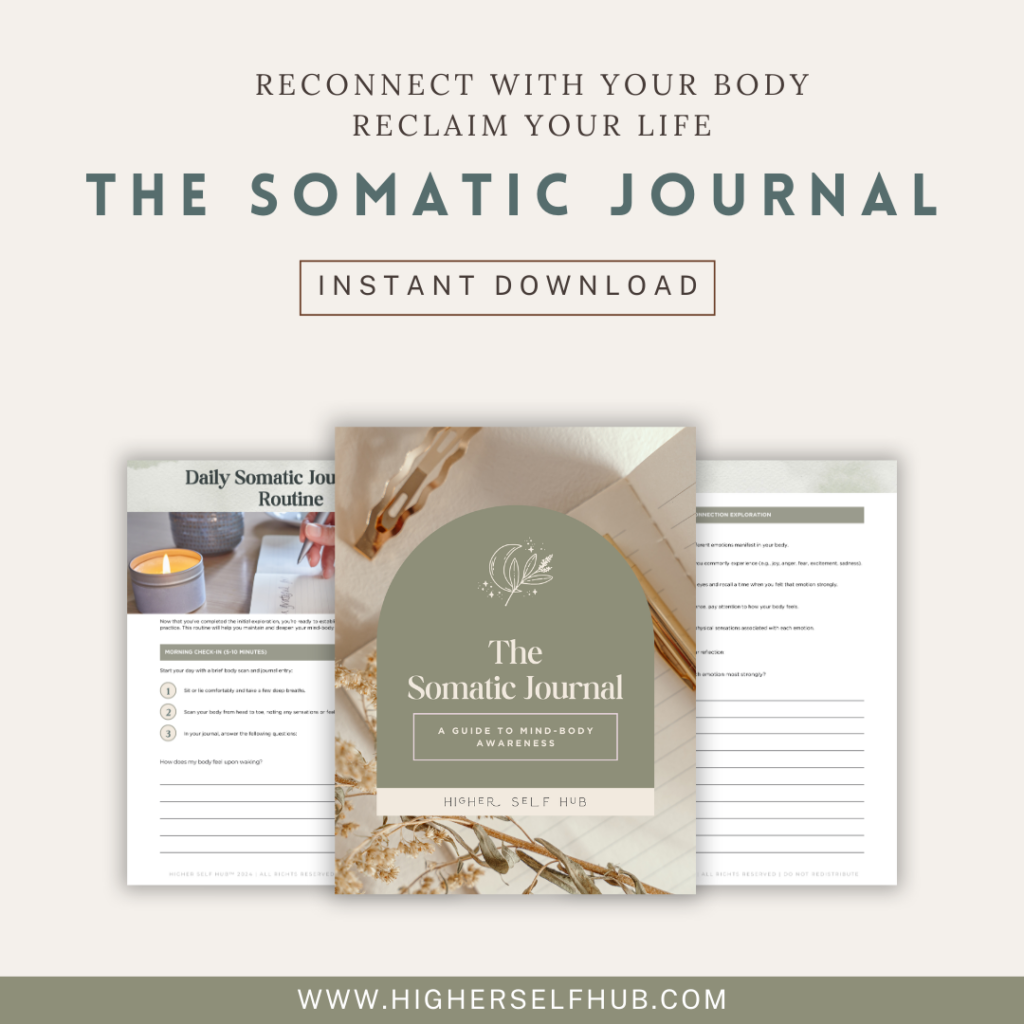
The Somatic Journal
Something is off and you can’t name it. The tension in your neck, the racing thoughts at 2am, the feeling of being stuck in your own body without a way out.
This 52-page printable journal helps you stop guessing and start noticing what your nervous system is actually trying to tell you. Daily body awareness check-ins, pattern tracking, and guided reflections that take 5-10 minutes.
Not a gratitude journal. Not a mood tracker. A 30-day nervous system conversation with your own body.
Your Next Somatic Release Exercise Awareness Move
Start small. Try a five-minute body scan as part of your somatic morning routine. Notice where you hold tension without trying to change it. Pay attention to your breathing and how it might stimulate your vagus nerve throughout the day.
Simple exercises can give you a taste of awareness without overwhelming your system.
If you find yourself intrigued, keep adding on. Consider somatic yoga for beginners, healing yoga, or easy yoga workouts.
Look for classes that focus on trauma-informed yoga techniques rather than external form. Or try somatic exercises for beginners that you can do at home.
Remember, your body’s been talking to you all along. Sometimes the most radical thing you can do is listen.
Without judgment, without trying to fix, without needing to understand everything immediately.
Your nervous system doesn’t need more strenuous work to do. It needs space to process and rest.
The conversation between your mind and body doesn’t have to be a battle. It can be a dance—one where you finally learn the steps your system’s been trying to teach you all along.
Still Feeling Stuck In Your Head?
Grab the free Somatic Starter Kit for 3 calming tools you can try today—because healing starts in the body. ✨
Your Free Somatic Starter Kit
3 science-backed tools to go from panic to peace in under 60 seconds.
Your inbox stays calm, too. Unsubscribe anytime. We respect your privacy.