Somatic Yoga: A Beginner’s Guide to Moving With Your Body (Not Against It)
You’re lying on the mat with your eyes closed. The instructor says “let everything go” and you’re trying, you really are. Still, your hips are screaming, your brain is running through tomorrow’s to-do list, and the woman next to you looks like she was born in child’s pose. This is where somatic yoga changes everything.
You roll up your mat early. Again.
If traditional yoga has ever felt like a performance you couldn’t keep up with, somatic yoga might be the reason you finally stay on the mat.
What Is Somatic Yoga?
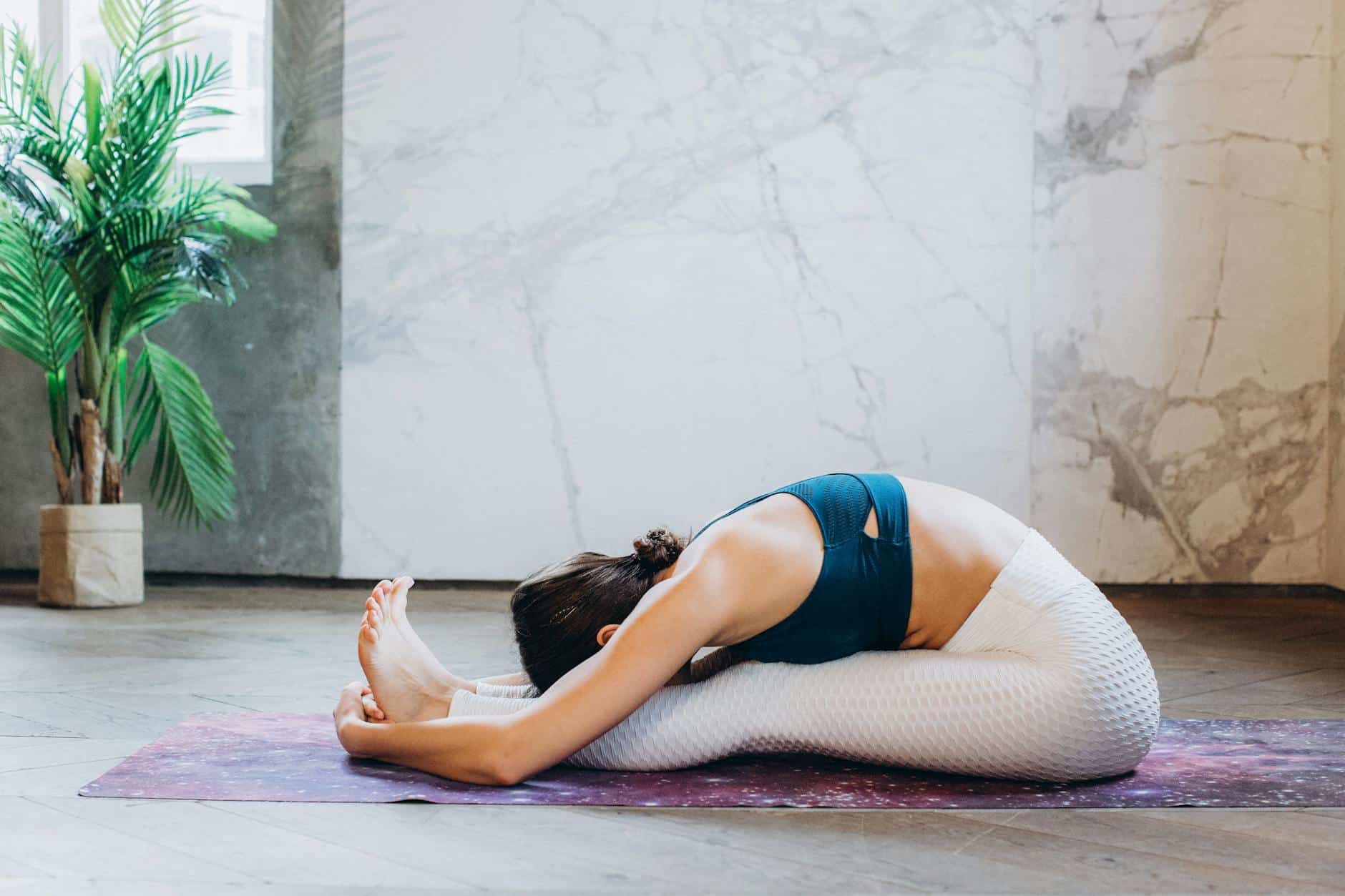
Somatic yoga is a body-first approach to movement. Instead of pushing into deeper poses or chasing flexibility, it asks one simple question: what do you actually feel right now?
Traditional yoga often starts from the outside in. Hold this pose. Breathe on this count. Reach further. Somatic yoga flips that. Instead, it starts from the inside out. You notice what’s tight, what’s holding, what your body is doing before you ask it to do anything different.
The word “somatic” simply means “of the body.” In short, somatic yoga is yoga that prioritizes your body’s signals over any external instruction. It’s less about how a pose looks and more about what it feels like from the inside.
This kind of body awareness is what makes somatic yoga different from almost every other movement practice. You’re not performing. You’re listening.
Why Somatic Yoga Works When Regular Yoga Doesn’t
Here’s the thing: Here’s the thing: most of us carry tension we don’t even know about. Years of stress, held emotions, and nervous system activation leave patterns in the body. Tight shoulders. A locked jaw. Hips that won’t release no matter how many pigeon poses you suffer through.
Regular yoga can sometimes push against those patterns without resolving them. However, somatic yoga works with your body instead. Specifically, it uses slow, intentional somatic movement to help your nervous system feel safe enough to actually let go.
I didn’t realize how much tension I was carrying until a therapist said something that stopped me cold: “That’s not normal. That’s not healthy.” I had always just laughed off the tight muscles, the held breath, the body that seemed permanently braced for impact. Once I started paying attention to what my body was actually holding, everything shifted. Not overnight. But steadily.
That’s what somatic exercises do. They help you notice what’s been running in the background, quietly, for years.
If you want to understand more about why calming down doesn’t always work (and what does), I break it all down in this free guide: Why Calming Down Doesn’t Work (And What Finally Will)
What Somatic Yoga Actually Looks Like
If you’re picturing a candlelit studio and an hour-long flow, set that image aside. Somatic yoga can happen on your living room floor while your kids nap. It can happen in bed before you get up. It can take five minutes or thirty.
Here’s what a simple somatic yoga sequence might include:
Gentle floor movements. For example, lying on your back, slowly rocking your knees side to side. Not stretching. Just noticing. Where does it catch? Where does it flow? This is body awareness at its most basic, and it’s the foundation of all somatic movement.
Slow spinal waves. On hands and knees, letting your spine move like water. Not cat-cow for Instagram. Cat-cow because you’re feeling what each vertebra does when you give it permission to move at its own pace.
Somatic breathing. This isn’t about box breathing or counting. It’s about noticing where your breath goes naturally and gently inviting it deeper. The kind of calming yoga practice that actually calms, because you’re not forcing anything.
Standing awareness. Simply standing with your eyes closed, feeling your weight shift. This is grounding in the purest sense. No special pose. Rather, just your feet on the floor and your attention turned inward.
What’s more, none of this requires flexibility, experience, or special equipment. Somatic yoga for beginners looks exactly the same as somatic yoga for someone who’s been practicing for years. After all, it’s not about progress. It’s about presence.
A Simple Somatic Yoga Sequence to Try Right Now
This somatic yoga sequence takes about 10 minutes. Do it on the floor, on your bed, or anywhere you can lie down. No mat required.
1. Find Your Ground
Lie on your back with your knees bent, feet flat. Close your eyes. Feel where your body touches the surface beneath you. Just notice. Stay here for five slow breaths.
2. Rock Your Knees
Let both knees fall gently to one side, then the other. Slow. Smaller than you think. This isn’t a stretch. It’s a conversation with your hips and lower back. Notice which side feels different.
If you want to try somatic movement without piecing it together yourself, my free Somatic Starter Kit walks you through the first steps.
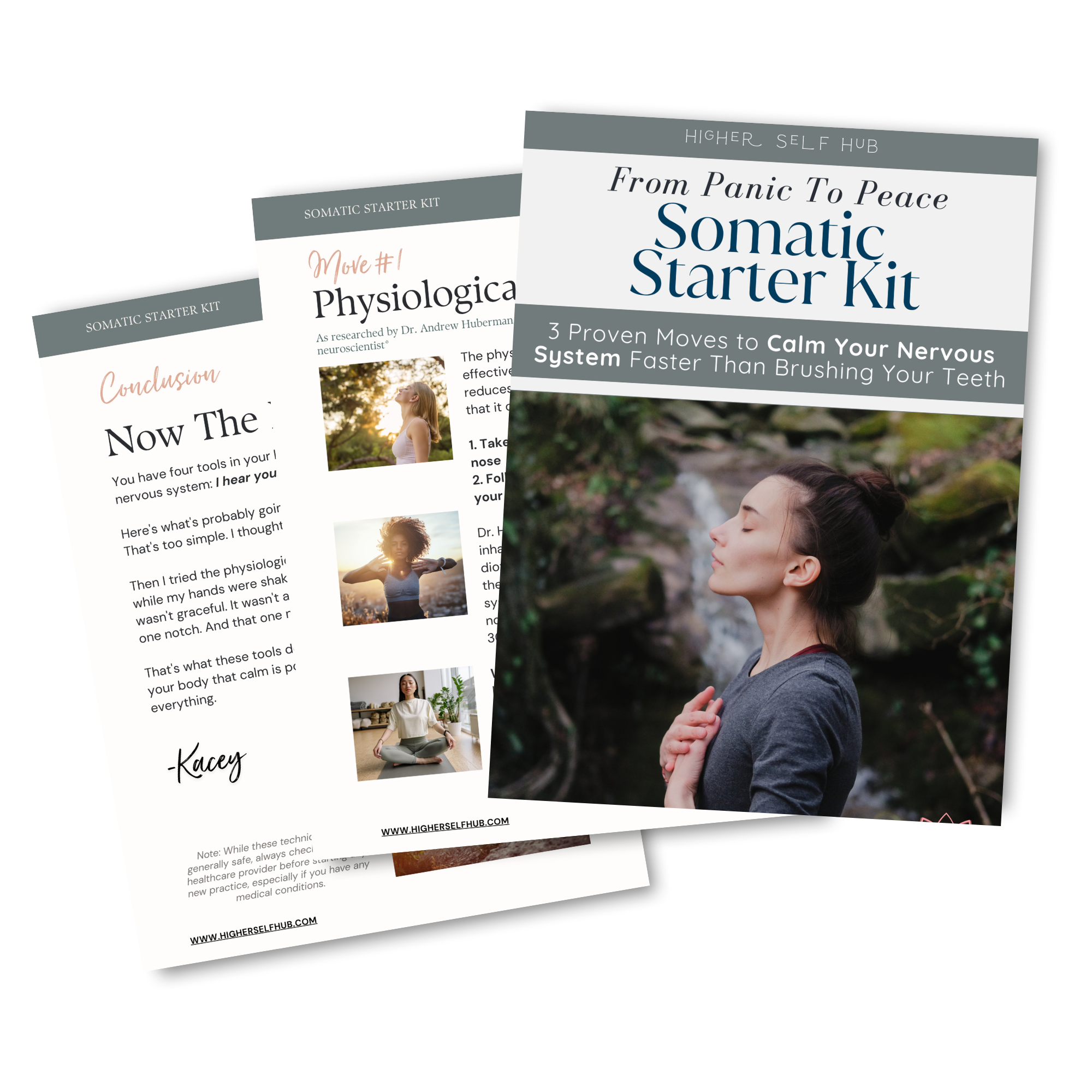
Your Free Somatic Starter Kit
3 science-backed tools to go from panic to peace in under 60 seconds.
Your inbox stays calm, too. Unsubscribe anytime. We respect your privacy.
3. The Pelvic Tilt
Gently rock your pelvis so your lower back presses into the floor, then arches away. Tiny movements. This is one of the most effective somatic exercises for releasing tension in your core and lower back without any effort at all.
4. Arms Open
Extend your arms out to the sides, palms up. Slowly bring one arm across your body, then return. Switch sides. Feel how your ribs, shoulders, and chest respond. This somatic movement opens the places where we hold stress and emotional tension.
5. Full Body Check
Come back to stillness. Scan from your toes to the top of your head. Does anything feel different from when you started? Warmer? Softer? Heavier? That’s your nervous system shifting from alert to at rest. That’s somatic yoga doing its work.
When my body is at its most activated, when my whole system feels like it’s revolting and I just want to run, one of the things that helps most is starting with the smallest piece. Can I relax just my toes? Just that. Not my whole body. Just my toes. That tiny somatic exercise routine is often enough to bring me back from the edge.
When Somatic Yoga Helps the Most
Somatic yoga isn’t just a workout. It’s a nervous system tool. Here’s when it tends to make the biggest difference:
When cortisol is running the show. If you wake up wired, crash by 2pm, and can’t turn off at night, your body is stuck in a stress loop. Somatic yoga for cortisol works because it signals safety to your nervous system instead of adding more demand. Gentle somatic exercises help your body downshift without forcing it.
When emotions feel stuck. Sometimes you can’t cry even when you want to. Or anger sits in your chest with nowhere to go. Somatic yoga helps with emotional release because movement creates a pathway for what’s been trapped. Your body processes what talk therapy sometimes can’t reach.
As a morning routine. Even five minutes of somatic yoga as a morning routine can change the entire tone of your day. Before your feet hit the floor, before the kids are up, before the to-do list starts running. A simple somatic yoga sequence in bed is enough.
When traditional exercise feels like too much. On the hard days, when a run or a full yoga class feels impossible, so somatic yoga is the thing that meets you where you are. This is therapeutic yoga in the truest sense. It doesn’t ask you to push through. It asks you to soften.
The Science Behind Somatic Yoga (Explained Simply)
Your nervous system has two main modes: alert (sympathetic) and rest (parasympathetic). Most of us spend way too long in alert mode, and our bodies adapt to that as the new normal.
Somatic yoga works by gently activating the vagus nerve, the longest nerve in your body, which runs from your brain all the way to your gut (source). Essentially, when you do slow, mindful somatic movement, you’re sending a signal to your brain: we’re safe. Over time, that mind body connection gets stronger. As a result, your body learns it doesn’t have to stay braced all day.
This is also why somatic yoga builds emotional resilience. It’s not about toughening up. It’s about teaching your body that it can move between states. Activated to calm. Tense to soft. Ultimately, that flexibility in your nervous system is what real somatic healing looks like.
The crossbody movements that show up in many somatic yoga sequences (like gently swinging your arms across your body) actually help re-engage both sides of your brain. When you’re stressed or spiraling, your prefrontal cortex, the thinking part, goes offline. Crossbody somatic movement helps bring it back. You’re not broken for losing the ability to think clearly in those moments. Your brain is doing exactly what it was designed to do. You just need to signal that you’re safe.
What If You Want to Go Deeper With Somatic Yoga?
If this post resonated, here are some paths forward:
Start a simple tracking practice. You don’t need anything fancy. Even a few lines at the end of the day about what you noticed in your body can reveal patterns you’d never see otherwise. Over time, Over time, that kind of somatic awareness becomes second nature.
Try a somatic journaling practice. Similarly, writing about what you feel in your body (not just your mind) takes the awareness from the mat into the rest of your life.
Explore more somatic exercises for beginners. Somatic yoga is one doorway. There are many body-based practices that work the same way, whether you prefer movement, breathwork, or simple grounding exercises.
Read about the vagus nerve. Furthermore, understanding why these tools work is often what makes the difference between “this is nice” and “this is actually changing something.”
You Don’t Have to Be Good at This
Somatic yoga isn’t a thing you can fail at. There’s no correct pose. No ideal sequence. No benchmark to hit.
If you lay on the floor for ten minutes and noticed that your left hip feels different than your right, that’s it. That’s the practice. That’s somatic healing happening, quietly, without fanfare.
Your body has been carrying a lot. It doesn’t need another thing to be good at. It needs permission to be exactly where it is.
Start with whichever movement sounded like the least amount of effort. That’s the right one.
If this post helped, save it for later. Pinterest is a great place to keep things like this close for the days when you need a gentle reminder that moving with your body (not against it) is always an option.
If somatic yoga feels like your kind of movement, you will also love these somatic exercises for reducing cortisol. And for complete beginners, this guide to what somatic exercises are and why they work for emotional release breaks it all down.
Ready to move with your body instead of against it? The free Somatic Starter Kit below is the gentlest place to begin.
Your Free Somatic Starter Kit
3 science-backed tools to go from panic to peace in under 60 seconds.
Your inbox stays calm, too. Unsubscribe anytime. We respect your privacy.