
Your Body Knows How To Sleep Well, Now Let It
Introduction
3:17 AM.
You’re staring at the ceiling again, your mind racing through tomorrow’s to-do list, last week’s embarrassing moment, and every possible scenario of how your presentation could go wrong.
Sound familiar?
Here’s what most “how to sleep well” advice gets wrong: It tells you to stop thinking. As if you haven’t already tried that. As if willing your brain to shut up has ever worked for anyone, ever.
But here’s the truth I wish someone had told me years ago: Your body already knows how to sleep well. It’s hardwired with everything it needs. The problem isn’t that you’re broken – it’s that your nervous system is stuck in overdrive.
When your nervous system is dysregulated, even the best sleep hygiene tips fall flat. You can have the perfect room temperature, blackout curtains, and a $300 pillow, but if your body is still in fight-or-flight mode, sleep remains elusive.
That’s where somatic tools come in. These aren’t just breathing exercises or meditation (though those have their place). These are research-backed, body-based techniques that actually teach your nervous system how to downshift from chaos to calm.
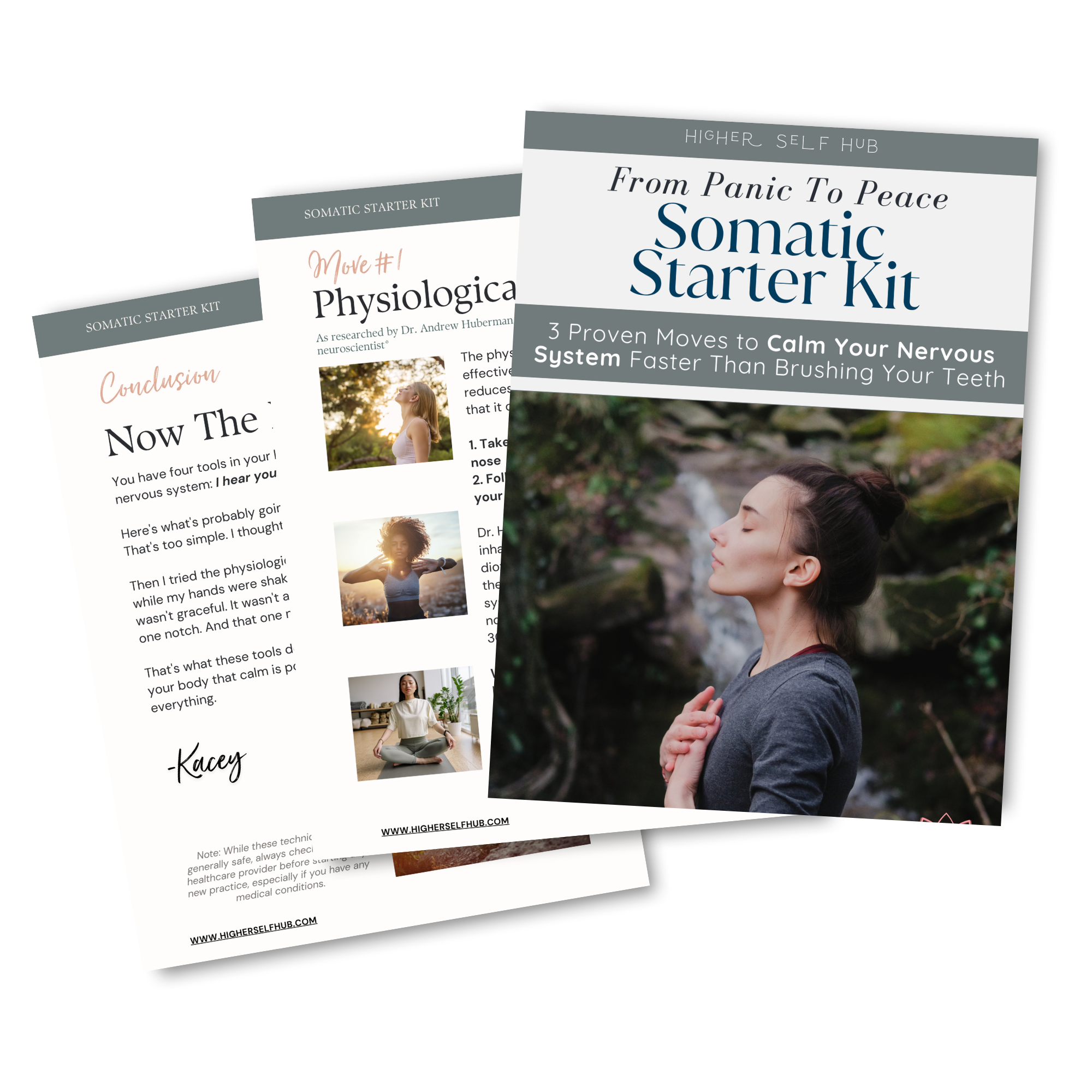
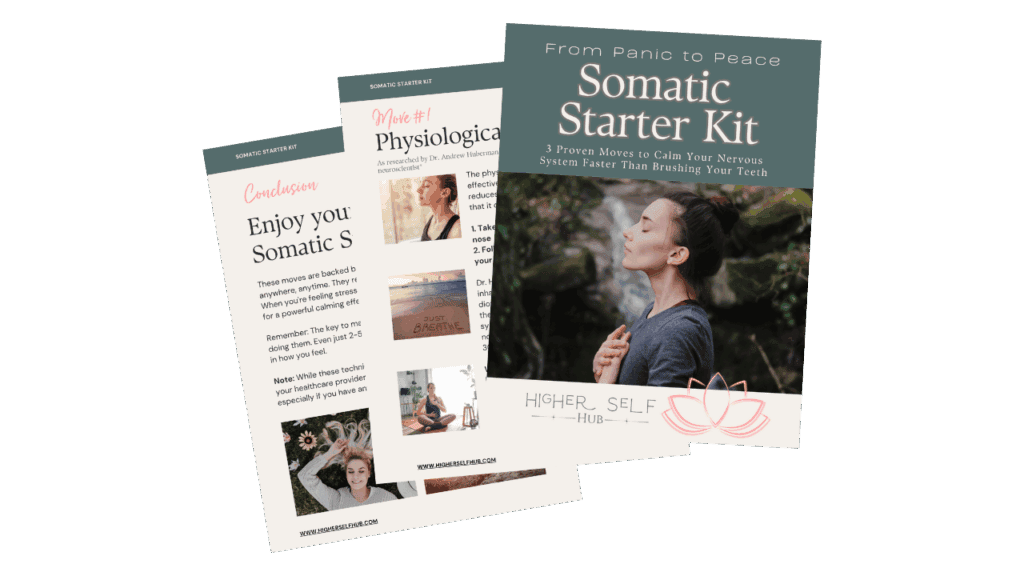
Grab Your Somatic Starter Kit HERE: The same proven moves I’ll share with you today – the ones that helped me go from 2 AM anxiety spirals to actually sleeping through the night.
Your Free Somatic Starter Kit
3 science-backed tools to go from panic to peace in under 60 seconds.
Your inbox stays calm, too. Unsubscribe anytime. We respect your privacy.
Why Your Mind Races at Night (And Why It’s Not Your Fault)
Let me guess what you’ve been told about how to sleep well:
“Just clear your mind.” “Stop thinking so much.” “Try counting sheep.”
I used to think I was just bad at sleeping. Like some people are naturally good at math or sports, and I drew the short straw on the sleep thing.
But here’s what’s really happening when your mind won’t stop at bedtime:
Your nervous system is doing exactly what it’s supposed to do. It’s scanning for threats, processing the day, and trying to keep you safe. The problem is, it doesn’t know the difference between a real emergency and your brain’s tendency to catastrophize about tomorrow’s meeting.
Women especially struggle with this. We’re conditioned to be hypervigilant, to carry the mental load, to anticipate everyone’s needs. Our nervous systems are chronically activated from managing everything and everyone around us.

By 10 PM, your body might be tired, but your nervous system is still buzzing. It’s like trying to sleep while your internal alarm system is going off.
The good news? Understanding how to sleep well isn’t about forcing your mind to be quiet. It’s about giving your nervous system permission to downregulate through your body.
Your sympathetic nervous system (fight-or-flight) needs to hand the reins over to your parasympathetic nervous system (rest-and-digest). And the fastest way to make that happen isn’t through your thoughts – it’s through somatic, body-based techniques.
The Science Behind Somatic Sleep Solutions
Traditional sleep advice focuses on your environment and your thoughts. And while those matter, they’re missing the most important piece: your nervous system.
Somatic approaches work because they speak your body’s language. Instead of trying to think your way to calm, you’re using physical techniques to signal safety to your nervous system.
When you’re learning how to sleep well, you’re really learning how to regulate your autonomic nervous system. This is the part of your nervous system that controls things like heart rate, breathing, and yes – your ability to fall asleep.
Here’s the beautiful part: Your body has built-in reset buttons. Specific breathing patterns, body positions, and gentle movements that can shift you from activated to calm in minutes, not hours.
Research shows that somatic techniques can:
- Reduce cortisol levels within 30 seconds
- Activate your vagus nerve (the main pathway of your parasympathetic nervous system)
- Decrease anxiety and racing thoughts
- Improve sleep quality and duration
The key is knowing which techniques work and how to use them. Not all somatic tools are created equal, and timing matters when you’re trying to wind down for sleep.
6 Somatic Techniques That Actually Work for Better Sleep
Technique 1: Progressive Body Scanning with Tension Release
Your body is holding the day’s stress in places you don’t even realize.
Progressive body scanning isn’t just about relaxation – it’s about redirecting your racing mind from tomorrow’s worries to right-now body awareness.
Here’s how to do it for better sleep: Start at the top of your head and slowly move your attention down through your body. But here’s the key difference: when you find tension, don’t just notice it – actively release it.
Step by step: Notice your forehead – is it furrowed? Consciously soften it. Check your jaw – are you clenching? Let it drop open slightly. Move to your shoulders – are they hunched? Let them melt away from your ears. Continue down through your arms, chest, back, hips, legs, and feet.
When your mind wanders (and it will), gently bring it back to wherever you left off in your body. This isn’t a failure – it’s the practice.
Why this works for how to sleep well: Scanning interrupts thought loops by giving your mind a specific job that’s anchored in your physical body. You literally cannot worry about tomorrow while you’re focused on releasing tension in your left shoulder.
Make it work for you: Some nights you might only get through your head and shoulders before falling asleep. That’s perfect. This isn’t about completion – it’s about redirecting your attention away from your racing thoughts.

Technique 2: The 4-7-8 Breath with Full Body Awareness
Most people do breathing exercises wrong for sleep because they focus only on the counting.
The real magic happens when you add somatic awareness – feeling where the breath moves in your body and how it affects your nervous system.
Here’s the technique: Inhale through your nose for 4 counts, hold for 7 counts, exhale through your mouth for 8 counts.
But here’s where most people stop, and where we’re going deeper:
On the inhale: Feel your ribs expanding, your belly rising, your back widening. Notice how the breath fills your entire torso, not just your chest.
During the hold: Sense the fullness in your body. Feel how this pause creates space and stillness in your nervous system.
On the exhale: Visualize releasing not just air, but tension, worry, and the day’s accumulated stress. Feel your whole body softening as you breathe out.
Why this enhances how to sleep well: The 4-7-8 pattern activates your parasympathetic nervous system, but adding body awareness amplifies the effect. You’re not just breathing – you’re teaching your entire nervous system to downregulate.
Troubleshooting: If 7 seconds feels too long to hold, start with 4-4-6 or even 3-3-4. The ratio matters more than the specific count. If you feel dizzy, slow down or take a break.
Technique 3: Gentle Self-Touch and Pressure Points
Your nervous system craves safe, nurturing touch – especially when it’s activated and racing.
This isn’t just “nice to have” comfort. Therapeutic touch releases oxytocin and activates your vagus nerve, both crucial for how to sleep well.
Hand on heart technique: Place one hand on your heart, one on your belly. Feel the warmth and weight of your hands. This simple connection tells your nervous system: “I’m here, I’m safe, I’m cared for.”
Sleep-supporting pressure points: Gently massage your temples in small circles for 30 seconds. Apply gentle pressure behind your ears, in the soft spot where your skull meets your neck. Hold the acupressure point on your wrists – about three finger-widths down from your hand, in the center.
Self-massage for tension release: Use your fingertips to massage your jaw muscles – most of us hold incredible tension here. Gently knead the muscles where your neck meets your shoulders. Roll your shoulders back and massage the base of your skull.
The science behind therapeutic touch: Safe touch activates your parasympathetic nervous system and releases oxytocin, the bonding hormone that promotes calm and connection. When you’re learning how to sleep well, you’re essentially learning how to create safety in your body.
Make it yours: Some people prefer firmer pressure, others lighter touch. Pay attention to what feels soothing to your nervous system.
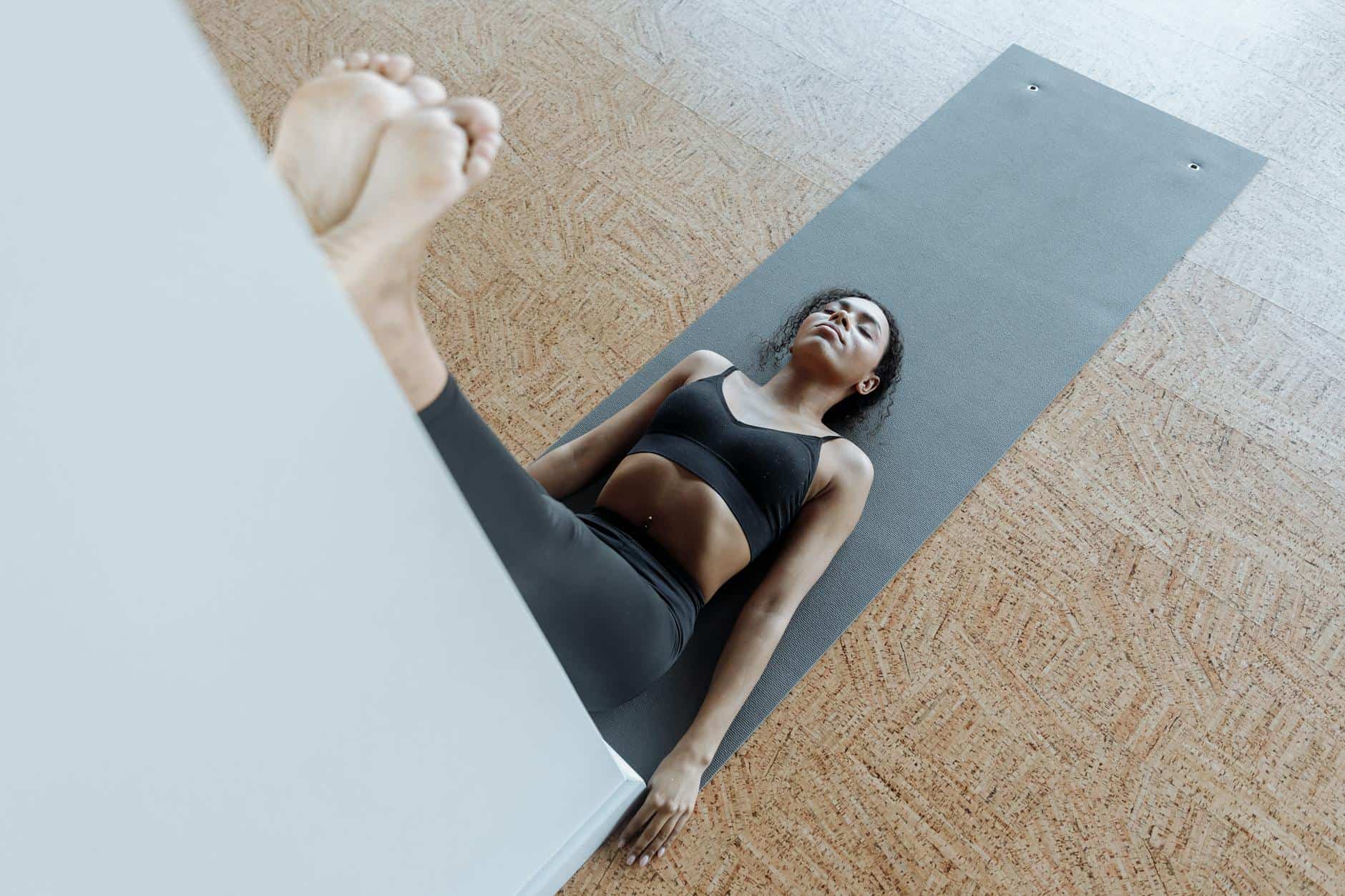
Technique 4: Legs Up The Wall (Viparita Karani)
This might be the simplest yet most effective technique for how to sleep well when your nervous system is overstimulated.
All you need is a wall and 5-10 minutes.
How to do it: Lie on your back and scoot your sitting bones close to a wall. Extend your legs up the wall and let your arms rest by your sides. That’s it.
Why this works so powerfully: The gentle inversion helps regulate blood flow and activates your parasympathetic nervous system. Your heart doesn’t have to work as hard to pump blood back from your legs, which signals to your body that it’s safe to rest.
What you might notice: A sense of immediate calm washing over you. Your breathing naturally slowing down. Tension melting out of your legs and lower back. Your mind becoming quieter without you having to force it.
For better sleep: Try this 30 minutes before bedtime, or even right in bed if you have a headboard wall. You can also do this in the middle of the night if you wake up anxious.
This is a technique from my Somatic Starter Kit because it’s so reliable and requires zero skill – just the willingness to let gravity do the work.
Modifications: If the full pose is uncomfortable, bend your knees or place a pillow under your lower back.
Technique 5: Using Sound to Turn Off Your Thinking Brain
Sometimes your racing mind needs a little help quieting down, and that’s where strategic sound comes in.
Your brain can’t focus on anxious thoughts and absorbing healing sounds at the same time. It’s neurologically impossible.
Binaural beats for sleep: These use specific frequencies (usually in the delta or theta range) that naturally sync your brainwaves to sleepy states. Pop in headphones and let the science do the work.
Meditation music and soundscapes: Nature sounds, gentle instrumental music, or guided sleep meditations give your mind something to focus on besides your to-do list.
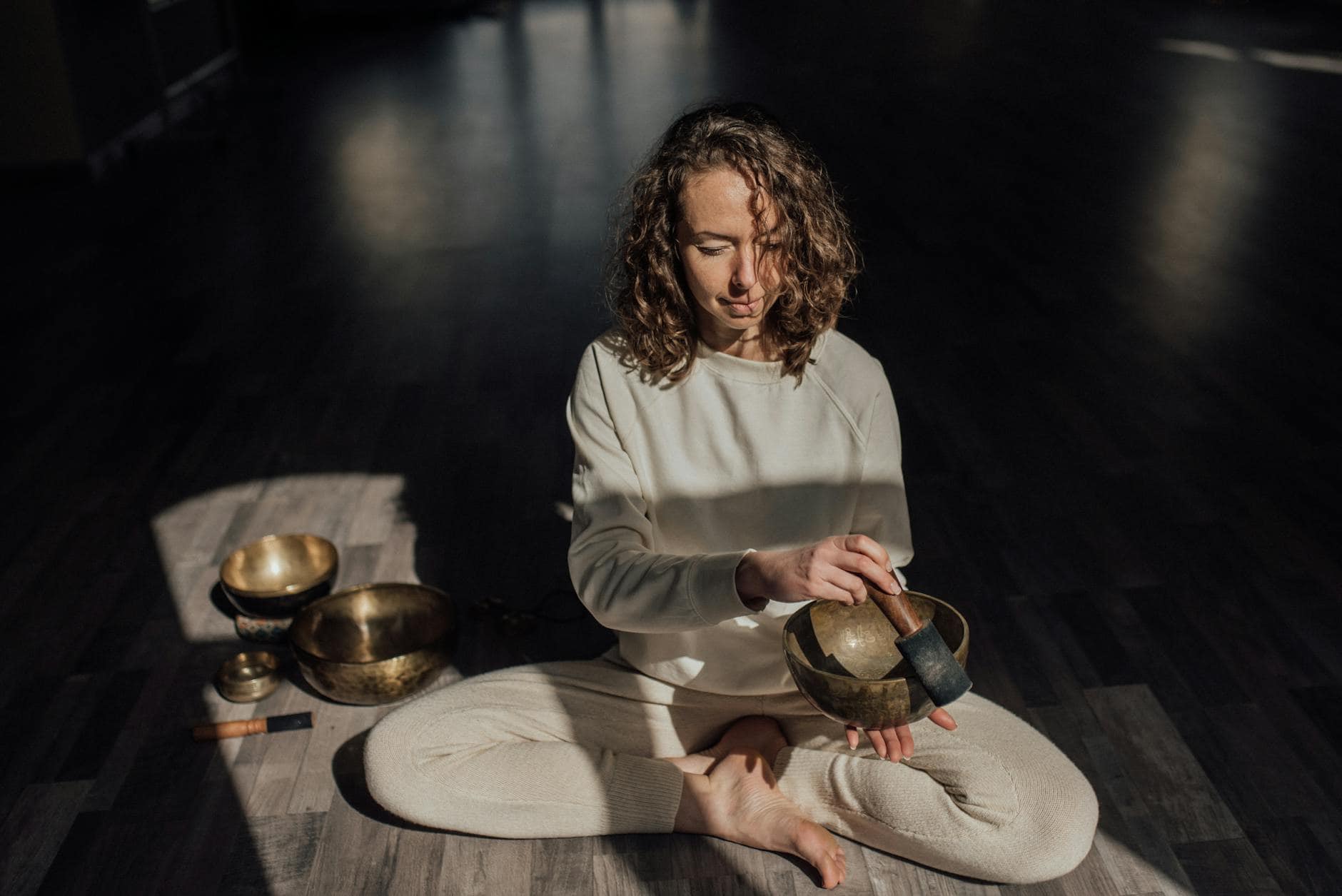
Sound bowls and healing frequencies: The resonant tones of Tibetan or crystal singing bowls can literally vibrate tension out of your body and nervous system.
How this supports how to sleep well: Sound works directly on your nervous system through your auditory processing, bypassing your thinking mind entirely. It’s like giving your brain a different radio station to tune into.
Making it work for you: Experiment with different types of sound to see what resonates with your nervous system. Some people find nature sounds distracting, while others find them deeply calming.
Pro tip: Start the sound before you get into bed, so your nervous system begins downregulating before you’re even lying down.
Technique 6: Somatic Grounding Exercises
When your mind is spinning, grounding brings you back to your body and the present moment.
Traditional grounding focuses on what you can see and hear. Somatic grounding goes deeper by including body awareness.
The 5-4-3-2-1 somatic version: 5 things you can feel in your body (the weight of your head on the pillow, your back against the mattress, the temperature of the air on your skin) 4 things you can hear 3 things you can see (even in dim light) 2 things you can smell 1 slow, deep breath that fills your whole torso
Feeling your body’s weight and connection: Notice how your body is supported by your bed. Feel the places where you’re making contact – your head, shoulders, back, hips, legs. Let yourself sink into that support.
Temperature awareness: Notice the coolness of the air on your face, the warmth under your covers, how different parts of your body feel warmer or cooler.
Texture and touch grounding: Feel the texture of your sheets, the weight of your blanket, the softness of your pillow. Use these sensations as anchors to keep you in your body instead of in your racing thoughts.
Why grounding improves how to sleep well: It interrupts the anxiety spiral by bringing you into present-moment body awareness. Your nervous system can’t be worried about the future while it’s focused on current physical sensations.
Creating Your Personal Somatic Sleep Routine
Here’s the truth about learning how to sleep well: there’s no one-size-fits-all solution.
What works for your nervous system might be different from what works for your partner’s or your best friend’s. And that’s completely normal.
Start by experimenting with one technique at a time. Try each one for 3-4 nights before moving to the next. Notice which ones feel natural to your body and which ones create the most noticeable shift in your nervous system.
Some bodies respond better to movement-based techniques (like shaking or power posing), while others prefer stillness-based approaches (like the heart-hand connection).
Here’s how to build your personalized routine:
20 minutes before bed: Choose one activating technique (like power posing) to release the day’s tension.
In bed: Use 1-2 calming techniques (like the physiological sigh or heart-hand connection) to signal to your nervous system that it’s time to rest.
If you wake up with racing thoughts: Have your go-to technique ready (the 5-4-3-2-1 grounding works well for middle-of-the-night wake-ups).
Want to master these foundational moves? Download the complete Somatic Starter Kit – it includes the 3 most effective techniques that can calm your nervous system faster than brushing your teeth. These are the same moves that transformed my sleep and the sleep of thousands of women I’ve worked with.
Remember: consistency beats perfection. Even 2-3 minutes of somatic practice can make a significant difference in how well you sleep.

When Racing Thoughts Persist: Going Deeper
Sometimes, knowing how to sleep well requires more than bedtime techniques.
If you’ve tried everything and your mind still races at night, it might be a sign that your nervous system needs deeper support during the day.
Chronic racing thoughts often indicate chronic nervous system dysregulation. Your body is stuck in survival mode, and bedtime techniques alone can’t override that level of activation.
Here are some signs your nervous system needs additional support:
- You feel tired but wired most days
- Small stressors feel overwhelming
- You have trouble concentrating during the day
- You experience physical symptoms like tight chest, shallow breathing, or digestive issues
- You feel like you’re always “on” and can’t truly relax
This doesn’t mean you’re broken. It means you’re human, living in a world that keeps your nervous system chronically activated.
Daytime nervous system support might include:
- Regular somatic movement practices
- Therapy that includes body-based approaches
- Reducing stimulants and adding nervous system-supportive nutrients
- Creating more moments of genuine rest (not just scrolling on your phone)
For comprehensive nervous system support, consider approaches that combine multiple somatic techniques with emotional processing. Movement-based practices that help you release stored stress can be particularly powerful.
The Somatic Starter Kit gives you the foundation with 3 proven moves, but if you’re dealing with persistent anxiety and sleep issues, you might benefit from the complete Stop The Spiral program. It includes 12 Rapid Relief Resets, a Body Mapping Workbook, and custom audio meditations designed for when anxiety tries to make decisions for you. Learn more at higherselfhub.com/hope.
Building Long-term Somatic Awareness for Better Sleep
Learning how to sleep well is really about learning how to listen to your body.
Most of us have spent years ignoring or overriding our body’s signals. We push through fatigue, ignore stress symptoms, and wonder why our bodies won’t cooperate when we finally want to rest.
Building somatic awareness means tuning back into your body’s wisdom.
Start small: Check in with your body a few times during the day. Notice where you’re holding tension, how your breathing feels, whether your shoulders are up by your ears.
Practice nervous system awareness: Learn to recognize the early signs of activation (shallow breathing, tight jaw, racing thoughts) so you can intervene before you’re completely dysregulated.
Create micro-moments of regulation: Use somatic techniques throughout the day, not just at bedtime. A few physiological sighs during a stressful meeting can prevent that stress from accumulating and disrupting your sleep later.
Honor your body’s rhythms: Notice when you naturally feel tired versus when you think you should feel tired. Work with your nervous system instead of against it.
For deeper exploration of movement-based nervous system regulation, consider comprehensive somatic practices that combine movement with emotional release work. These approaches can help you build the long-term resilience that makes restful sleep your new normal.
Your Body Already Knows
Here’s what I want you to remember: your body already knows how to sleep well.
It’s not broken. You’re not doing it wrong. You just need to give your nervous system the tools it needs to feel safe enough to rest.
These somatic techniques aren’t just about sleep – they’re about reclaiming your relationship with your body and trusting its wisdom.
Start tonight. Pick one technique that felt most accessible to you and try it. Notice what happens in your body, not just in your mind.
Be patient with yourself. If you’ve been dealing with sleep issues for months or years, it might take some time for your nervous system to trust that it’s safe to truly relax.
But I promise you this: your body wants to sleep well. It wants to rest and restore and wake up feeling refreshed. Sometimes it just needs a little help remembering how.
Your nervous system is not your enemy – it’s been trying to protect you. Now you can teach it a new way to keep you safe: through rest, through trust, through the deep knowing that you are safe to sleep.
If your evenings need one more calming cue, try adding a cup of one of these nerve-calming teas for sleep to your wind-down routine. They work with your nervous system to help your body do what it already knows how to do.
Your Free Somatic Starter Kit
3 science-backed tools to go from panic to peace in under 60 seconds.
Your inbox stays calm, too. Unsubscribe anytime. We respect your privacy.