

When Your Neck Won’t Relax: 7 Gentle Somatic Practices
Neck tension can ruin a good day. You’ve stretched your neck three times today. You tried rolling your shoulders back. You’ve tried to “just relax.” And your neck is still a rock.
If your neck will not relax no matter how much you stretch or roll it, you are not doing anything wrong.
Why Your Neck Won’t Relax (It’s Not What You Think)
For many people, neck tension has very little to do with posture or flexibility. More often, it is a sign that the body has been staying alert for a long time. Even when life slows down, the nervous system does not always get the message right away.
The neck and shoulders are common places where stress settles. They are close to the head, close to our senses, and often involved in bracing or preparing for what might come next. Over time, that readiness can turn into chronic tightness.
This does not mean your body is broken. It means it adapted.
What Most People Try (And Why It Backfires)
Before we get to what actually helps, let’s talk about what doesn’t:
Aggressive stretching triggers more guarding. When your nervous system feels unsafe, pushing harder tells your body it needs to protect even more.
Forcing deep breathing creates more tension. If your body is already braced, being told to breathe deeply can feel like one more thing you’re failing at.
Ignoring the tension keeps your body in alert mode. Pretending it’s not there doesn’t make it go away. It just means your body keeps trying to get your attention.

What Actually Helps Neck Tension
The practices below are not exercises to push through or stretches to force. They are gentle ways to check in with your body and offer it a little more safety, which is often what allows tension to ease on its own.
Want to see what these practices look like before you try them? This video shows you exactly how gentle and small these movements are:

Before You Begin
You do not need to do all of these practices. You do not need to do them perfectly. And your neck does not need to fully relax for this to be helping.
Sometimes the first signs of release are subtle. A deeper breath. A yawn. A feeling of warmth or tingling. Even simple awareness is a shift.
If it helps, think of this as listening rather than fixing.
The One Thing To Do Before Stretching Your Neck
1. Start by Looking Around
Before doing anything with your neck, take a moment to look around the room.
Let your eyes land on a few ordinary things. A chair. A window. A light. Something familiar and neutral.
You might quietly name what you see, either out loud or in your head.
This may seem simple, but it matters. Looking around helps your nervous system understand that you are here, now, and that nothing urgent is required of you in this moment. That sense of safety often comes before any physical release.
Stay here for about a minute, or longer if it feels supportive.
If your neck holds this much, imagine what the rest of your body is carrying. My free Somatic Starter Kit helps you release it gently.
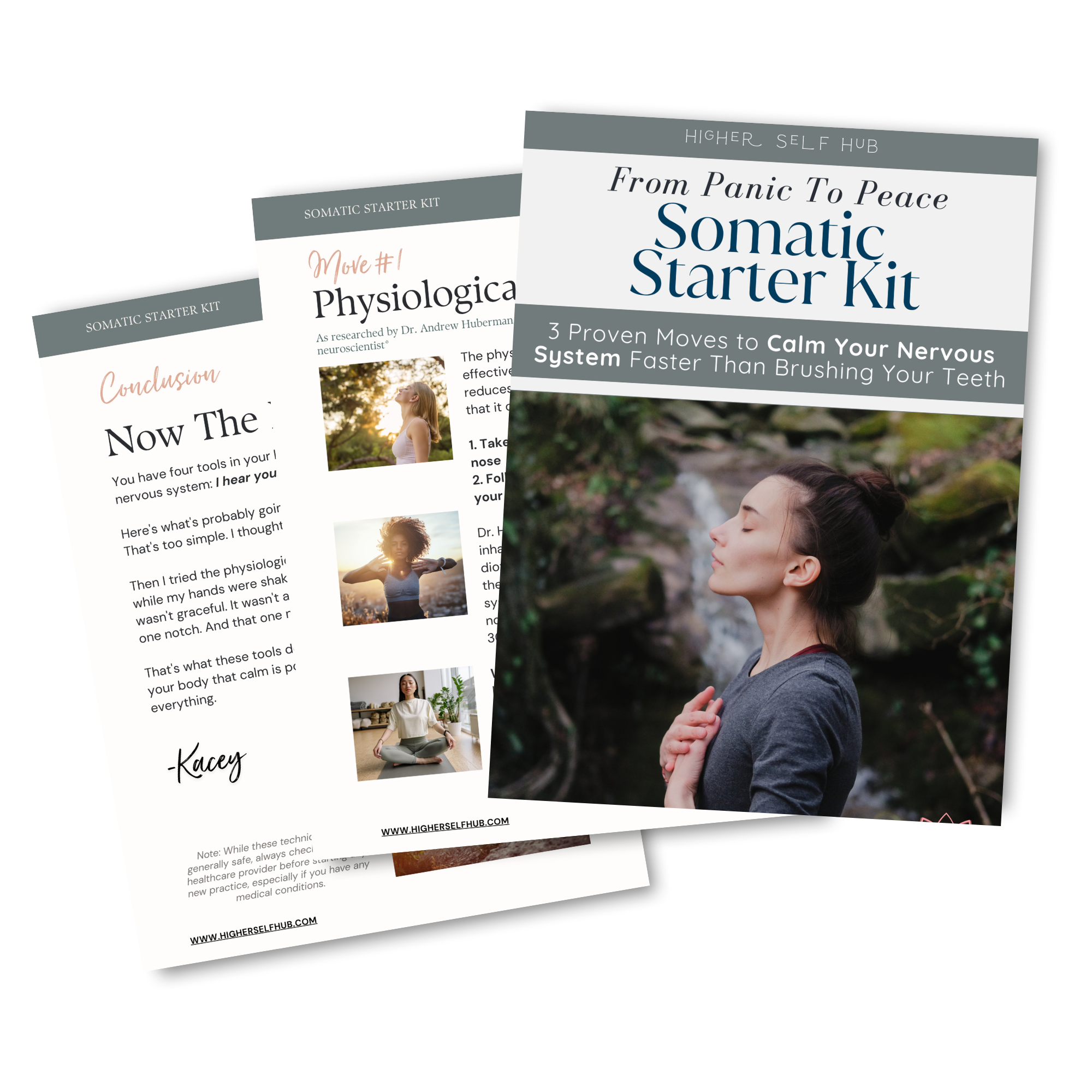
Your Free Somatic Starter Kit
3 science-backed tools to go from panic to peace in under 60 seconds.
Your inbox stays calm, too. Unsubscribe anytime. We respect your privacy.
2. Notice What Is Already There
Bring your attention to your neck, shoulders, and jaw.
Do not try to change anything yet. Just notice what is present.
You might feel tightness, pressure, heaviness, warmth, pulling, or even numbness. There is no correct sensation to find.
Noticing without fixing is powerful. When the body feels listened to, it often begins to soften on its own.
This is exactly the kind of body awareness tracking that helps patterns become visible. Grab the free Somatic Journal here. It’s one page, takes 2 minutes, and helps you see what your body is actually telling you.
If you like writing things down, this can be a helpful moment to jot a few words about what you notice. A simple body check-in like this is exactly how many people use the journal, especially when tension feels vague or hard to explain.
3. Let Your Breath Move Upward
Instead of stretching, try working from the inside.
Place one hand on your upper chest or collarbone. Breathe in through your nose. As you breathe out, imagine the breath gently moving up the back of your neck and out through the top of your head.
There is no need to breathe deeply or slowly. Natural, easy breaths are enough.
If imagining the breath feels awkward, that is okay. Simply noticing your exhale can still help the body settle.
Small Movements > Big Stretches For Neck Relief

4. Make the Movements Very Small
Big stretches can sometimes make neck tension worse, especially when the body feels guarded or tired.
Try moving your head just a tiny amount. Tilt it slightly to one side. Pause. Come back to center. Then try the other side.
Think barely moving.
Small movements often feel safer to the nervous system than big ones. If your neck resists or feels stiff, that is not a problem. It is information, not failure.
5. Use Your Hands for Support
If it feels comforting, place one or both hands at the base of your skull or along the sides of your neck.
Let your hands rest there without pressing, pulling, or massaging deeply.
Supportive touch can be very calming. It gives the body a sense of being held rather than corrected.
Stay here as long as it feels soothing, even if that is only a few breaths.

6. Check Your Jaw and Shoulders
Neck tension often shows up alongside jaw clenching and lifted shoulders.
Gently notice whether your teeth are touching. See if your tongue can rest on the bottom of your mouth.
Then bring awareness to your shoulders. See if they can drop just a small amount.
You do not need a dramatic release. Even a one-percent shift can interrupt a familiar tension pattern.
This is another place where journaling can help. Noticing patterns like “my jaw tightens when I am stressed” or “my shoulders lift when I feel rushed” is something the Somatic Journal is designed to support, without overthinking it.
How To Tell When Your Body Needs You To Stop
7. Know When to Stop
This kind of work is not about pushing through.
If you feel tired, emotional, warm, or like you want to rest, that is a good place to stop.
A lot of release happens later, after the body has had time to process. Stopping early can be just as supportive as doing more.

A Final Thought
If your neck will not relax, it does not mean you are doing something wrong.
It means your body learned how to protect you. Now it may just need gentler signals to let go.
You do not need to force anything. You do not need to stretch harder. You can start by listening.
If this pace felt supportive, you might like keeping one of these practices saved for later or pairing it with a short body check-in on paper. Even a few words about where tension shows up can help you notice patterns over time.
Your body is not resisting you. It is responding. And slowly, it can learn that it is safe to soften.
And for more gentle practices like these (beyond just your neck), grab the free Somatic Starter Kit below.
Your Free Somatic Starter Kit
3 science-backed tools to go from panic to peace in under 60 seconds.
Your inbox stays calm, too. Unsubscribe anytime. We respect your privacy.