

Hope Molecules: How Movement Is The Best Mental Health Help
Six months ago, anxiety had a death grip on me. I came across the concept of “hope molecules” and decided to start small: walking just one mile a day. Twenty minutes of movement sometimes split into two ten-minute walks, became my daily non-negotiable.
The shift surprised me. My self-confidence grew, my mood brightened, and the best part was my motivation to move more increased naturally. Now, 100 days into my consistent walking practice, the anxiety that once controlled me has faded to the background.
Scientists have long attributed exercise’s mood-boosting effects to endorphins, those feel-good chemicals released during activity. However, emerging research reveals something even more profound at the cellular level when we move our bodies.
Movement gives us more than an elevated mood. Regular exercise creates biological resilience through proteins called myokines—nicknamed “hope molecules”—that fundamentally shift your mental health. These tiny messengers make physical activity more effective for improving our well-being than ever imagined.
Myokines: The Biology Behind the Buzz
Every time you take a walk, lift weights, or dance in your kitchen, your muscles do more than move your body. They’re actually functioning as an endocrine organ, secreting powerful proteins called myokines, aka hope molecules, into your bloodstream.
Unlike many substances in your body, myokines have a superpower: they can cross the blood-brain barrier. This selective membrane typically keeps most molecules from reaching your brain but welcomes these special messengers.
“It’s not just an endorphin rush. Your muscles contract and secrete these proteins into your bloodstream. They travel to your brain, cross the blood-brain barrier, and act as an antidepressant.” — Kelly McGonigal
Once these proteins arrive in your brain, they provide multiple benefits:
- Act as natural antidepressants
- Enhance your resilience to stress
- Promote optimism and well-being
- Improve neural function
- Facilitate communication between neurons
This “muscle-brain cross-talk” represents a profound biochemical conversation happening within your body. Your muscles aren’t just tools for movement—they’re active participants in your mental health.

II. Hope in Action: The Measurable Benefits
Mental Resilience
When myokines enter your brain, they create a biological buffer against stress. Research shows that regular exercise can be as effective as medication for mild to moderate depression in some people. These hope molecules don’t just make you feel good momentarily—they build lasting neural resilience.
Cognitive Enhancement
Have you ever noticed feeling mentally sharper after a workout? There’s science behind that clarity.
Myokines promote:
- Improved learning capacity
- Enhanced memory retention
- Increased focus and attention
- Better problem-solving abilities
Beyond Mood: Whole-Body Benefits
The impacts of myokines extend far beyond just mental health. A large synthesis study found moderate to large effects of exercise on depressive symptoms, but the benefits don’t stop there.
“These biochemical miracles not only enhance our mood but also fortify our bodies and brains against disease.” — Research summary
Overall physical activity through myokine activation also contributes to:
- Reduced inflammation throughout the body
- Improved metabolism and energy regulation
- Enhanced immune function
- Increased muscle strength and tone
- Protection against cognitive decline with aging
The most remarkable aspect? These benefits begin accumulating with even modest amounts of movement. Your daily mile walk is already triggering these powerful biochemical cascades throughout your body and brain.

III. The Hope Molecule Prescription: Practical Implementation
The Minimum Effective Dose
How much movement do you actually need to activate these hope molecules? The good news: much less than you might think.
Studies suggest that even 20-30 minutes of moderate activity daily—like my one-mile walk—can trigger significant myokine release. The key isn’t intensity but consistency. Your body responds more favorably to regular, moderate movement than to occasional intense workouts.
Ready to put hope molecules to work? My free Somatic Starter Kit gives you the gentlest ways to start moving.
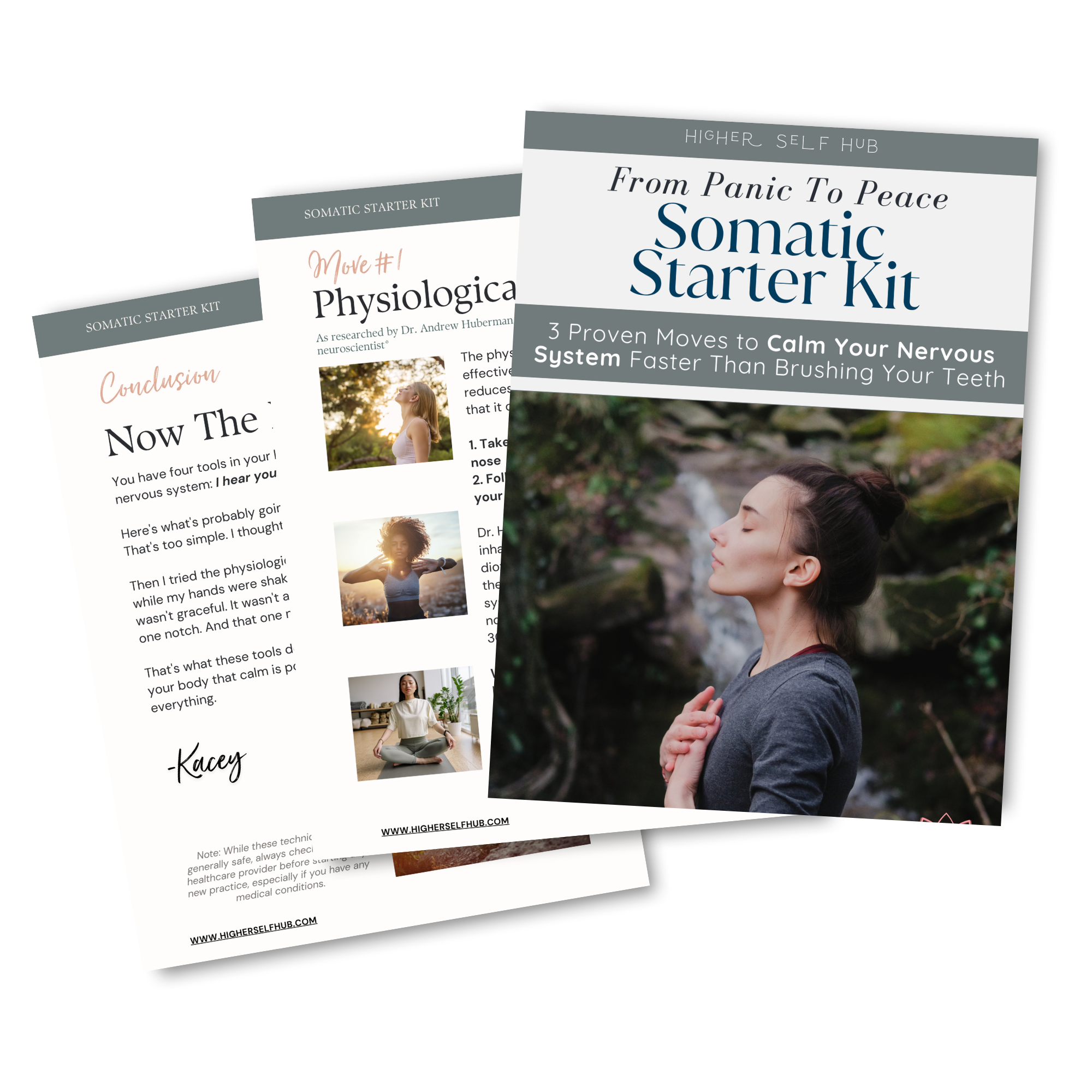
Your Free Somatic Starter Kit
3 science-backed tools to go from panic to peace in under 60 seconds.
Your inbox stays calm, too. Unsubscribe anytime. We respect your privacy.
Movement Varieties That Matter
Different types of movement create slightly different myokine profiles:
Strength Training Builds muscle mass while releasing specific myokines that enhance metabolic health and cognitive function.
Aerobic Activity Walking, jogging, or cycling prompts a steady release of myokines that particularly benefit mood regulation.
Flexibility Work Yoga and stretching activate muscle fibers differently, potentially releasing unique myokine combinations that support stress reduction.
The 30-Second Reset Technique
Don’t have time for a full workout? Try this:
- Take 30 seconds right now
- Stand up and stretch your arms overhead
- Perform 5-10 jumping jacks or march in place
- Take three deep “physiological sighs” (double inhale, extended exhale)
- Notice how you feel
Even these brief movement “snacks” throughout your day can trigger small releases of hope molecules, creating cumulative benefits over time.
Building Consistency Over Intensity
My approach—walking just one mile daily—embodies this principle perfectly. The goal isn’t to become an athlete overnight. It’s to create a sustainable, consistent practice that your body can count on.
Start where you are. Five minutes of movement is infinitely better than zero. Your hope molecules will thank you.
IV. Beyond Individual Practice: The Social Dimension
The Amplifying Effect of Moving Together
There’s something uniquely powerful about moving in synchrony with others. Team sports and group exercise classes create a double benefit: the myokine release from physical activity plus the oxytocin boost from social connection.
Research from Norway found that physically active teenagers in team sports reported higher self-esteem and life satisfaction—particularly among high school girls. The combination of movement and connection creates a potent cocktail for mental wellbeing.

Movement Across Generations
Children learn by watching. When we prioritize movement in our lives, we’re setting a template for the next generation.
Alarming Trend: Studies show young people are spending increasingly more time on devices and less time moving their bodies. A study of 40,000 U.S. children found that after just one hour of daily screen use, they showed:
- Less curiosity
- Lower self-control
- Reduced emotional stability
- Decreased psychological wellbeing
The antidote? Creating family movement rituals that everyone participates in, from the youngest to the oldest.
Social Prescribing: A Healthcare Revolution
Forward-thinking healthcare providers are now “prescribing” movement rather than just medication. This shift toward social prescribing includes recommendations for:
- Daily walks
- Community exercise classes
- Outdoor activities
- Team sports participation
This approach recognizes that sustainable health improvement often happens outside the clinical setting, in our daily environments and communities.
V. Moving Toward Hope: Your Path Forward
Start Where You Are
My journey began with just one mile daily—approximately 2,000 steps or 20 minutes of walking. This wasn’t intimidating, even on my busiest days or when motivation was low.
The beauty of hope molecules is that you don’t need intense workouts to benefit from them. If you’re currently not exercising at all, consider starting with just 10 minutes of walking daily. This small commitment can trigger meaningful myokine release while building a sustainable habit.
Finding Movement Moments in Your Day
Look for natural opportunities to incorporate movement:
- Screen Breaks: After each hour of computer work, stand up for a 5-minute walking break
- Phone Time: Make all your calls walking calls—pace inside or step outside
- Morning Ritual: Put your shoes by your bed and walk for 10 minutes before your first cup of coffee
- Parking Strategy: Choose the far end of parking lots to add short walks to your errands
- Meeting Alternative: Suggest walking meetings for one-on-one work conversations
- Commercial Breaks: Use TV time to stand up, stretch, or march in place
Any movement counts. The goal isn’t perfection but consistency—creating regular opportunities for your muscles to produce those valuable hope molecules.
Building Movement Literacy
Understanding the “why” behind movement transforms it from a chore to a choice. When you recognize that each walk, stretch, or dance break is sending hope molecules to your brain, motivation shifts.
Ask yourself after moving: “How did I feel before? How do I feel now?” This builds awareness of your body’s responses and reinforces the connection between movement and wellbeing.
Your Hope Molecules Toolkit
As you venture forward, remember:
- Consistency trumps intensity
- Small movements matter
- Social movement multiplies benefits
- Screen breaks are brain boosts
- Movement is medicine working at the cellular level
Ready to put hope molecules to work? Somatic exercises for beginners gives you a gentle starting point that works with your nervous system, not against it.
The science of hope molecules gives us a powerful framework for understanding why movement feels so good. But the real magic happens when we put this knowledge into action—one step, one stretch, one moment of embodied awareness at a time.
Your body is ready to produce hope. All you need to do is move.
And if a full workout feels like too much today, the free Somatic Starter Kit below meets you where you are.
Your Free Somatic Starter Kit
3 science-backed tools to go from panic to peace in under 60 seconds.
Your inbox stays calm, too. Unsubscribe anytime. We respect your privacy.