
Feel Better In February: Your Winter Somatic Reset Guide
This week, I bundled up for an afternoon walk, came home to light candles at 4 pm, and realized I’d been wearing the same cozy cardigan for three days straight.
That can only mean one thing… it’s time for a winter reset – somatic style.
You might disagree with me on this, but February is the hardest month. The initial magic of winter has worn off, spring feels impossibly far away, and the lack of sunlight is really showing up in your body.
But let’s be honest: deep winter is exhausting.
The darkness feels like it’s stealing your energy. You wake up tired, you move through your day tired, you go to bed tired.
Your body is working overtime just to stay warm, stay regulated, and keep functioning when every cell is screaming for hibernation.
And the isolation? Between short days, cold weather, and everyone staying indoors, your nervous system is craving connection it’s not getting.
The real struggle: You want to feel good, but everything about winter seems designed to drain you.
What if instead of fighting your body’s winter rhythm, we partnered with the wisdom it’s already showing you?
If your body feels constantly “on” this winter, my free guide, Why Calming Down Doesn’t Work explains what’s actually happening in your nervous system, and how to fix it rather than fight it.

Why Your Body Needs a Winter Somatic Reset
If you’re feeling slower, heavier, or just “done” with winter, this isn’t weakness.
Your nervous system is responding to real, measurable changes: dramatically reduced sunlight, vitamin D depletion, circadian rhythm disruption, and months of temperature stress.
Here’s what most people don’t realize: winter isn’t just hard on your mood—it’s hard on your entire system.
Your body is burning more energy to maintain temperature, processing less serotonin due to low light exposure, and constantly recalibrating to the demands of deep winter survival mode.
Common signs your system is winter-weary:
- Fatigue that doesn’t improve with sleep
- Increased cravings for carbs and sugar
- Mood dips that feel heavier than usual
- Heightened sensitivity to cold and stress
- Feeling disconnected from yourself
None of this means you’re failing.
Most winter wellness advice focuses on forcing yourself to “stay positive” or “just get outside more.”
This somatic approach works differently.
Somatic practices honor what your body needs right now. Instead of pushing through, you create conditions for genuine restoration from the inside out.
You’re not broken. Your body is just asking for support through winter’s unique challenges.
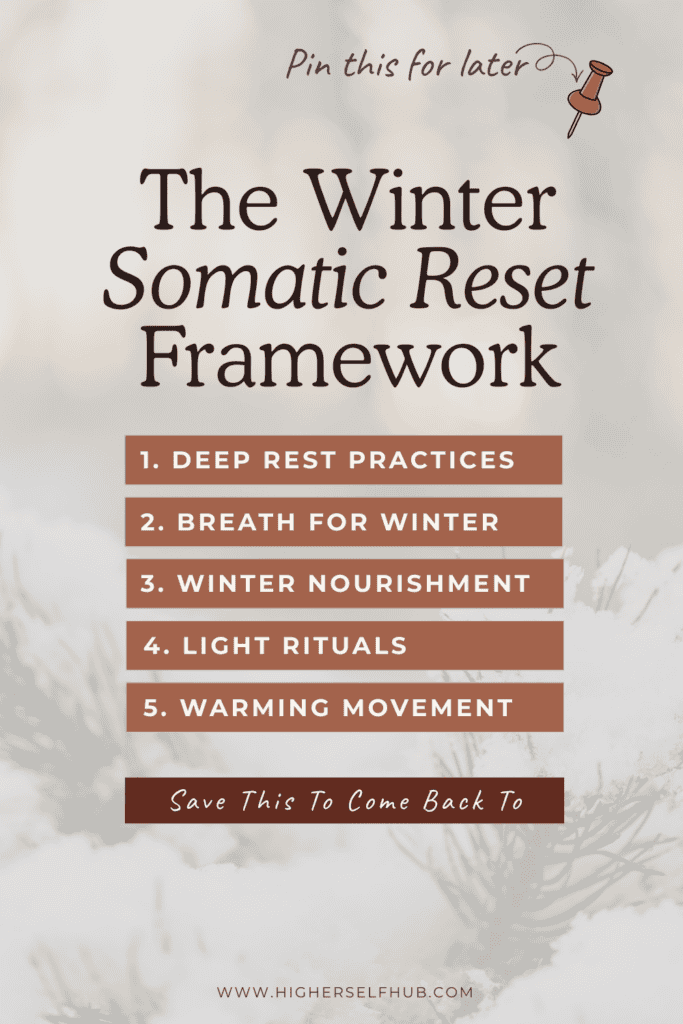
The Winter Somatic Reset Framework
These five practices helped me survive February (and even find moments of peace), and they can help you too.
1. Deep Rest Practices (Honor the Hibernation Instinct)
Your nervous system isn’t lazy—it’s responding to ancestral wisdom that says “conserve energy in winter.”
Try this: 10-minute legs-up-the-wall pose with a pillow under your hips. Let gravity do the work while your system resets.
At home: Restorative child’s pose with a bolster. Evening yin yoga. Permission to be horizontal without guilt.
Why it works: These postures activate your rest-and-digest nervous system response, signaling to your body that it’s safe to rest truly. In winter, rest isn’t lazy, it’s medicine.

If February always feels like the longest short month, my free guide explains what your nervous system needs to get through it.

Free Guide: Why Calming Down Doesn’t Work
(And What Finally Will)
You’re Not Broken. Your Body Is Protecting You.
Your inbox stays calm, too. Unsubscribe anytime. We respect your privacy.
2. Breath for Winter Heaviness (Energize the Exhale)
When your energy feels stagnant and heavy, your breath can create gentle movement without depleting you.
The practice: Breath of fire (rapid belly breaths for 30 seconds) or alternate nostril breathing to balance and energize.
Winter imagery: Imagine each exhale melting frozen tension, each inhale bringing warmth and light to dark corners.
Why it works: Energizing breath patterns increase oxygen flow and stimulate your sympathetic nervous system just enough to combat that February fog—without triggering overwhelm.
Even 3 minutes can shift stagnant energy.
3. Winter Nervous System Nourishment
Your body needs different fuel in winter. What you eat directly impacts your capacity to handle the season’s demands.
Focus on: Bone broth, slow-cooked stews, root vegetables, healthy fats like butter and ghee, warming spices like turmeric and cayenne.
The connection: Your body needs more fat and protein in winter to maintain temperature and energy. Warm, nourishing foods tell your nervous system “we have resources, we’re safe.”
Simple swap: Replace that second coffee with hot bone broth or herbal chai. Notice how your afternoon energy stabilizes.
4. Light Rituals (Signal Safety to Your System)
Your nervous system tracks light as a survival signal. In winter’s darkness, you have to create light intentionally.
Morning ritual: Face a bright light source (lamp or SAD light) for 10 minutes within an hour of waking. This resets your circadian rhythm.
Evening ritual: Candlelight instead of overhead lights after sunset. Fairy lights. Anything that creates warmth without blue light stimulation.
Why it matters: Light directly influences cortisol and melatonin production. Proper light exposure tells your body when to be alert and when to rest.
Permission: Even 5 minutes of intentional light makes a difference.
5. Warming Movement (Thaw Frozen Emotions)
Cold weather makes your body contract and hold tension. Gentle movement helps you thaw—physically and emotionally.
The practice:
- Start with gentle self-massage (rub your arms, legs, belly)
- Add slow movement—cat-cow, hip circles, shoulder rolls
- Build to 2 minutes of any movement that creates warmth (dancing, shaking, marching in place)
- End with forward fold or child’s pose for integration
Why it works: Movement increases circulation and releases tension stored from months of bracing against cold. Physical warmth creates emotional warmth.
This gentle warming practice helps your body remember it’s safe to soften, even in the depths of winter.
Signs Your Winter Somatic Reset is Working
You’ll know these practices are working when:
The darkness bothers you less. You still notice it, but it doesn’t drain you the same way.
Energy comes in waves instead of crashes. You have periods of genuine vitality instead of just pushing through on fumes.
Your body feels less rigid. The constant bracing against cold starts to soften. You notice more ease in your muscles.
Food cravings shift. Instead of desperately needing sugar, your body starts craving nourishing, warming foods.
February feels survivable. Instead of counting down days until spring, you find small moments of peace in winter itself.
Cold doesn’t deplete you as quickly. You bounce back faster from being outside in harsh weather.
Progress will be subtle. Some days the heaviness returns, and that’s completely normal.
Trust that each practice is cumulative. Even small shifts matter during winter’s longest stretch.
Your Body Knows How to Winter
Which of these practices feels most needed right now?
Your body already knows what it needs to get through February. Start with whatever feels most accessible today.
This isn’t about adding more pressure. It’s about creating space to hear what your body has been trying to tell you all along.
If winter feels heavier than it “should,” there’s a reason.
I created Why Calming Down Feels So Hard to help you understand why your nervous system struggles to settle, especially during seasons like this—and what actually helps.
This isn’t about forcing calm. It’s about learning how your body protects you, and how to gently support it through stress, darkness, and fatigue.
Download the free guide and start working with your nervous system this winter, rather than against it.
Free Guide: Why Calming Down Doesn’t Work
(And What Finally Will)
You’re Not Broken. Your Body Is Protecting You.
Your inbox stays calm, too. Unsubscribe anytime. We respect your privacy.
Sometimes the most rebellious thing we can do is stop fighting our own nature.