
Gentle Spring Slow Living Habits for a Sensitive Nervous System
Crocuses are the first flowers to pop up in my yard in early spring. A sign of go-getter energy? Maybe, but for me, they make me want to mimic the slow living habits of flowers. On Pinterest, the theme is bullet journals and workouts. In contrast, this guide is a gentle invitation to find simple ways to be present, rather than productive.
Spring has this get-moving pressure to it. “Fresh start” energy, decluttering challenges, and invitations to finally wake up at 5 am. It’s exhausting before you even begin.
Here’s what I’ve learned: if your nervous system is already running on fumes, adding more doing, even if it’s “self-care doing,” doesn’t actually help. Sometimes what looks like a lack of motivation is actually your body trying to protect you from one more thing.
So this isn’t a list of habits you should be doing. Instead, think of it as a menu of slow living inspiration. Little shifts that work with your nervous system instead of against it. Pick one. Try none. Come back when you’re ready.
What’s Actually Happening When “Slow Living” Feels Impossible
If you’ve ever felt like you want to slow down but can’t seem to actually do it, you’re not broken.
Your nervous system might be stuck in a state where slowing down feels dangerous. When your body believes it needs to stay alert to stay safe, rest doesn’t register as an option. Relaxation can even feel threatening. That’s not a mindset problem. It’s a mind-body response.
A holistic lifestyle approach doesn’t mean doing more things for wellness. Often, it means creating tiny pockets of safety so your system can start to believe that slowing down is okay.
Spring is actually a great time for this. Longer light supports better sleep-wake patterns. Warmer air invites you outside without the heavy layers. Even small seasonal shifts can support nervous system regulation if you let them work gently in the background.
Before you get to the ideas, grab this free guide that explains why your nervous system is sensitive in the first place.
A Few Slow Living Habits That Don’t Require You to Overhaul Your Life
These aren’t about becoming someone new. They’re about working with what you already have. Your body, your rhythms, your real life.

Let morning light do the regulating for you
You don’t need a 90-minute morning routine. Just opening the blinds while you’re still half-asleep counts.
Natural light in the morning helps set your body’s internal clock. It supports cortisol rhythms, mood stability, and sleep quality later. Even five minutes outside with your coffee (or just standing at an open window) gives your system information it can use.
This is one of those life changing habits that doesn’t feel like much in the moment. But over time, your nervous system starts to trust the rhythm of daylight again. That trust makes it easier to wind down at night and wake up without feeling like you’re clawing your way out of a fog.
Related post: This Is What You Need To Know About Early Morning Sunlight & Your Hormones
If slowing down sounds lovely but your body won’t cooperate, my free guide explains why (and what finally helps).
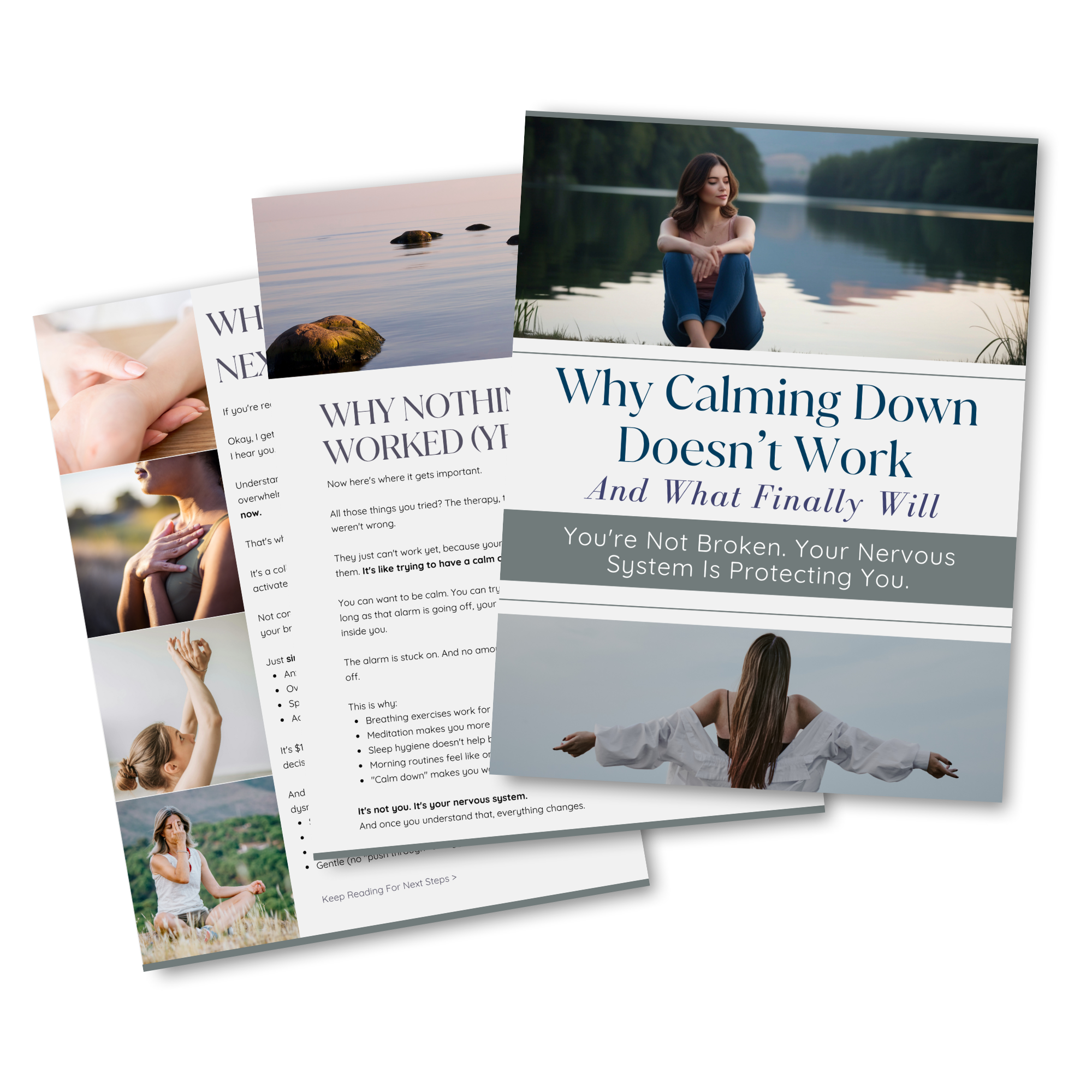
Free Guide: Why Calming Down Doesn’t Work
(And What Finally Will)
You’re Not Broken. Your Body Is Protecting You.
Your inbox stays calm, too. Unsubscribe anytime. We respect your privacy.
Build in micro-pauses instead of waiting for a full reset
If you wait until you have an hour of free time, you’ll never rest.
Micro-pauses are 30 seconds to 3 minutes of intentional stillness. Think: one slow breath before you open your laptop. Sitting down to drink your water instead of chugging it while you’re unloading the dishwasher. Closing your eyes for three breaths after a hard conversation.
These aren’t mindfulness exercises you have to do perfectly. They’re just moments where you let your body catch up to your brain. When your system is used to running on high alert, these small breaks teach it that pausing is safe. Over time, that makes simplifying life feel less like deprivation and more like relief.
Related post: Microhabits For A Healthy Nervous System (How To Make Them Stick)
Let cozy habits double as nervous system support
Here’s the thing about hygge and soft life aesthetics: they’re not just about candles and linen napkins. They’re about creating sensory environments that help your body downregulate.
Soft textures, warm drinks, low lighting, gentle scents — these aren’t indulgences. They’re cues. Your nervous system reads them as signs of safety, which makes it easier to shift out of fight-or-flight and into a state where rest is actually possible.
So yeah, light the candle. Wrap yourself in the blanket. Make the tea even though it’s “extra.” These aren’t silly little comforts. They’re tools.

Match your energy to the season instead of fighting it
Spring energy is restless. It wants to move, grow, and open. If you’re trying to force yourself into deep stillness right now, you might be working against your body’s natural rhythms.
Instead, try gentle movement. A slow walk without a destination. Stretching on the floor in the sun. Rearranging a shelf because your hands want to do something small.
You don’t have to make it a whole thing. Simple living doesn’t mean you’re calm and centered all the time. Sometimes it just means you’re letting your body move in the way it wants to move, without turning it into a productivity project.
Stop trying to build habits the way productivity culture taught you
Atomic habits and habit stacking work great for some people. But if your nervous system is already maxed out, adding structure can feel like punishment.
Try this instead: identify one thing that already feels good, and let yourself do it without optimizing it. Maybe it’s sitting outside for a few minutes. Maybe it’s how you feel after you’ve had something nourishing to eat. Maybe it’s the moment right after you’ve put your phone down.
Notice what already supports you. Then protect it. That’s a slow living lifestyle — not because it looks impressive, but because it’s yours.

This Is the Kind of Post You Might Want to Come Back To
Not everything here will land right now. That’s fine.
This is one of those posts that can be helpful to revisit when you’re feeling stuck or overwhelmed. If you use Pinterest, saving it can make it easier to find when you need it. Spring self care doesn’t have to be a one-time event. It can be something you return to as your capacity shifts.
If You’re Tired of Being Told to “Just Calm Down”
I made something for you.
It’s a short guide called Why Calming Down Doesn’t Work (And What to Do Instead). It explains what’s actually happening in your nervous system when you’re told to relax, but your body won’t cooperate. It offers a few body-based tools that work differently.
Free Guide: Why Calming Down Doesn’t Work
(And What Finally Will)
You’re Not Broken. Your Body Is Protecting You.
Your inbox stays calm, too. Unsubscribe anytime. We respect your privacy.
No fluff. No pressure. Just a clearer map for how to slow down when slowing down feels impossible.
You can grab it here — it’s free, and it’ll make a lot of this make more sense.