
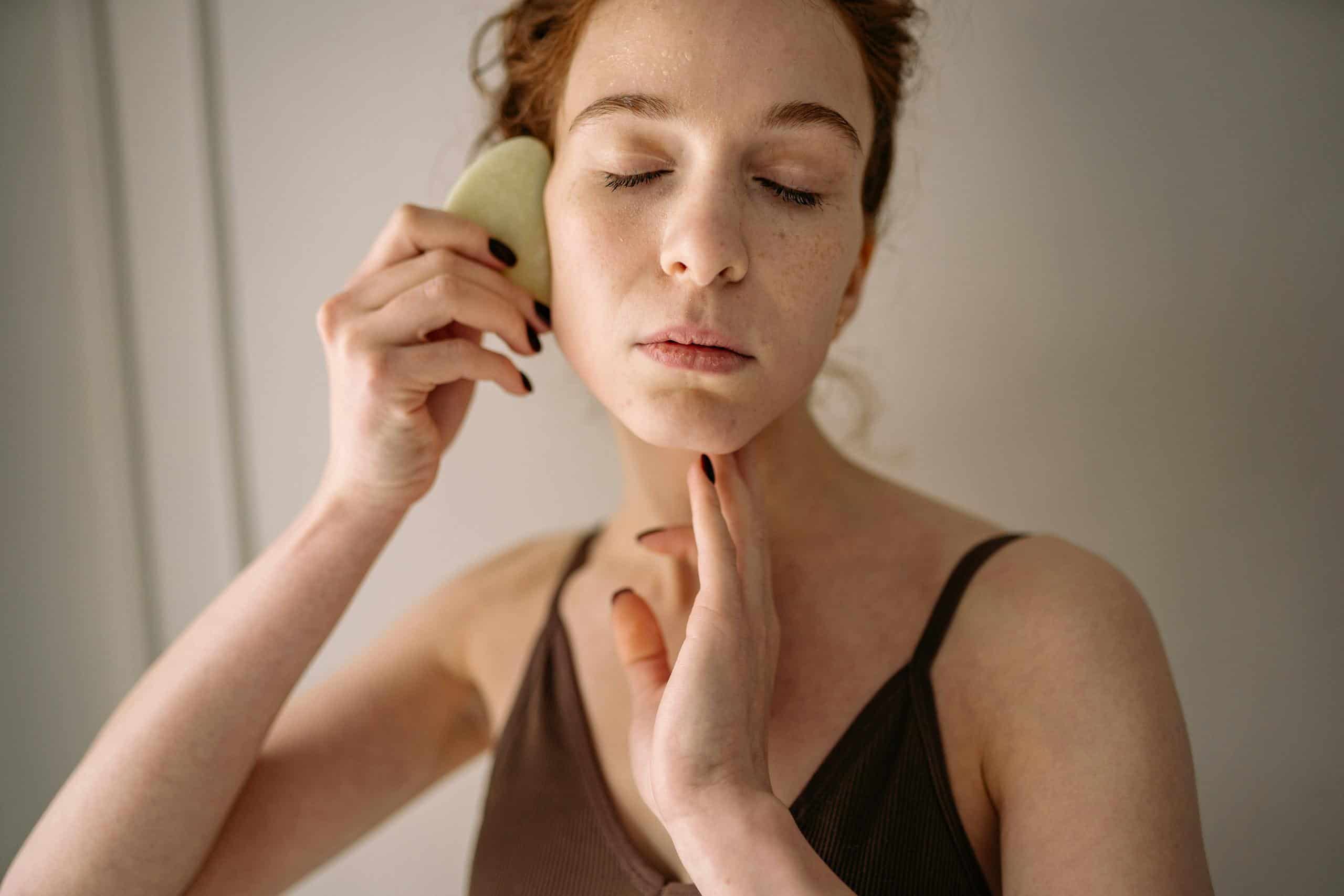
What Is Cortisol Face? (And Why Skincare Alone Won’t Fix It)
You’re staring at yourself in a bathroom mirror that used to feel neutral.
Something shifted. Your jawline looks wider. Your under-eyes won’t depuff no matter how much water you drink. Your skin looks swollen. Inflamed. Tired in a way that sleep doesn’t fix.
You haven’t changed your skincare routine. You’re still using good products. You’re doing the things.
But your face doesn’t look like your face anymore.
This might be cortisol face.
Cortisol face is the visible puffiness, inflammation, and skin texture changes that happen when your body has been stuck in a prolonged stress response. It’s not about one bad night. It’s what happens when your nervous system has been running on high for weeks or months at a time.
And no serum is going to fix that on its own.
What Cortisol Actually Does to Your Face
Cortisol is your body’s primary stress hormone. In short bursts, it’s useful. It gets you out of danger.

But when cortisol stays elevated (and for a lot of women, it does) your body starts showing it.
Here’s what happens to your face specifically:
Fluid retention. Cortisol disrupts your body’s sodium balance. That means water pools in your tissues. Your face, jaw, and under-eyes puff up. This is what gives cortisol face that round, swollen look that some people call “moon face.”
Collagen breakdown. Elevated cortisol accelerates the breakdown of collagen. Skin loses its structure. It looks dull. It sags in places it didn’t before.
Increased inflammation. Cortisol triggers an inflammatory cascade. That inflammation shows up as redness, uneven texture, breakouts that don’t respond to your normal products.
Excess oil production. Cortisol stimulates sebum. More oil. More congestion. More of the kind of breakouts that don’t make sense with your routine.
Research confirms this connection. A 2017 study in Brain, Behavior, and Immunity found that chronic psychological stress significantly elevates inflammatory markers that directly affect skin integrity and healing time.
None of this is a skincare failure. It’s a signal.
Why Skincare Alone Won’t Fix It
This is the part that took me years to figure out.
I was using good organic skincare. Products I still believe in. I was cleansing well. Hydrating. Doing the things you’re supposed to do.
But my face kept changing.
After my third baby, after 2020, after years of running on fumes and pretending I was fine, my face didn’t look like mine. The puffiness was constant. My jawline disappeared. The inflammation didn’t go down.
I used to love sharing selfies. I was part of this incredible community of women who collected hand-woven baby wraps. Beautiful, hand-dyed pieces of art. We’d wrap our babies and take photos together. Send wraps to friends across the globe and ask for a picture back. It was joyful. I felt confident. Life hadn’t hit me yet.
Three kids later, I stopped sharing photos of myself.
Not because of vanity. Because my face didn’t match how I felt inside. And I couldn’t figure out why.
It took a long time to make the connection. My products weren’t failing me. My nervous system was.
When cortisol stays high, topical products can only manage symptoms. The puffiness comes back. The inflammation returns. Because the source isn’t on the surface. It’s underneath everything.
The Nervous System Piece
Cortisol face isn’t solved at your bathroom sink. It’s solved in your nervous system.
When your body learns to come back down from the stress response, cortisol levels regulate. Fluid retention decreases. Inflammation calms. Your face starts to look like yours again.
This is what somatic work does. It speaks directly to the part of your nervous system that’s stuck on high alert.
A few starting points:
Jaw release. Your jaw holds more tension than you realize. Gently open your mouth. Let your tongue fall from the roof of your mouth. Stay there. Thirty seconds is enough to send a signal.
Vagal toning. Your vagus nerve runs from your brain to your gut. Activating it tells your body the threat is over. Humming, gargling, cold water on your face. Simple inputs with measurable effects. (Here’s a deeper guide to vagus nerve exercises you can do in 60 seconds.)
60-second resets. You don’t need an hour. You need a pattern interrupt. One minute of intentional body-based input can shift your cortisol trajectory for the whole afternoon. (More on that in 60-second calming techniques for nervous system regulation.)
These aren’t relaxation tips. They’re nervous system inputs. Your body responds to them whether your mind believes they’ll work or not.
Those are starting points. If you want something more structured, I put together a free 7-day guide that walks you through one cortisol-lowering practice per day.
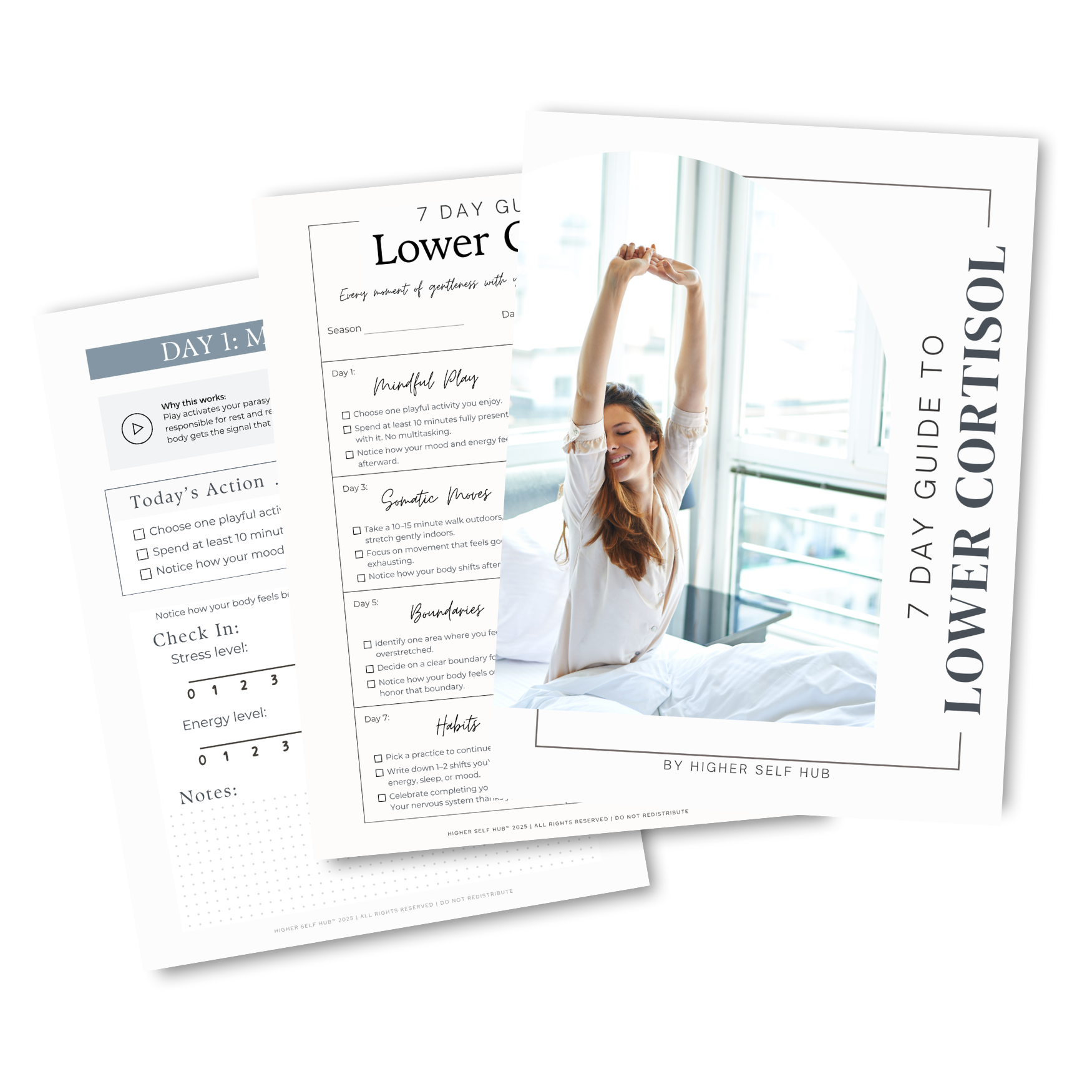
Free 7-Day Guide To Lower Your Cortisol
The Hormone Balancing Guide That Works For Women In The Thick of It.
Your inbox stays calm, too. Unsubscribe anytime. We respect your privacy.
What to Do for Your Skin While You’re Healing
The nervous system work takes time. It’s not instant.
In the meantime, your skin still needs support. What you put on your face matters more when inflammation is already high.
Conventional products loaded with synthetic fragrance, endocrine disruptors, and harsh actives can make cortisol face worse. They add chemical stress to a system that’s already overwhelmed.
This is where clean, organic skincare earns its place. Not as the fix. As the support while the fix is happening underneath.
Think of it like this: somatic work lowers the cortisol. Clean skincare stops adding fuel to the fire while your body recalibrates.
A few things to prioritize:
- Gentle cleansing. Nothing that strips. Your skin barrier is already compromised by inflammation.
- Anti-inflammatory ingredients. Niacinamide. Green tea. Zinc. Ingredients that calm rather than stimulate.
- Rich hydration. Cortisol-driven dehydration needs more than a light moisturizer. Give your skin something it can hold onto.
- Fewer products, not more. A stressed system doesn’t need 12 steps. It needs 3-4 good ones.
If you want to go deeper on how internal inflammation shows up on your skin (and what to do about it from both sides), that’s a good place to start.
What “Before and After” Actually Looks Like
You won’t wake up one morning with a different face.
But you’ll notice things. Gradually.
The under-eye puffiness softens. Your jawline reappears. Your skin looks less reactive. Less red. Less swollen in a way nobody else can name but you feel every time you look in a mirror.
It’s not dramatic. It’s quiet.
One morning you’ll take a photo and not hate it. That’s the before and after nobody posts. But it’s real.
The Photo I Almost Didn’t Take
I still have friends from those babywearing days. We still share photos. I still love a good selfie with a beautiful piece of fabric.

The difference is I understand now. What changed in my face wasn’t age. It wasn’t my skincare. It was years of running hot without knowing how to come back down.
Your face isn’t broken. Your products aren’t failing. Your body has just been asking for something your bathroom shelf can’t give it.
Not sure where to start? This free guide gives you one cortisol-lowering practice a day for 7 days.
Free 7-Day Guide To Lower Your Cortisol
The Hormone Balancing Guide That Works For Women In The Thick of It.
Your inbox stays calm, too. Unsubscribe anytime. We respect your privacy.
Start there.