This Is What You Need To Know About Early Morning Sunlight & Your Hormones
Despite what I see on my feed, hormone balance doesn’t rely on expensive pills and extreme detoxes.
You have access to one of the most impactful levers on morning cortisol, and it’s free. It’s right outside your window, shining in on you, begging you to come soak it up.
Early morning sunlight gives your body an incredibly strong signal that it uses to set its hormonal rhythm for the day.
Sunlight tells cortisol when to rise gently (instead of spiking you awake like an alarm), tells melatonin when to start its countdown toward sleep, and gives serotonin the boost it needs so your mood isn’t running on fumes by 2 pm.
I used to drag my way through the morning, clutching my coffee as if it were lifeblood. But my nerves were always on edge.
That’s when I heard something from Dr. Andrew Huberman that really hit home: “What if I told you that stepping outside for 10 minutes every morning could regulate your entire nervous system for the day?”
We all feel the same about things that sound too easy to really make a difference, so I naturally was skeptical.
But after months of feeling like my body was constantly in fight-or-flight mode, I was ready to try anything. So I started my experiment of 10 minutes of early morning sunlight every day.
Here’s What Actually Happens in Your Body When Morning Light Hits Your Eyes
Morning sunlight is key to controlling our hormones. Knowing how it works can help us use it to our advantage. The different light wavelengths we get in the morning affect our hormones. The moment natural light enters your eyes in the morning, it’s like sending a gentle “all clear” signal to your entire nervous system. Your brain receives this light through a special pathway that goes straight to your hypothalamus – think of it as your body’s master control center.
Within minutes, three incredible things start happening:
Your cortisol awakens properly – Instead of that jarring alarm clock shock, your stress hormone rises gently and naturally, giving you sustainable energy (not that jittery, anxious feeling)
Your melatonin production gets reset – This is huge for anyone struggling with sleep. Morning sunlight essentially tells your body, “Hey, it’s time to be awake now, and we’ll make you naturally sleepy later”
Your serotonin gets a boost – That “I can handle whatever today brings” feeling? That’s serotonin working its magic
But here’s what really blew my mind: this isn’t just about hormones. When your body receives consistent morning light signals, it starts to feel safe. And when your nervous system feels safe, everything else – your digestion, your mood, your ability to handle stress – starts working better.
| Hormone | Effect of Morning Sunlight |
|---|---|
| Melatonin | Regulates production, helping with sleep-wake cycle |
| Serotonin | Boosts production, improving mood and reducing stress |
| Cortisol | Increases production, helping with alertness and energy |
Ready for the big shift? I made a printable 7-Day Guide to Lower Cortisol that will walk you through this.
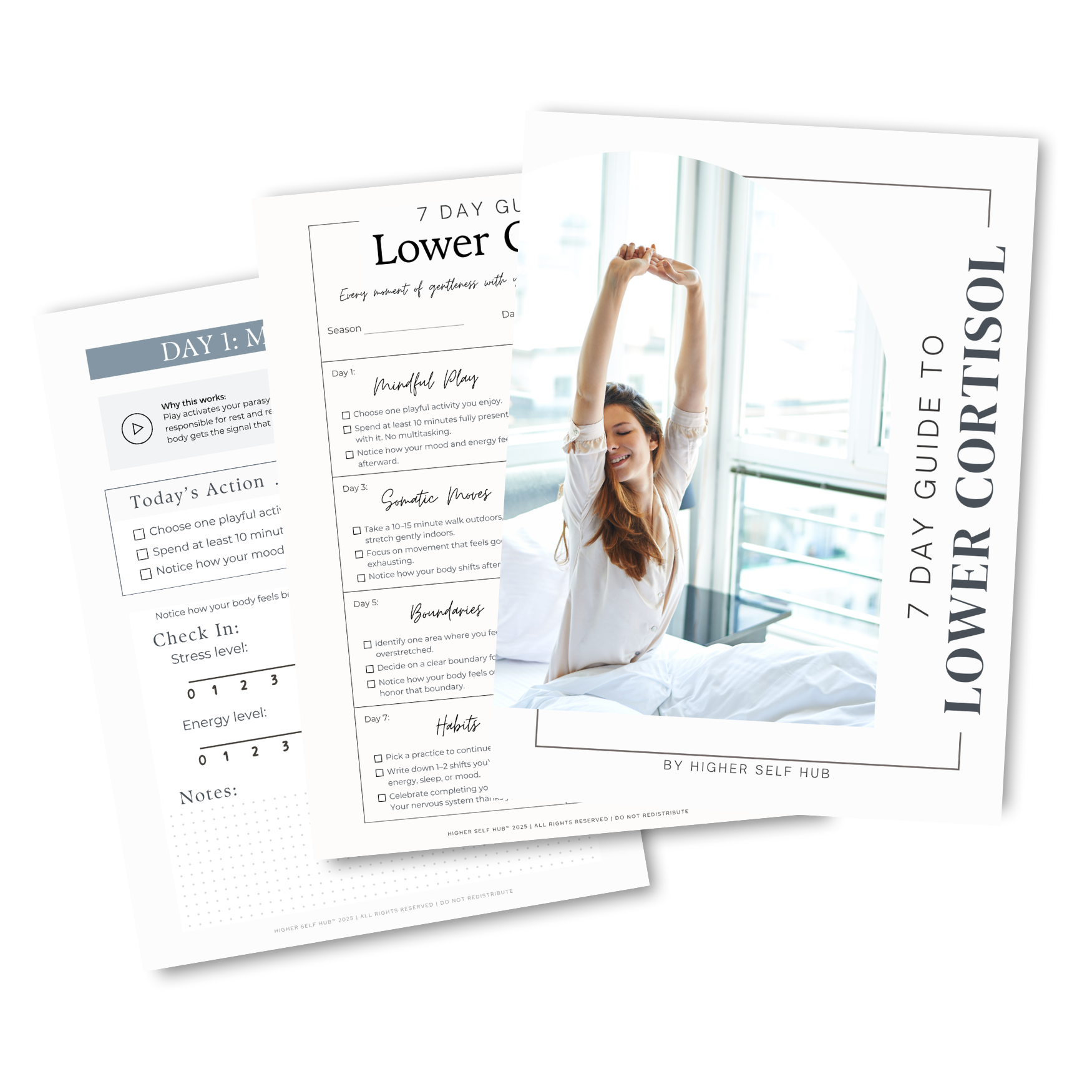
Free 7-Day Guide To Lower Your Cortisol
The Hormone Balancing Guide That Works For Women In The Thick of It.
Your inbox stays calm, too. Unsubscribe anytime. We respect your privacy.
Why Morning Light Hits Different (And Why That 2 pm Walk Isn’t the Same Thing)

Morning sunlight has a special effect on our bodies. It affects our circadian rhythm and hormone The quality of light in the first hour after sunrise has a completely different effect on your nervous system than any other time of day. Here’s why:
The light spectrum is gentler – Early morning light has more red and orange wavelengths, which are like a warm hug for your circadian rhythm. Harsh midday sun? That’s more like a slap in the face to your system.
Your eyes are most receptive – There’s actually a window right after waking when your light-sensitive cells are primed and ready to receive these signals. Miss this window, and you’re essentially trying to reset your body clock with one hand tied behind your back.
It sets the tone for your entire autonomic nervous system – Morning light exposure is like tuning a guitar. Get it right first thing, and everything else harmonizes beautifully throughout the day.
I learned this the hard way when I tried to “catch up” on light exposure by sitting in my backyard at noon. Sure, I got vitamin D, but that regulated, grounded feeling I was chasing? Nowhere to be found.

The Hormones That Are Secretly Running Your Life (And How Sunlight Keeps Them Happy)
Let’s talk about the invisible forces that determine whether you feel like you can conquer the world or hide under the covers.
Cortisol: Your Misunderstood Stress Hormone
Everyone talks about cortisol like it’s the villain, but here’s the truth: you NEED cortisol. The problem isn’t having it – it’s having it at the wrong times or in the wrong amounts.
When you expose yourself to morning light, your cortisol follows what’s called the “awakening response.” Instead of spiking randomly throughout the day (hello, 3pm anxiety attacks), it rises gently in the morning and naturally tapers off by evening.
Think of it like this: without proper morning light, your cortisol is like a toddler having a tantrum at random times. With consistent morning exposure, it becomes like a well-rested adult who knows exactly when to show up and when to chill out.
Related: 10 Super Simple Ways to Lower Cortisol (Without Positive Thinking)
Melatonin: The Sleep Hormone That Starts Working at Sunrise
This one seems backwards, right? But here’s the beautiful thing about your body: the moment you expose yourself to bright morning light, you’re actually setting up better sleep 14-16 hours later.
It’s like your body starts a countdown timer. “Okay, we saw bright light at 7am, so we’ll start winding down around 9pm.” No more lying in bed scrolling your phone wondering why you can’t fall asleep.
Serotonin: Your Natural Happiness Boost
About 90% of your serotonin is actually made in your gut, but morning light exposure helps optimize how your brain uses it. When this system is working well, you feel more resilient, more optimistic, and better able to regulate your emotions.
It’s not about forcing positivity – it’s about giving your nervous system the resources it needs to naturally find that sense of calm confidence.
| Time of Day | Hormone Release | Effect on Body |
|---|---|---|
| Morning | Cortisol | Increased alertness and energy |
| Evening | Melatonin | Increased sleepiness and relaxation |
Creating Your Morning Light Ritual (Without Becoming That Person Who Gets Up at 5am)
Because let’s be real – if it’s not sustainable, it’s not happening.
I’m not going to tell you to completely overhaul your morning routine. Instead, let’s work with what you’ve got and make it nervous-system friendly.
The 10-Minute Magic Window
Start here: 10 minutes outside within the first hour of waking up. That’s it.
- If you have a backyard: Step outside with your coffee or tea
- If you’re in an apartment: Find a spot by an open window or on a balcony
- If you’re in a city: Even a few minutes on your front steps counts
- If it’s winter: Yes, even through clouds, you’re getting beneficial light
The “I’m Not a Morning Person” Approach
Look, I get it. Some of us are not natural early birds. Here’s how to make this work:
Gradually shift your wake time – Move it up by just 10-15 minutes each week. Your nervous system loves gentle changes way more than dramatic ones.
Use light as your coffee substitute – Before you reach for caffeine, try light first. You might be surprised how much more naturally alert you feel.
Make it enjoyable – This isn’t another thing on your to-do list. Listen to a favorite podcast, practice gentle movement, or just breathe deeply. Your nervous system will thank you for making this a peaceful, not stressful, experience.
Related: Healthy Morning Routine: 7 Simple Habits Your Body Will Thank You For
Working with the Seasons (Because Your Body Knows It’s Not Always July)
Your light needs change throughout the year, and fighting against this is like swimming upstream.
Summer strategy: Take advantage of that abundant early light. This is when you can really reset your circadian rhythm and build up your light “savings account” for winter.
Winter approach: Focus on consistency over perfection. Even 5-10 minutes of whatever morning light is available makes a difference. Consider a light therapy lamp if you’re in a particularly dark climate.
Transition times: Spring and fall are perfect for gently adjusting your routine as the light changes.
When Life Gets in the Way (Because It Always Does)
Real talk: Some mornings you’ll wake up late, it’ll be pouring rain, or you’ll just forget. Here’s how to not let perfect be the enemy of good.
The “I Overslept” Protocol
- Even 5 minutes outside is better than nothing
- Light through a window still counts (though direct sunlight is ideal)
- Don’t skip it completely just because you can’t do your full routine
Rainy Day Solutions
- Sit by the brightest window you have
- Consider a light therapy lamp for consistently cloudy climates
- Remember: cloudy doesn’t mean no light – you’re still getting beneficial exposure
The Deeper Why: What Morning Sunlight Really Does for Your Nervous System
Here’s where it gets really interesting for those of us doing somatic work.
When you consistently expose yourself to morning light, you’re essentially teaching your nervous system that it’s safe to have natural rhythms. You’re saying, “It’s okay to be alert now and rest later. It’s okay to follow the natural flow instead of forcing everything.”
This is huge for those of us who’ve been stuck in chronic stress patterns. Your body starts to remember what it feels like to be regulated from the inside out, instead of constantly trying to manage chaos from the outside in.
You might notice:
- Deeper, more restorative sleep
- More stable energy throughout the day
- Better digestion (your gut loves a regulated nervous system)
- Improved emotional regulation
- A general sense of feeling more “at home” in your body

Your Next Step (Keep It Simple, Keep It Sustainable)
Because knowing and doing are two very different things.
Here’s what I want you to try for the next week:
- Tomorrow morning, step outside for 10 minutes within the first hour of waking
- Don’t check your phone during this time – let your nervous system ease into the day
- Notice how you feel throughout the day – not just your energy, but your overall sense of groundedness
- Adjust as needed – this should feel supportive, not stressful
That’s it. No complicated protocols, no expensive equipment, no dramatic lifestyle changes.
Just you, the morning sunlight, and 10 minutes to give your nervous system exactly what it’s been asking for.
Print The 7 Day Lower Cortisol Guide
Free 7-Day Guide To Lower Your Cortisol
The Hormone Balancing Guide That Works For Women In The Thick of It.
Your inbox stays calm, too. Unsubscribe anytime. We respect your privacy.