

9 Simple Swaps to Reset Your Nervous System Fast
In today’s fast-paced world, it’s more important than ever to find ways to reset your nervous system.
Most of us are bugging out with the constant overload. We humans simply weren’t designed to handle this much stimulation.
The flood of information and sensory input leads to chronic dysregulation, leaving many of us feeling anxious, overwhelmed, and disconnected.
The good news? You can reset your nervous system with some straightforward lifestyle adjustments. Here are nine powerful swaps you can implement right away:
1. Switch Aggressive Music to Healing Sounds
Aggressive music triggers your fight-or-flight response, releasing adrenaline and creating a state of agitation. While this might feel energizing in the moment, it’s detrimental to your nervous system in the long run.
Read a more in-depth explanation of Sound Healing here.
Try instead: Hand-pan music while working. These harmonious, resonant tones help maintain a calm, focused state without the stimulating effects of more aggressive sounds.

2. Switch Ice Baths to Epsom Salt Baths
While cold exposure has its benefits, jumping straight into ice baths without proper preparation can shock your system. Epsom salt baths, on the other hand, are rich in magnesium sulfate, which naturally reduces muscle tension and inflammation.
Try instead: Regular Epsom salt baths to soothe your nervous system. You can still incorporate ice baths, but only after proper parasympathetic activation.
Take it up another notch with sauna – read about that here.
3. Switch Noise-Canceling Wireless Headphones to Wired Earphones
Constant exposure to EMF (electromagnetic fields) from wireless devices may negatively impact your neurological function over time.
Try instead: Wired earphones to reduce unnecessary EMF exposure, especially during long listening sessions.
4. Switch Meditation to Breathwork
While meditation is valuable, it often takes months of consistent practice to foster a deeper connection to your inner self. Breathwork can provide more immediate results.
Try instead: Intentional breathing exercises that can help you feel grounded and at peace in just one session.
Swaps work faster when you understand what your nervous system is reacting to. My free guide explains it in plain language.
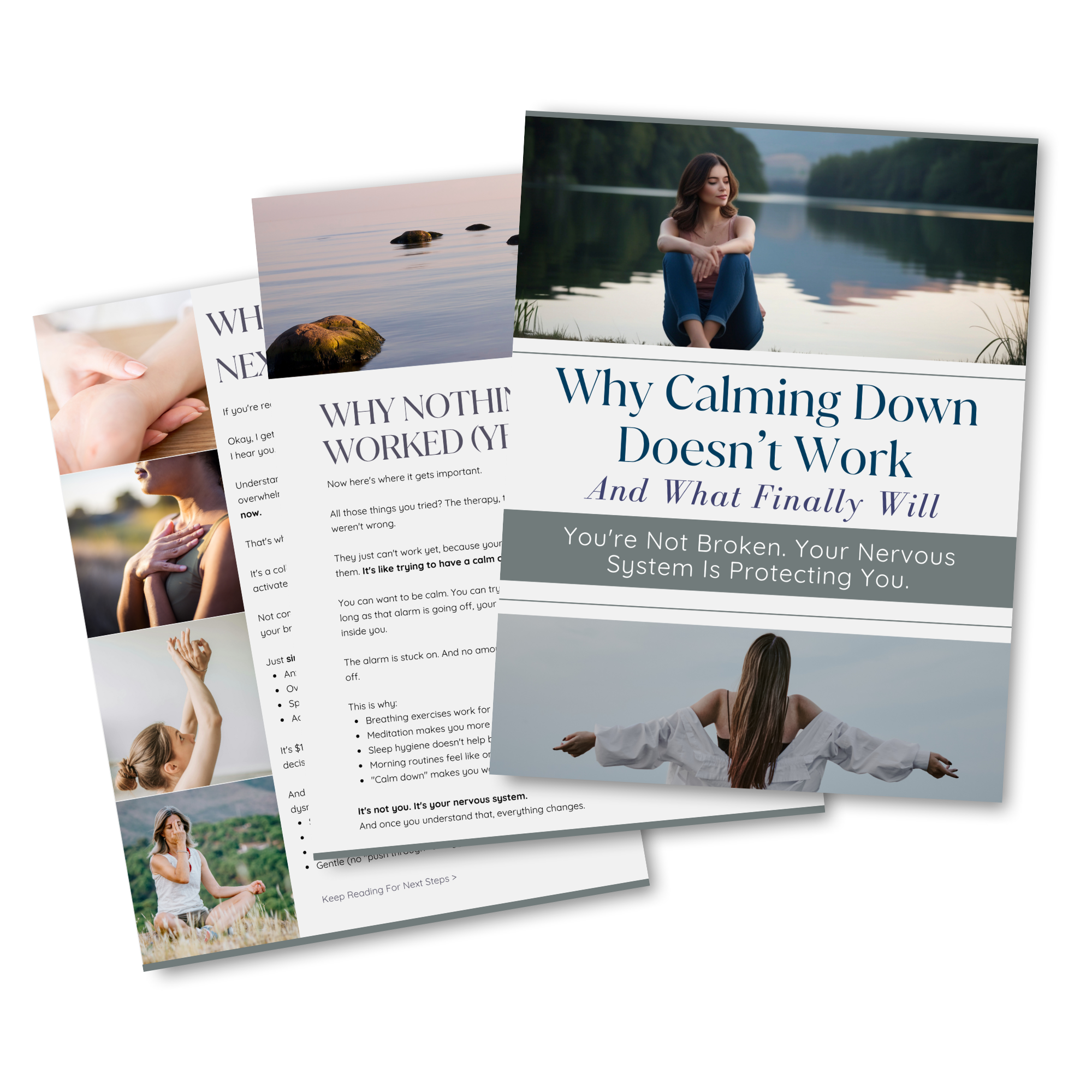
Free Guide: Why Calming Down Doesn’t Work
(And What Finally Will)
You’re Not Broken. Your Body Is Protecting You.
Your inbox stays calm, too. Unsubscribe anytime. We respect your privacy.
5. Switch Light Mode to Dark Mode To Reset Your Nervous System
Blue light exposure, especially in the evening, can disrupt your circadian rhythm and inhibit melatonin production, negatively affecting sleep quality.
Try instead: Dark mode on all your devices. This simple change not only reduces eye strain but may also make your devices less stimulating, potentially reducing the time you spend chasing “cheap dopamine” online.

6. Switch Fasting to Morning Fats and Protein
Stress hormones naturally spike when you wake up. Skipping breakfast (intermittent fasting) can keep these stress levels elevated throughout the morning.
Try instead: Starting your day with a simple low-carb meal like eggs and avocado. This helps stabilize your nervous system and provides steady energy. You can then gradually introduce more carbohydrates as the day progresses.
7. Switch Polyester to Natural Fiber Clothing
Synthetic fabrics like polyester contain endocrine-disrupting chemicals such as phthalates and dimethyl fumarate. These compounds can accumulate in body tissue through skin contact.
Try instead: Natural fiber clothing like linen or cotton that allows your skin to breathe and contains no artificial hormone disruptors.
8. Switch Closed Shoes to Barefoot Contact
Our feet contain countless nerve endings that benefit from direct contact with the earth. This practice, known as “grounding” or “earthing,” has been shown to have anti-inflammatory effects.
Try instead: Going barefoot when possible. The earth carries an electrical frequency that harmonizes with your nervous system and immune function, allowing you to absorb this beneficial energy through direct contact.

9. Switch Talk Therapy to Somatic Experiencing
While talk therapy can be valuable for cognitive processing, it often stays in the realm of thoughts rather than addressing how trauma and stress are stored in the body.
Try instead: Somatic experiencing, which focuses on bodily sensations and nervous system regulation. This approach helps release trapped stress responses and trauma stored in the physical body, leading to deeper and often faster healing.
If 9 swaps feels like a lot, start smaller. These 3 easy everyday practices that help regulate your nervous system are a perfect starting point you can build on.
Conclusion: Small Changes Help Reset Your Nervous System Fast
These nine simple swaps aren’t just about changing habits—they’re about fundamentally shifting how your nervous system interacts with the world around you. Each change works to reduce the chronic stimulation that keeps you in a state of fight-or-flight, helping to transition your body back to its natural state of balance.
Remember that nervous system regulation isn’t a quick fix but rather a lifestyle approach. Start with just one or two swaps that resonate most with you, and gradually incorporate more as they become natural parts of your routine.
The modern world isn’t going to slow down, but by making these conscious adjustments, you can create an internal environment of calm even amidst external chaos. Your nervous system will thank you with improved sleep, reduced anxiety, better focus, and a greater sense of overall wellbeing.
Which swap will you try first?
And if you want the why behind every swap in this list, grab Why You Can’t Calm Down below.
Free Guide: Why Calming Down Doesn’t Work
(And What Finally Will)
You’re Not Broken. Your Body Is Protecting You.
Your inbox stays calm, too. Unsubscribe anytime. We respect your privacy.