
Your Spring Somatic Reset: 5 Gentle Ways to Help Your Body Shake Off Winter
You made it through winter. The heavy blankets, the short days, the constant cold. That season is coming to a close.
Now the light is shifting. The air is softer. The mornings come earlier.
But your body? It might still be in winter mode. And that’s where a spring somatic reset comes in.
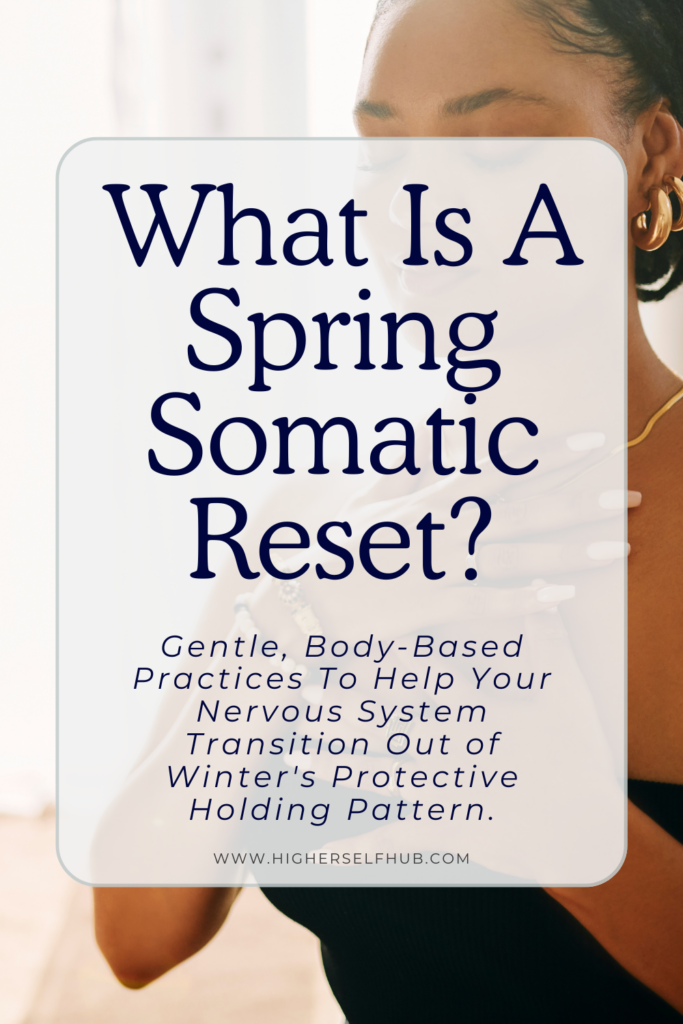
A spring somatic reset is a set of gentle, body-based practices that help your nervous system transition out of winter’s protective holding pattern.
Not a detox. Not a 30-day overhaul. Just a few simple ways to signal to your body that it’s safe to soften and open. Like a crocus in bloom.
If you’ve noticed that spring arrived but your energy didn’t, it doesn’t mean you’re broken. Seasonal transitions can be activating for the nervous system.
Your body spent months conserving, bracing, staying small. It doesn’t just flip a switch because the calendar says March.
Some of us feel it as lingering heaviness. Others notice restlessness, or that strange combination of both at the same time. You want to do more, but your body feels like it’s still under a weighted blanket.
That’s not laziness. That’s your nervous system catching up.
Why Your Body Needs a Reset Between Seasons
Your nervous system responds to light, temperature, and rhythm, often before your conscious mind notices. During winter, your body naturally downregulates. It conserves energy. Metabolism slows. Movement gets smaller. Muscles hold tension for warmth and protection.
When spring comes, the shift in light and temperature signals your body to open back up. However, if your nervous system has been stuck in a stress cycle (and let’s be honest, most of ours have), it may need some help making that transition.
Think of it like this: your body hibernated. Now it needs to stretch, shake off, and remember what ease feels like.
That’s what somatic exercises do. They work with your body’s own signals instead of overriding them. Rather than forcing a change with willpower or a strict routine, you’re simply helping your nervous system catch up to the season.
If you want a simple starting point for somatic work, the Somatic Starter Kit walks you through it. It’s free, and it’s yours whenever you’re ready.
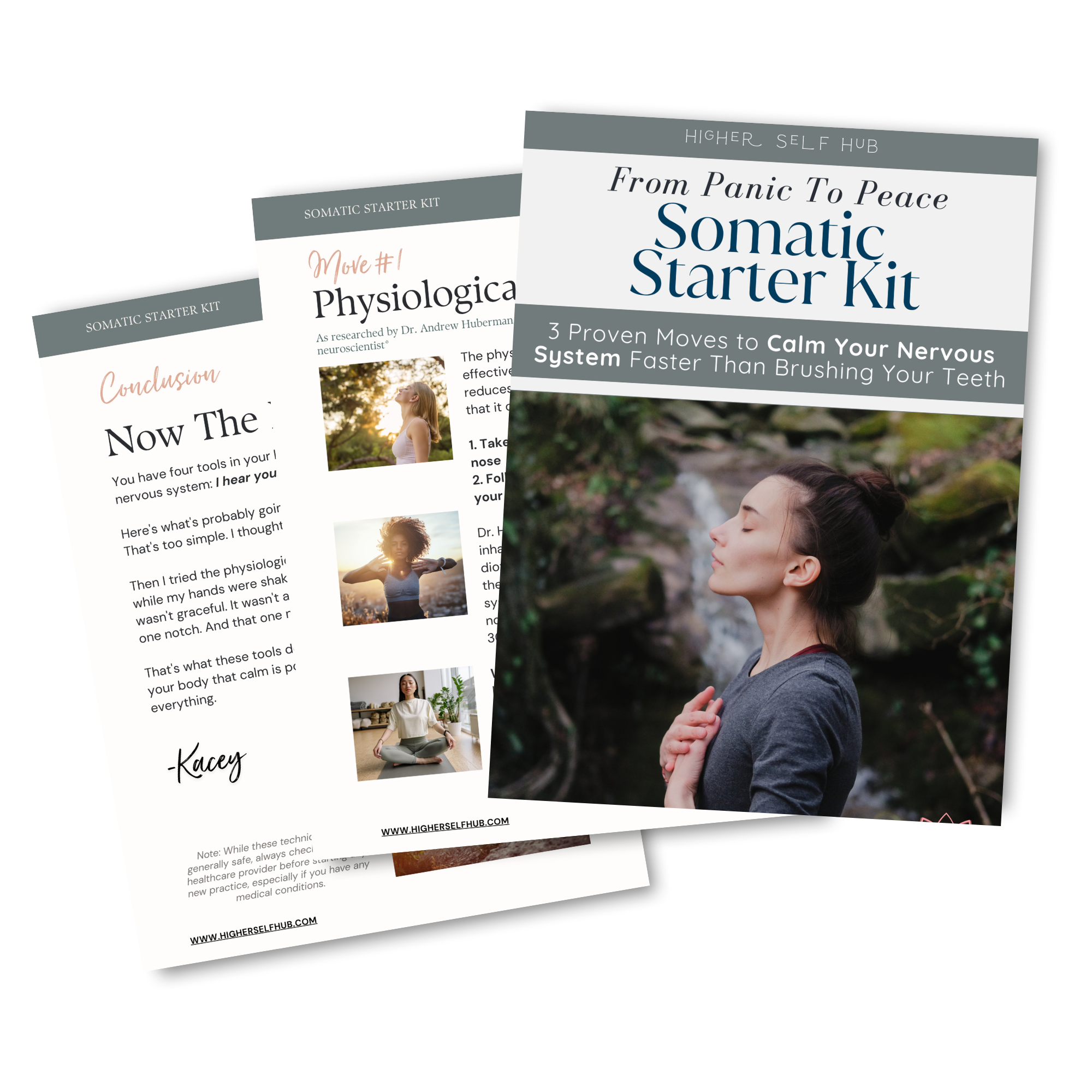
Your Free Somatic Starter Kit
3 science-backed tools to go from panic to peace in under 60 seconds.
Your inbox stays calm, too. Unsubscribe anytime. We respect your privacy.
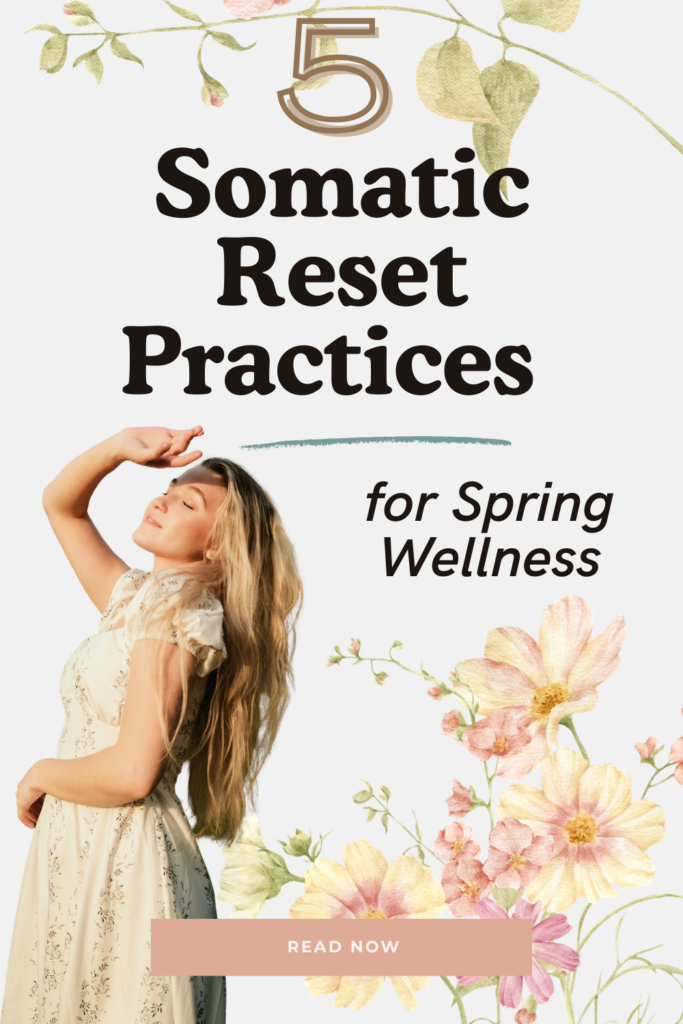
5 Somatic Practices for Your Spring Reset
These aren’t meant to be done all at once. Pick one. Try it tomorrow morning. Or tonight. Or in the car at pickup. Start with whichever one sounds like the least amount of effort.
1. The Shake-Off (Literally)
Stand up. Let your arms hang loose. Bounce gently on your knees and shake your hands, arms, and shoulders for 30 to 60 seconds. Let your jaw go slack.
This is called neurogenic tremoring, and it’s one of the fastest ways to release stored tension from your body. Animals do this instinctively after a stressful event. They shake it off and move on. Your body knows how to do this too. It just needs permission.
Try it first thing in the morning, before your brain starts running through the day’s list. It signals your nervous system that winter’s brace can finally come undone.
2. Morning Light and Bare Feet
Step outside within the first hour of waking. No sunglasses. Bare feet on the ground if you can (grass, dirt, even a cool patio).
Morning light hitting your eyes sets your circadian rhythm for the day, which directly influences cortisol and melatonin cycles. Early morning sunlight is one of the most powerful hormone signals your body responds to. Meanwhile, contact with the earth (often called grounding) has been shown to reduce cortisol levels and ease an overactive stress response.
Together, they create one of the simplest nervous system resets you can do. Two minutes. No equipment. Just you, the ground, and some early spring light.
3. A Slow, Aimless Walk
Not a workout. Not a podcast walk. A slow, aimless walk where you let your eyes look around without a destination.
This activates what researchers call the “optic flow” effect. When your eyes track movement on either side of you while walking, it naturally calms the amygdala (the part of your brain that scans for threats). In other words, your visual system tells your brain: we’re safe. We’re moving. Nothing is chasing us.
Spring is perfect for this because everything is changing around you. New buds. Different light. Birdsong that wasn’t there last month. Let your senses take it in without rushing.
In our house, we call this a reset. When everything gets loud, my go-to is walking outside. Even 10 minutes resets my entire energy. No plan. No podcast. Just motion and air.
If you already walk daily, this isn’t about adding more. It’s about slowing one of those walks down and letting it be the reset instead of the workout.
4. Longer Exhale Breathing (for the Longer Days)
As the days get longer, your breath can too. This one is simple: inhale for a count of 4, then exhale for a count of 6 to 8.
Extended exhale breathing activates the parasympathetic nervous system, your body’s built-in calming response. That longer exhale is what tells your vagus nerve to slow your heart rate and ease the tension you’ve been carrying in your chest and belly. Research from Stanford Medicine found that this kind of breathwork can shift your nervous system within 90 seconds.
Try it while sitting outside. On the porch. In the car before you go into the store. At the kitchen counter while the kettle heats up. No one even has to know you’re doing it.
5. The Spring Body Check-In
Sit or lie down somewhere comfortable. Close your eyes if that feels safe, or soften your gaze.
Start at your feet and slowly scan upward. Not trying to fix anything. Just noticing. Where does your body feel tight? Heavy? Open? Numb? Warm?
This is a simple form of somatic body awareness, and after months of winter, your body may have accumulated tension you’re not even conscious of. The check-in doesn’t require action. It just asks: what did winter leave behind? What am I still holding?
Write down what you notice if you want to. Even a few words. “Tight jaw. Heavy chest. Warm hands.” That’s enough. Over time, these small notes become a map of how your body moves through the seasons.
How to Build on Your Spring Somatic Reset
If one of them landed, start there. The real power of a spring somatic reset isn’t in the individual exercises. It’s in the repetition.
Doing one small, body-based practice regularly is what teaches your nervous system that safety is available. Not just once, but over and over again.
That’s where a simple tracker can help. Something you can reach for at the end of a 2-minute practice and just… mark it down. Not a gold star system. Not a guilt trip. Just a quiet note to yourself that says: I did something for my body today. The 28-Day Somatic Exercise Habit Tracker & Wellness Journal was designed for exactly this kind of gentle, daily repetition.
Your Body Already Knows How to Do This
Your body already knows how to transition between seasons. It’s been doing it your whole life. Sometimes it just needs a little help remembering.
A spring somatic reset isn’t about forcing yourself into a new routine. It’s about giving your body the gentlest possible nudge toward the opening that’s already happening around you.
Start small. Start with one.
If you want a free starting point for your spring somatic reset, grab the Somatic Starter Kit below.
Your Free Somatic Starter Kit
3 science-backed tools to go from panic to peace in under 60 seconds.
Your inbox stays calm, too. Unsubscribe anytime. We respect your privacy.
Save This for To Come Back To