The Somatic Gua Sha Routine For Better Sleep
I recently started a new job, and the hours flipped my whole evening upside down. I’m on East Coast time but I live out west, which means I’m going to bed earlier than I ever have and waking up while the rest of my house is still quiet and dark.
I expected to hate it. Instead, it’s given me something I didn’t know I was missing: an actual bedtime rhythm.
And the quiet star of that rhythm? A short gua sha routine for better sleep.
A gua sha routine for better sleep is a slow, sensory wind-down where you glide a smooth stone across your face and jaw before bed, releasing the tension you’ve been holding all day and signaling to your nervous system that it’s finally safe to power down.
This post contains affiliate links. If you buy something through them, I may earn a small commission at no extra cost to you. I only point you toward things I actually use.
Why an early bedtime needs a wind-down cue
When you ask your body to sleep on a schedule it isn’t used to yet, you can’t just lie down and expect it to cooperate. Mine certainly didn’t at first. I’d get into bed at an hour that still felt like early evening, and my nervous system hadn’t gotten the memo that the day was over.
That’s the gap a somatic practice fills. The ability to rest was never gone. As I’ve written about in your body knows how to sleep well, the wiring is all still there. It just needs a signal it can trust.
Here’s the thing I want you to hear, especially if you’ve felt like you’re “bad at” the wellness stuff: somatic practice isn’t about learning the perfect breathing technique or holding a yoga pose you saw online. It’s about finding something sensory and gentle that works for you, so you can slow down, let the day settle, and process a little of what you’re carrying before you sleep. That’s it. The right practice isn’t the most impressive one. It’s the one you’ll actually reach for.
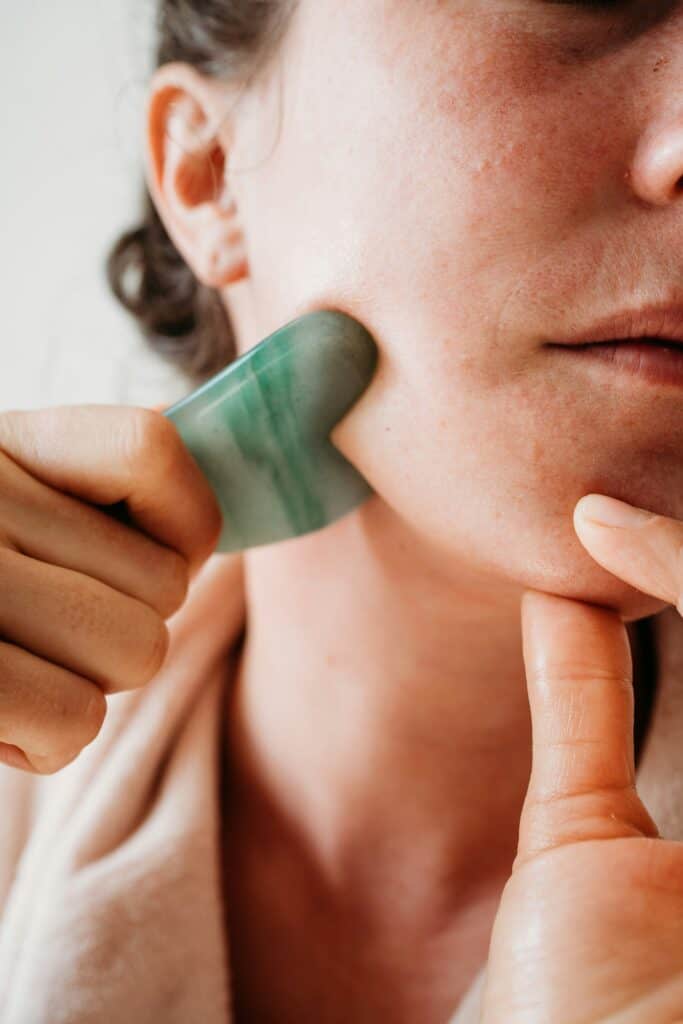
For me, that turned out to be a five to seven minute gua sha routine for better sleep, done right there in bed.
My nightly gua sha routine for better sleep
I keep my gua sha routine for better sleep simple, and I keep it slow on purpose. The slowness is the point.
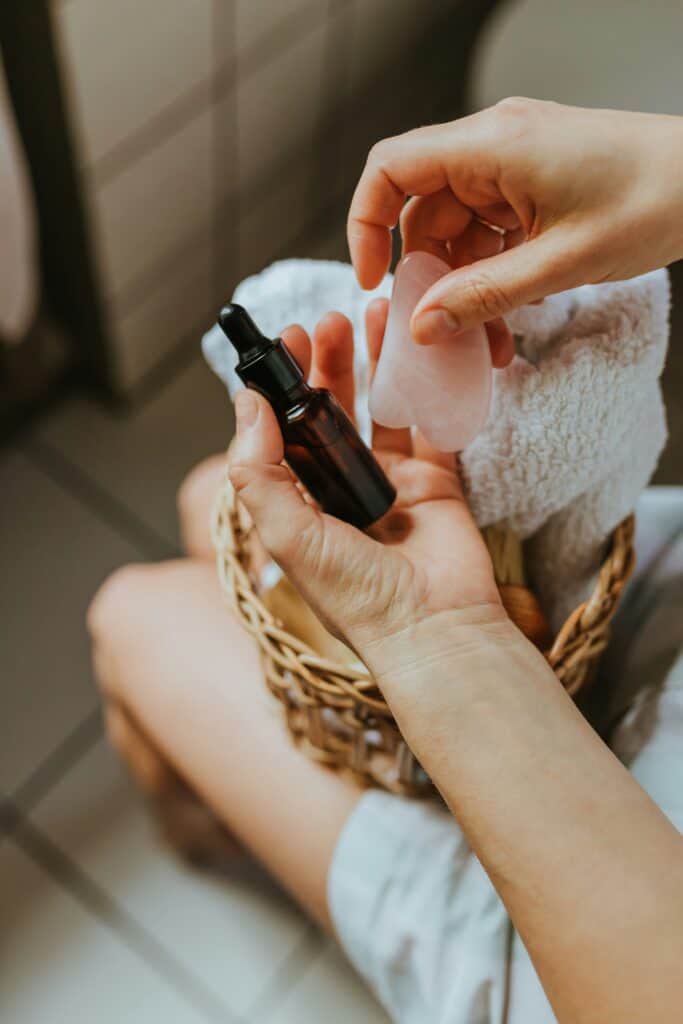
- I start with my skin. After I’ve washed off the day, I layer on my serums and a nourishing lotion or facial oil. The oil isn’t just for my skin. It gives the stone enough slip to glide instead of drag, which is what makes the whole thing feel soothing instead of fussy.
- I get into bed first, then reach for my gua sha. This matters more than it sounds. I’m not standing at a mirror trying to do it “right.” I’m already tucked in, lights low, so the practice carries me toward sleep instead of waking me back up.
- I work in slow, gentle strokes. Jaw, up along the cheek, out toward the ear, a few passes across the brow. There’s no perfect map here. I follow what feels good and let my shoulders drop a little more with each pass.
Five minutes later my face feels softer, my jaw has let go of whatever it was clenching, and my body has clearly understood that we are, in fact, done for the day.
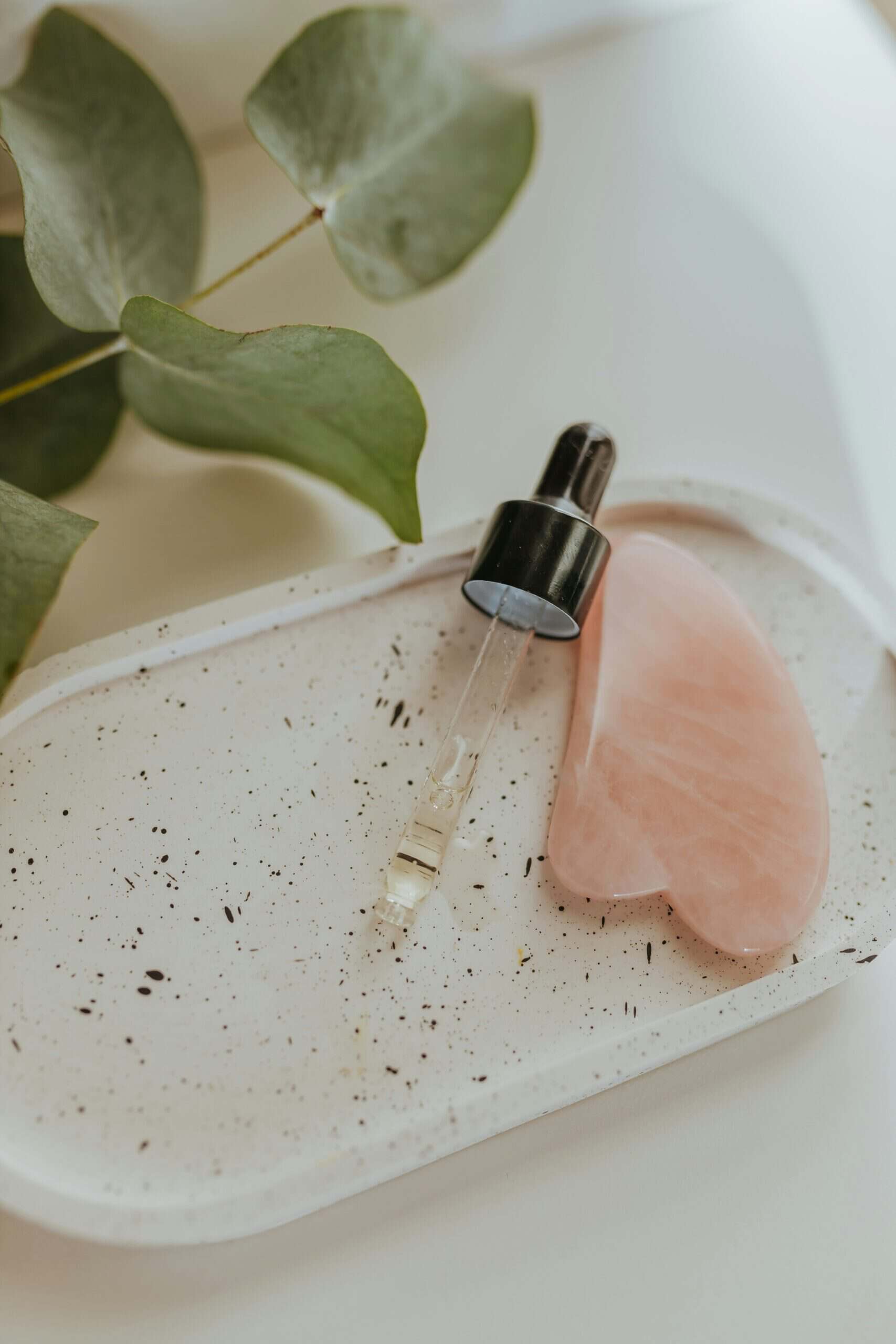
My gua sha tool: Rose Quartz gua sha
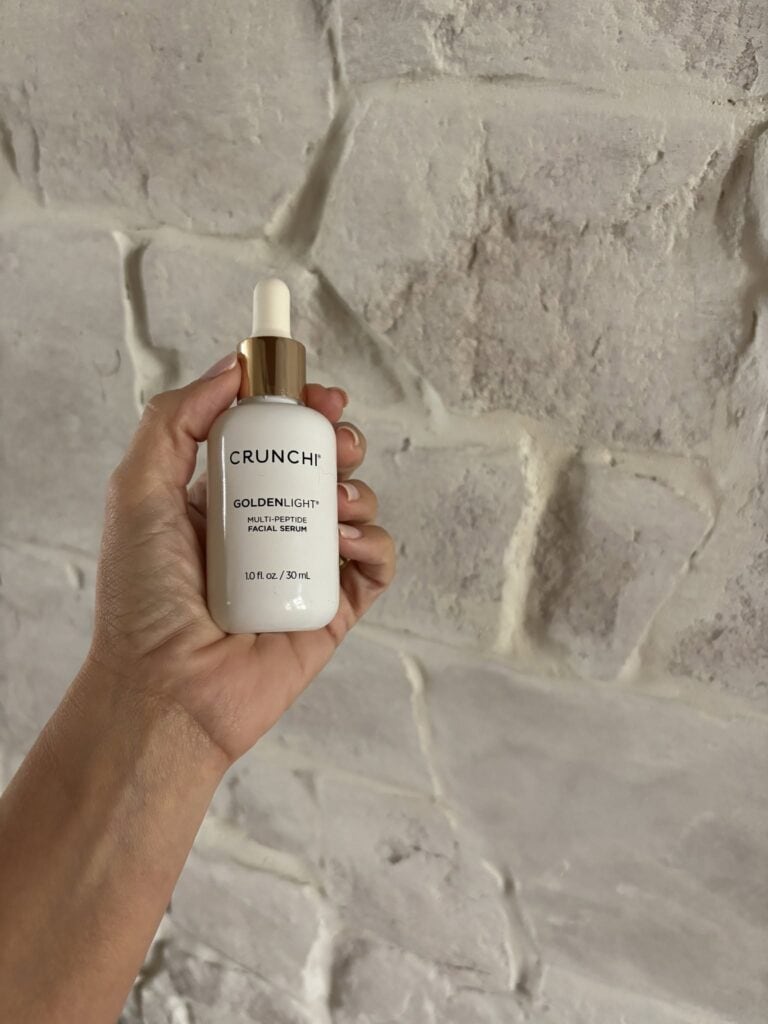
The facial oil I use for slip: Crunchi Goldenlight Serum
If your body won’t power down at night no matter what you try, there’s a reason, and it isn’t you. My free guide, Why Calming Down Doesn’t Work, walks through what your nervous system is actually doing when “just relax” backfires.
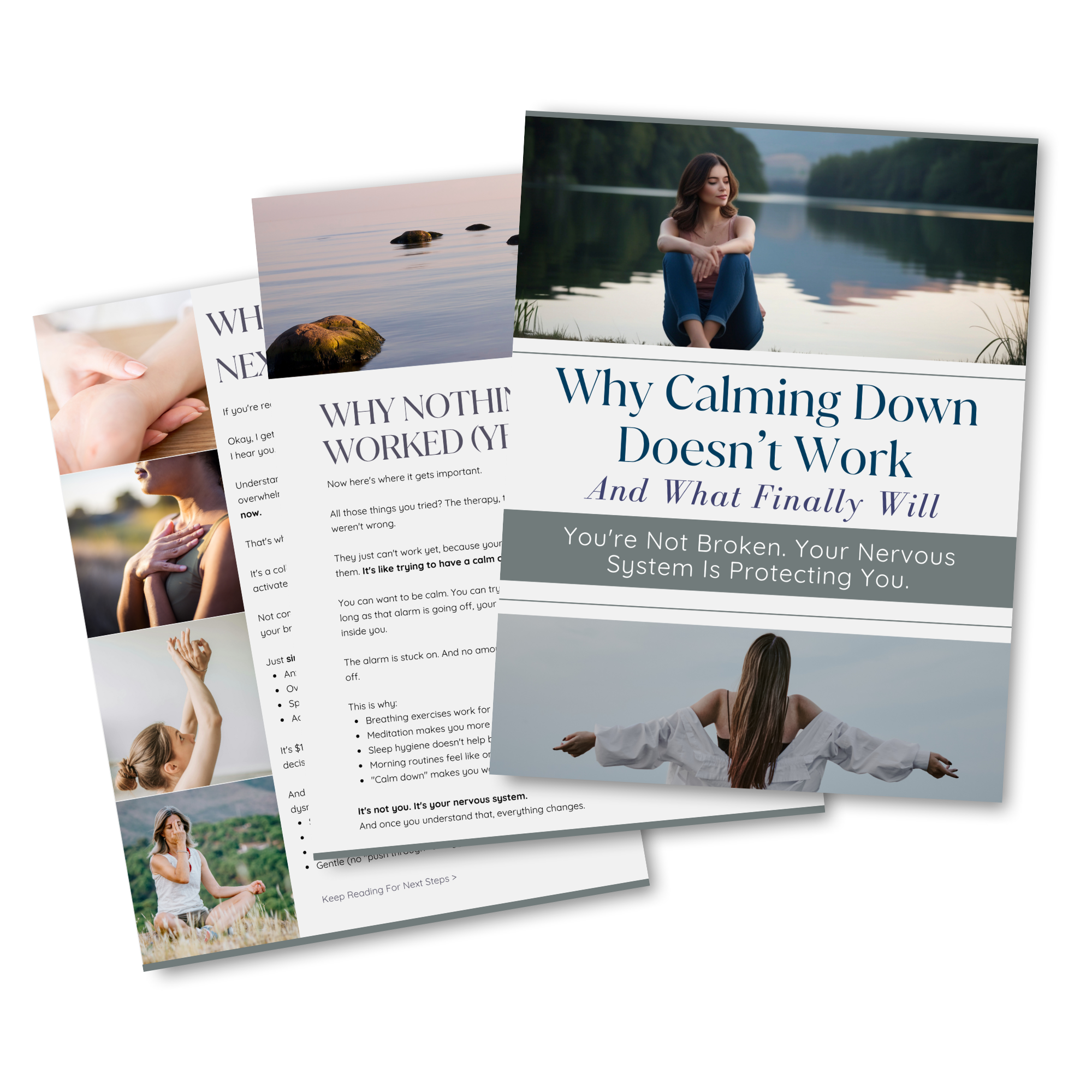
Free Guide: Why Calming Down Doesn’t Work
(And What Finally Will)
You’re Not Broken. Your Body Is Protecting You.
Your inbox stays calm, too. Unsubscribe anytime. We respect your privacy.
The other piece: blocking out the light
I have to mention this one because it’s been just as important for me, and it might be the most overlooked part of going to bed early.
We live very far north. In the longer months, the sun is still up well past the time I’m trying to fall asleep. You can have the calmest routine in the world, but if your room is glowing, your body keeps thinking it’s daytime.
So I put on a lavender eye pillow. The weight is grounding, the lavender is gently sensory in that same somatic way, and most of all it blocks the light so I can actually drift off before sundown. It’s one piece of the larger holistic bedtime kit I’ve built over time, and it turned my early bedtime from a frustration into something that feels almost luxurious.
The lavender eye pillow I use here.
Why this works (and why it might work for you)
None of this is about doing more. If anything, it’s about doing less, with more attention.
A sensory, repeatable wind-down tells your nervous system that the day is closing, especially when the clock says one thing and your body still believes another. The gua sha gives my hands something slow and soothing to do. The skincare turns it into care instead of a chore. The eye pillow handles the light my far-north sky won’t. And if your mind still races the moment your head hits the pillow, it helps to learn how to reset your vagus nerve when you can’t sleep.
Put together, it’s maybe seven minutes. That little gua sha routine for better sleep has been the gentlest, most reliable bridge into rest I’ve found since my whole schedule changed.
If you’re navigating an early bedtime, a new job, a new season, or a body that just won’t settle at night, I’d start here. Pick one small sensory thing. Do it slowly. Let it become the cue.
Your sleep doesn’t need a system. It needs a signal.
Sweet dreams,
Kacey
And if “just relax” has never once worked for you, you’re not broken. My free guide, Why Calming Down Doesn’t Work (And What Finally Will), unpacks why your body keeps bracing, and what actually helps it stand down.
Free Guide: Why Calming Down Doesn’t Work
(And What Finally Will)
You’re Not Broken. Your Body Is Protecting You.
Your inbox stays calm, too. Unsubscribe anytime. We respect your privacy.