

12 Somatic Ways to Survive the Holidays
The holidays ask a lot of a body that’s already tired.
More driving. More noise. More people in your kitchen. More plans stacked on top of plans, all happening in the darkest, coldest stretch of the year.
And somewhere between the school concert and the third grocery run, you realize you’ve been holding your breath since Thanksgiving.
Holiday stress is what happens when a season built for rest gets packed with more activity, more people, and more expectations than your nervous system has capacity for, right when shorter days and cold weather are already draining it.
You’re not bad at the holidays. Your body is just doing a lot.
So this year, instead of a longer to-do list, here’s a shorter one. Twelve small somatic practices, pulled from the ones readers come back to most here, grouped by when you’ll actually need them.

From the Somatic Press app
Find the support your nervous system needs right now.
Answer three simple questions, and you’ll be guided to the grounding practice for this moment.
Why the Holidays Hit Your Nervous System So Hard

Winter on its own is already a heavy season for your body. Less sunlight, colder air, more time indoors. Your system works harder just to stay warm and keep your energy level.
Then the holidays pile on top.
Your nervous system thrives on a sense of safety and predictability. Loud rooms, packed calendars, and the pressure to be “on” for hours all send signals that can tip you into overwhelm, even when you’re surrounded by people you love.
Some signs your body is running on holiday fumes:
- Your shoulders have been up by your ears since the first party
- You’re tired, but it shows up as irritation first
- You forget to eat, then suddenly you’re starving and shaky
- Small noises feel loud and small requests feel huge
- You get home from a gathering and need a full day to recover
None of that means you’re doing the season wrong. It means your body is asking for support while it gets through a lot.
The practices below don’t ask for a yoga mat, a quiet hour, or a perfectly calm house. Most of them take less than a minute. A few of them nobody will even notice you’re doing.
12 Somatic Ways to Survive the Holidays
These come in four small sets: before you walk in, in the middle of it all, winter-proofing your body, and recovering in between.
You don’t need all twelve. Pick one from each set that sounds like the least amount of effort, and start there. These aren’t assignments. They’re invitations.
Set 1: Before You Walk In
So much holiday stress starts in the car. The drive to the in-laws. The mall parking lot. The pickup line before the class party. These three use that drive time on purpose.
1. Sigh out loud at every red light
Take a deep breath in through your nose. Then, on the exhale, let out an audible sigh. Like, actually make noise. A “haaaah” or a groan or whatever wants to come out.
Sighing is your body’s built-in release valve. One sigh won’t change your whole day, but it can soften the edges just enough before you walk into a full house.
2. Hum the whole way there
Hum along to the radio, hum a carol, or just make a low “mmmm” sound for a few seconds at a time.
Humming creates a vibration in your throat and chest, right along the path of the vagus nerve. Making sound is something your body doesn’t do when it’s in real danger, so it reads as a safety signal. It doesn’t have to be pretty. It just has to be yours.
More of these in 5 Somatic Exercises for a Vagus Nerve Reset That Work in the Car.
3. Look left, then right, before you get out
Once you park, turn your head slowly and look all the way to the left. Pause. Then all the way to the right.
This is called orienting, and it tells your brain that you’ve checked the space and nothing’s coming. It’s especially helpful when your vision narrows or your chest tightens before a big gathering. Turning your head is what widens it back out.
Set 2: In the Middle of It All

You’re at the table. The room is loud. Someone asked about your job, your kids, or your plans for the new year, and your body would like to leave. These work right there, mid-conversation.
4. Take one physiological sigh
One inhale through your nose. A second small sip of air on top of it. Then a long, slow exhale out through your mouth.
This is one of the fastest ways to shift your state in real time, and you can do it next to the dessert table without anyone looking twice. Not a magic fix. It just moves the needle a notch, and you get to feel it move.
5. Run cold water over your wrists
Excuse yourself to the bathroom. Turn on the cold tap and hold the insides of your wrists under the water for 30 to 60 seconds. Let the temperature do the work.
Cold on the wrists triggers the dive reflex, a built-in response that slows your heart rate and pulls your nervous system toward calm. All you need is a sink and one minute of privacy. Nobody has to know.
For more practices built for real life, see 9 Calming Activities That Actually Work When You’re Overwhelmed.
6. Relax your toes, and nothing else
I was stuck in a drive-through line with my son once, parked, which is the exact situation my body hates most. Relaxing my whole body was not available to me. Relaxing my toes was.
So I relaxed my toes, over and over, until we moved up a space.
Try it under the dinner table. You don’t have to calm everything at once to prove the connection between you and your body still works.
If you’d like the quick ones in one place you can reach for without thinking, the Somatic Starter Kit is the short list I come back to most, holidays included.
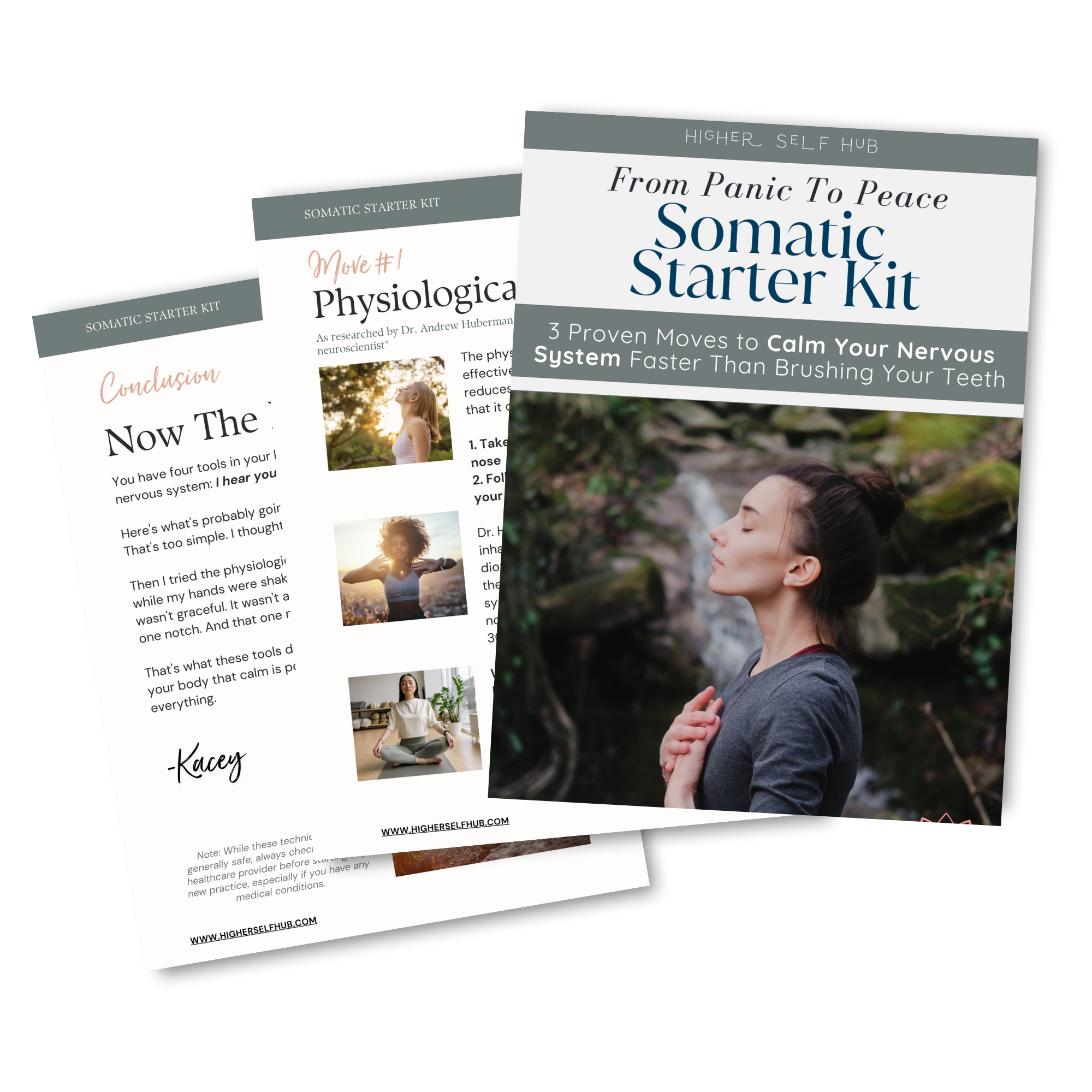
Your Free Somatic Starter Kit
3 science-backed tools to go from panic to peace in under 60 seconds.
Your inbox stays calm, too. Unsubscribe anytime. We respect your privacy.
Set 3: Winter-Proof Your Body
This set isn’t about the gatherings. It’s about the season underneath them. Cold, dark days ask your body to work harder, and a little support here makes every party easier to get through.
7. Get ten minutes of light in the morning

Your nervous system tracks light as a survival signal. In winter, you have to create it on purpose.
Within an hour of waking, sit facing a bright window or a bright lamp for about 10 minutes. Drink your coffee there. Light helps set your body’s daily rhythm, telling it when to be alert and when to wind down.
Even 5 minutes makes a difference on the busy days.
8. Switch to candlelight after sunset
One winter week, I came home from an afternoon walk and lit candles at 4 pm. Honestly, it was the right call.
Once it’s dark, swap the overhead lights for candles, fairy lights, or a lamp with a warm bulb. Softer, warmer light tells your body the day is winding down, which matters a lot during a season when the evenings keep filling up with plans.
9. Thaw out with warming movement

Cold weather makes your body contract and brace. Add holiday tension on top and your shoulders may not come down until January.
Try this two-minute thaw:
- Start by rubbing your arms, legs, and belly with your hands
- Add slow shoulder rolls and hip circles
- Build to a minute of anything that makes you warm: shaking out your hands, marching in place, dancing in the kitchen
- End in a forward fold or child’s pose and just breathe
Movement brings warmth back into your body, and physical warmth is a signal your system recognizes as safe.
The full winter version lives in Feel Better in February: Your Winter Somatic Reset Guide.
Set 4: Recover in Between
The holidays aren’t one event. They’re a string of them, sometimes back to back. These three help your body come down between them, so you’re not starting the next one already depleted.
10. Put your legs up the wall for 10 minutes

Lie on the floor with your legs resting up the wall and a pillow under your hips. Let gravity do the work.
This posture helps your body shift toward rest-and-digest. After a long day of hosting or traveling, ten minutes horizontal isn’t lazy. In winter, rest is medicine.
11. Brew a slow pot of Deep Rest tea

Tea is an invitation to slow down. To pause. To let your body remember what rest feels like. Here’s the blend readers ask about most:
- 2 parts chamomile flowers
- 1 part linden flower and bract
- 1 part lemon balm
- 1/2 part lavender flowers
- 1/2 part rose petals
Chamomile and linden are gentle relaxing herbs, lemon balm eases that anxious edge, and lavender and rose are soothing and grounding. Make it the last thing you do on a full holiday evening, under a blanket, with the house finally quiet.
Two more winter blends are in 3 Warming Herbal Teas to Calm Your Winter-Frazzled Nerves. If you’re pregnant, nursing, or on medication, check with your provider before trying new herbs.
12. Make one gathering a graze, not a production
You’re allowed to host differently this year.
Instead of a big cooked meal, ask everyone to bring one or two things, store-bought is completely fine, and lay it all out. Cheese and crackers. Pickles. Olives. Grapes. Dark chocolate. Whatever sounds good.
No cooking pressure, no plating anxiety, no performing. People can sit on the floor, go back for thirds, and eat dessert first. Most holiday traditions weren’t designed with nervous system capacity in mind. You get to design one that is.
More low-key ways to gather are in Restorative Galentine’s: 7 Ways to Connect Without Draining Your Energy.
How to Use These When You Can’t Remember Any of Them
When your body is overwhelmed, the thinking part of your brain goes offline. That’s exactly when you won’t remember a list of twelve things.
So design for your worst day, not your best one:
- Pick one practice per set and forget the rest for now
- Attach each one to something you’ll already be doing: red lights for the sigh, bathroom breaks for the cold water, your morning coffee for the light
- Expect it to feel small. Small is how it works. One notch at a time is still a shift
Some days the tension will come back anyway. That’s normal, not a sign it isn’t working. Every time you pause and notice your body instead of overriding it, you’re building the pathway back to calm.
You’re Allowed to Do the Holidays Differently
You don’t have to love every gathering. You don’t have to keep up with every plan. And you don’t have to push through December on adrenaline and cookies and hope January fixes it.
Your body already knows how to winter. It’s been asking for warmth, light, rest, and fewer demands all along. These practices are just a way of saying yes to it, in small doses, right in the middle of the season.
Which one sounds doable today? Start there.
The holidays go better when you don’t have to remember what to try. The Somatic Starter Kit is the list I keep for the days I can’t think of one.
Your Free Somatic Starter Kit
3 science-backed tools to go from panic to peace in under 60 seconds.
Your inbox stays calm, too. Unsubscribe anytime. We respect your privacy.
📌 Save This For Later
If this one landed, save it somewhere you’ll find it on a hard holiday day. Pinterest is a good place to keep things like this close.